
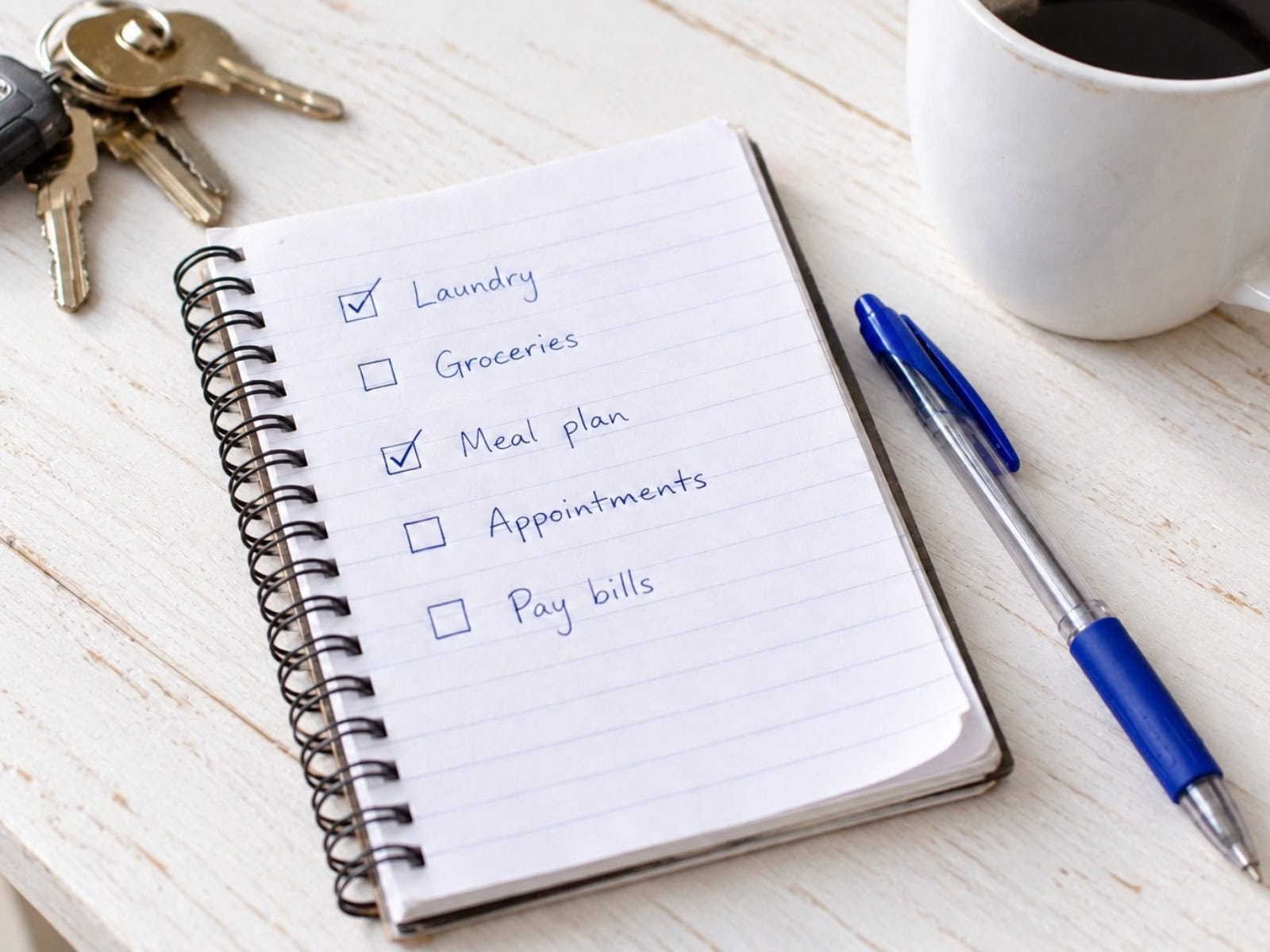
28 Practical Organization Lists to Make Everyday Life Easier

You remember the thing you need to return while you’re making dinner. You notice you’re almost out of laundry detergent just as you start a load. And the appointment you meant to schedule slips your mind until the office is closed.
Those small loose ends can make life feel harder to manage than it needs to be.
Organization lists give those reminders somewhere to go. They help you see what needs attention, find information when you need it, and choose a next step without starting over every day.
But you do not need 28 lists to stay organized.
Below are 28 list ideas to choose from, including free printables for several of them. Start with the ones that solve a problem you keep running into. A list should save you time or make something easier to remember. Otherwise, it is just another thing to maintain.
Which Organization Lists Should You Start With?
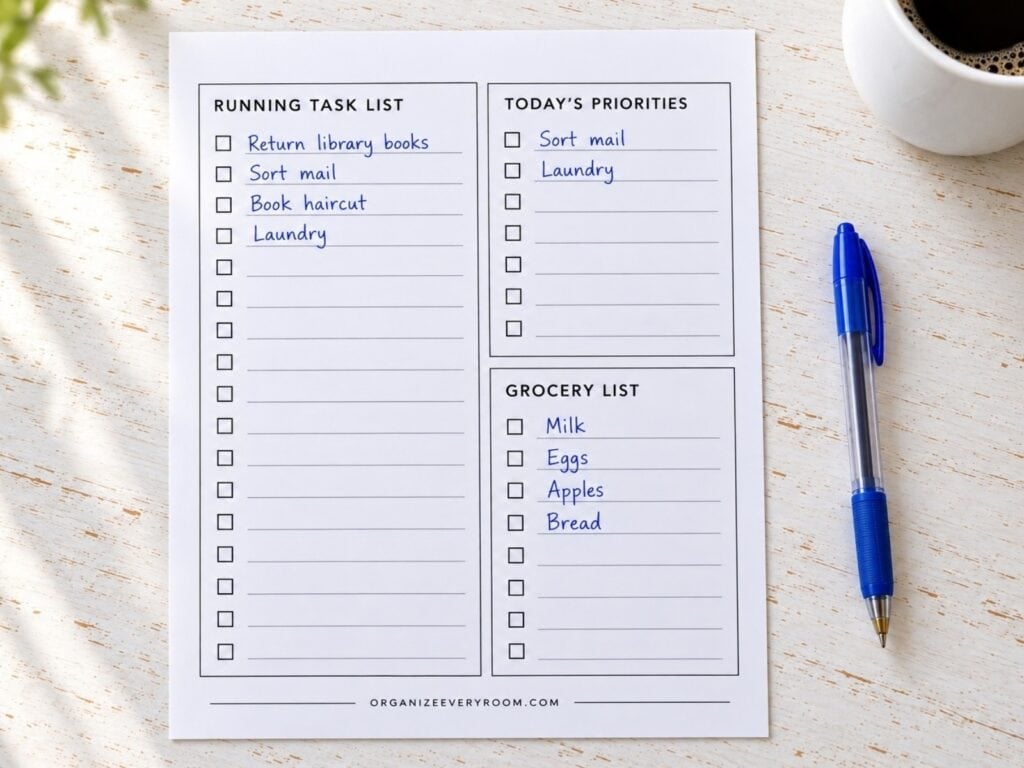
If you feel overwhelmed, start with these three:
- A running task list: One place to capture things you need to do.
- A short daily priority list: A few tasks you can realistically finish today.
- A grocery list: Items to buy, added when you notice you need them.
Put appointments and deadlines on your calendar. You do not need to remember to check a separate list for something that must happen on a particular date.
Try this small setup for a week before adding more. Then choose another list only if you notice a specific gap.
Lists for Managing Everyday Tasks
1. Running Task List
Keep one place for the things you remember throughout the day:
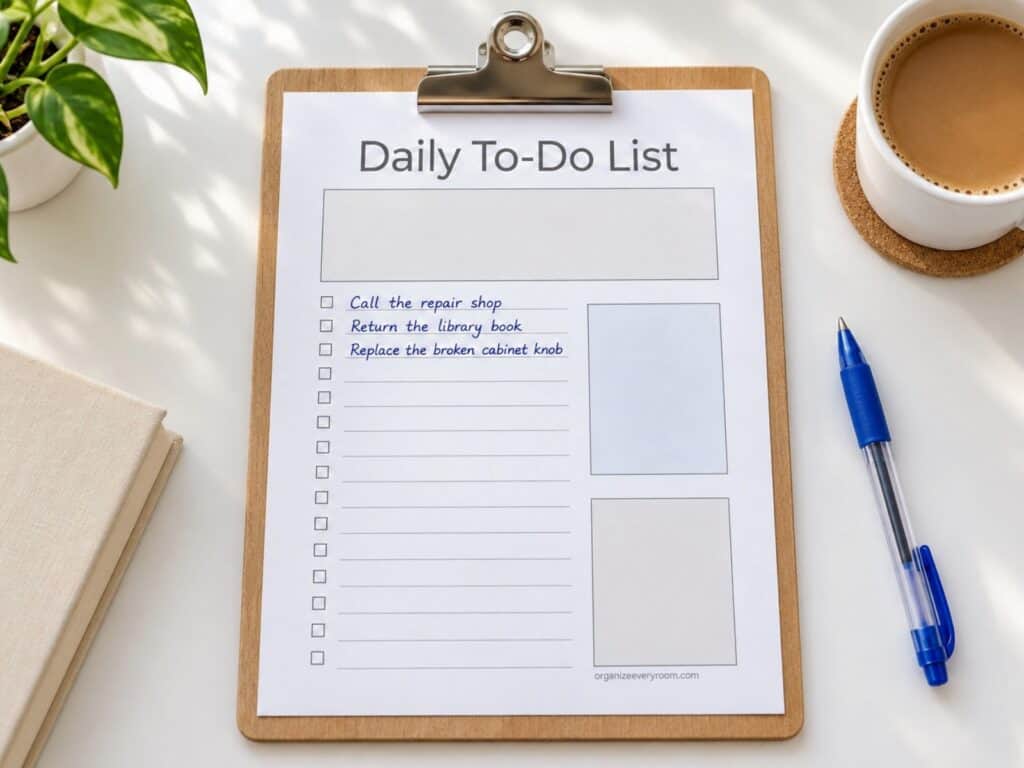
- Call the repair shop.
- Return the library book.
- Replace the broken cabinet knob.
Use a notebook or a note on your phone. The important part is being able to add something quickly.
Write tasks as actions. “Call the plumber about the dripping faucet” is easier to act on than “bathroom.”
If you prefer paper, use my free to-do worksheet to get those loose reminders out of your head.
2. Daily Priority List
Choose one to three tasks from your running list that fit the time you have today.
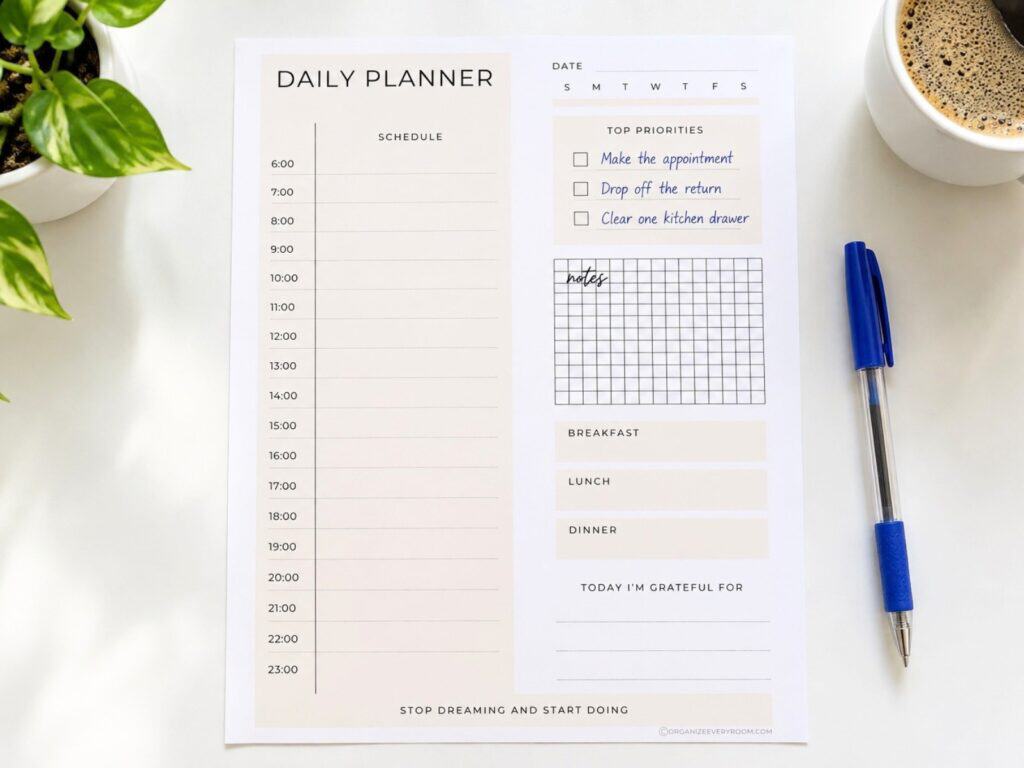
A useful daily list might be:
- Make the appointment.
- Drop off the return.
- Clear one kitchen drawer.
Leave the rest on your running list. You do not need to rewrite every unfinished task each morning.
My free daily planner has space for priorities and your schedule.
3. Weekly Planning List
Look at your calendar before deciding what to tackle this week.
A week with evening appointments needs a different plan from a week with several free afternoons. Choose a few household tasks that fit around what is already scheduled.
Include anything that needs preparation, such as buying a gift before a birthday or gathering paperwork before an appointment.
4. Errands and Returns List
Group errands by location so you can handle nearby stops together.
For example:
- Library: Return books.
- Shipping store: Drop off package.
- Hardware store: Buy cabinet knob.
Include return deadlines on your calendar. Keep the items you need to take near the door so the list and the belongings are ready at the same time.
5. Waiting-for List
Some tasks are unfinished because you need a response from someone else.
Record what you are waiting for, who you contacted, and when to follow up. Examples include a repair estimate, a refund, or confirmation of an appointment.
This keeps “check on that” reminders from getting mixed into everything you can act on now.
6. Simple Routine Checklist
Use a short checklist for a routine that keeps falling apart.
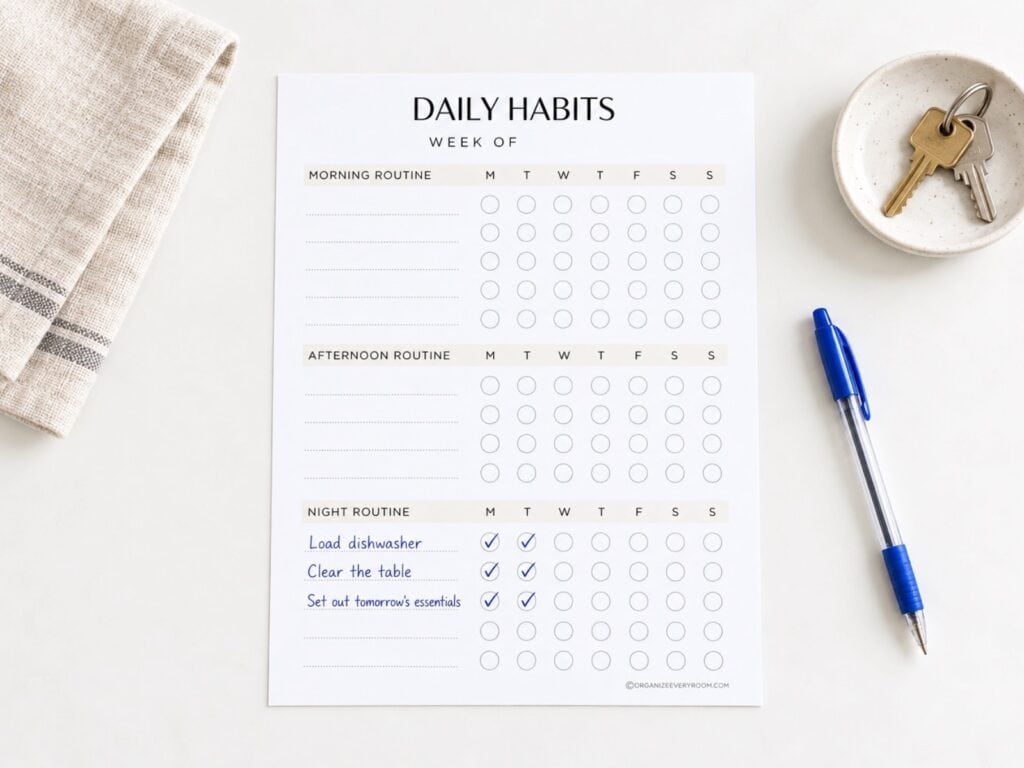
An evening reset might include putting dishes in the dishwasher, clearing the table, and setting out what you need tomorrow.
Start with the steps that make the biggest difference. You can use my daily habits printable, but you do not need to fill every space.
Lists That Make Your Home Easier to Manage
7. Decluttering List
Write down small areas that need attention rather than putting “declutter the house” on your task list.
Try the utensil drawer, the bathroom counter, or the shoes beside the door.
Choose one area when you have time. My room-by-room decluttering checklist can help you spot places to start.
8. Donation and Selling List
Track items that have already been set aside to leave your home.
Add the next action: take the bag to the donation center, photograph the table, or arrange pickup.
For items you plan to sell, choose a date to reconsider anything that has not sold. My guide to where to sell unwanted items can help you choose a suitable option.
9. Cleaning Schedule
Keep recurring cleaning tasks on a reusable checklist so you do not have to rebuild the list each week.
Separate everyday resets from tasks you do less often. Adjust the schedule to how your home is used rather than trying to follow every suggested chore.
My home cleaning schedule and free printables give you a starting point.
10. Home Maintenance List
Record tasks that are easy to overlook, such as servicing an appliance or replacing a filter.
Include the last completion date and the next reminder, following the relevant manufacturer’s instructions.
For replacement parts, note the model or size. Having the right information beside the task saves another trip to check the appliance.
11. Home Projects List
Separate repairs that need attention from improvements you would like to make eventually.
For each active project, write the next step. “Measure the entryway wall” is more useful than “redo the entryway.”
Keep optional projects in a later section. Seeing an idea on a list does not mean you have committed to doing it.
12. Where Things Are Stored List
This is useful for belongings you rarely need but struggle to find when you do.
Record specific locations:
- Spare keys: Top drawer of the entryway cabinet.
- Holiday lights: Labeled bin on the garage shelf.
- Appliance manuals: Home binder.
For paper records, my guide to organizing important documents can help you create clear homes for what you keep.
Lists for Meals and Shopping
13. Grocery List
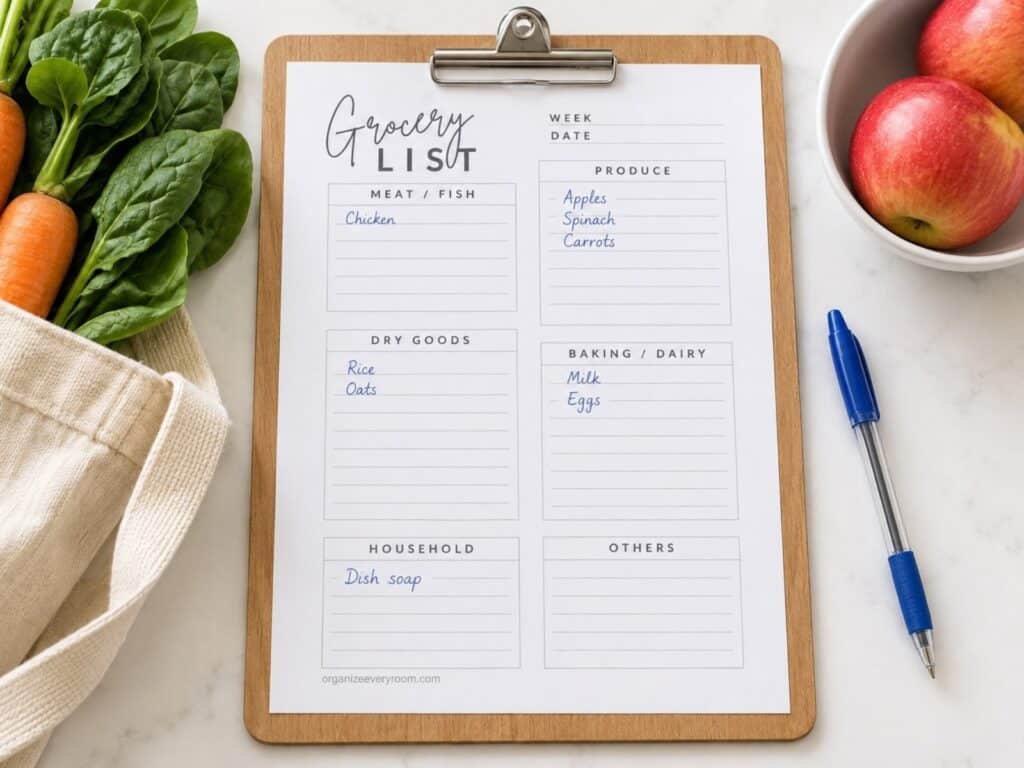
Add items when you notice they are running low.
Before shopping, check your refrigerator, freezer, and pantry so you are buying what you need rather than guessing.
I use OurGroceries for grocery shopping and meal planning. A paper list also works. Choose the version you can easily update and have with you at the store.
14. Meal Ideas List
Keep a short list of meals you know how to make and enjoy eating.
Include a few easy options for busy evenings. This could be soup and sandwiches, eggs and toast, or a meal made with freezer staples.
When you cannot think of what to cook, choose from this list instead of searching for a new recipe.
15. Weekly Meal Plan
Check your schedule and available food, then choose meals that fit.
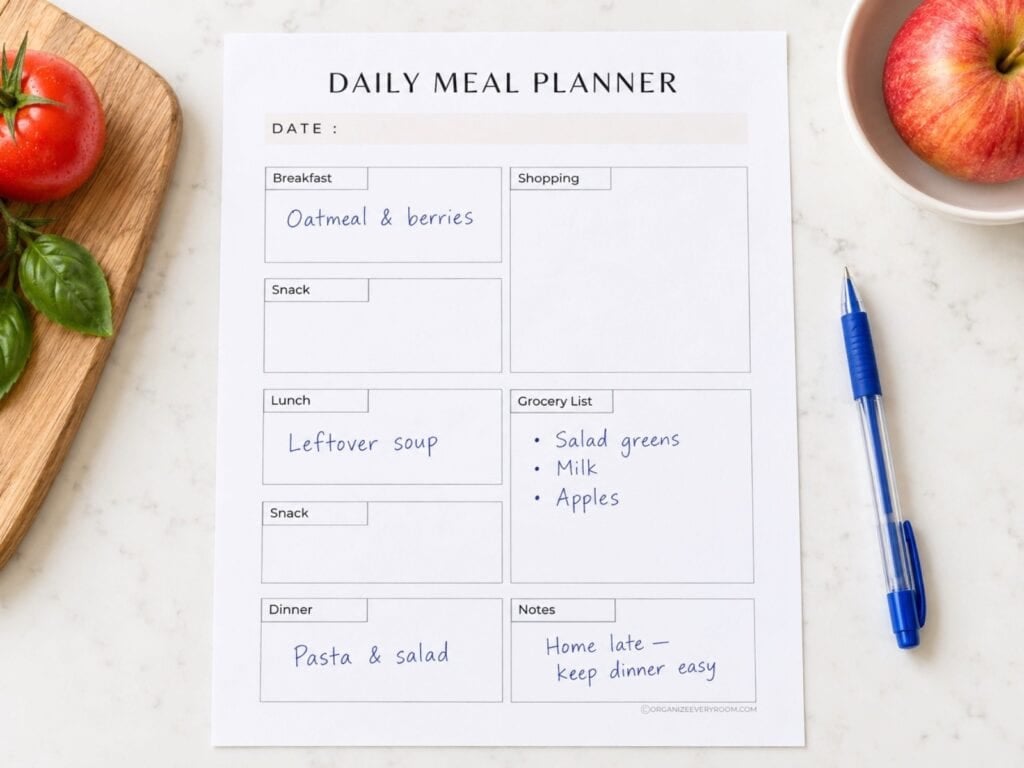
Plan an easy dinner for the night you get home late. Leave room for leftovers instead of assigning a new recipe to every evening.
My daily meal planner is useful if you prefer to plan one day at a time.
16. Freezer and Pantry Use-first List
Keep a small list of food you want to use soon: the open bag of rice, frozen soup, or vegetables left from another recipe.
Look at it before planning meals.
You do not need a complete inventory of every can and packet. Track the things most likely to be forgotten, and cross them off when you use them.
17. Household Supplies List
Record supplies you regularly replace, such as detergent, trash bags, light bulbs, and printer ink.
Include details you might forget, like a bulb type or cartridge number.
If you buy these during your grocery trip, keep them on the grocery list. A separate list is helpful only when it makes shopping easier.
18. Orders and Returns Tracker
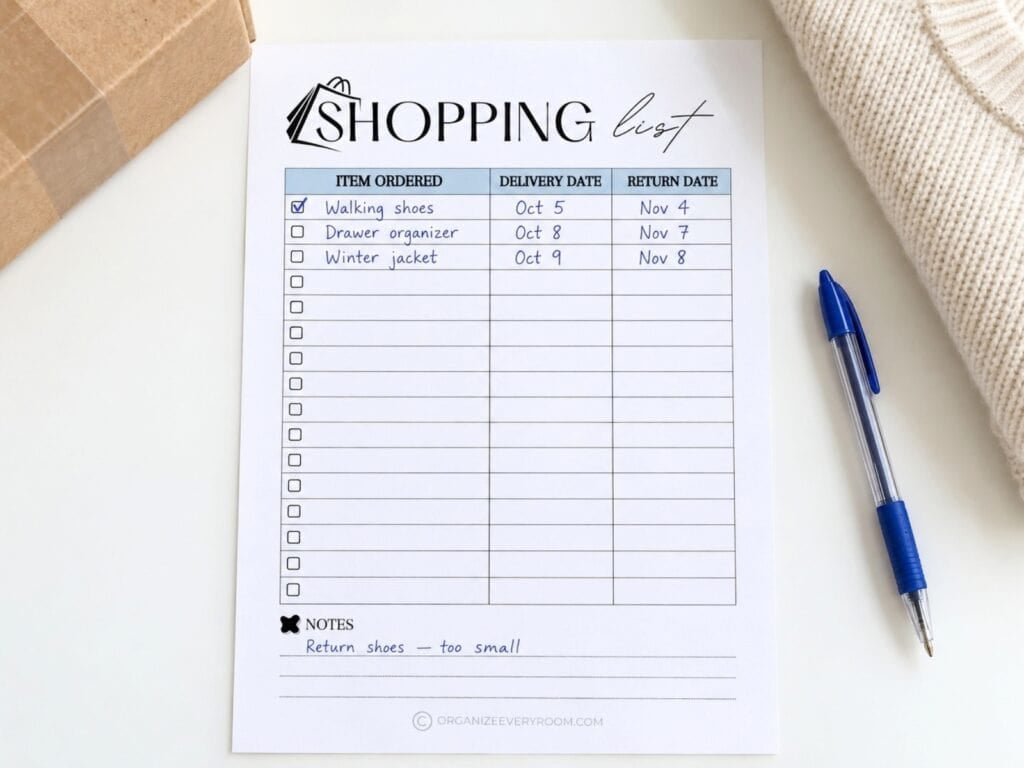
Record what you ordered, whether it arrived, and the return deadline.
This is particularly useful when several purchases are in progress at once. Once you have received and decided to keep an item, remove it from the active list.
My printable shopping tracker includes spaces for orders, delivery dates, and return dates.
Lists for Household Information and Important Dates
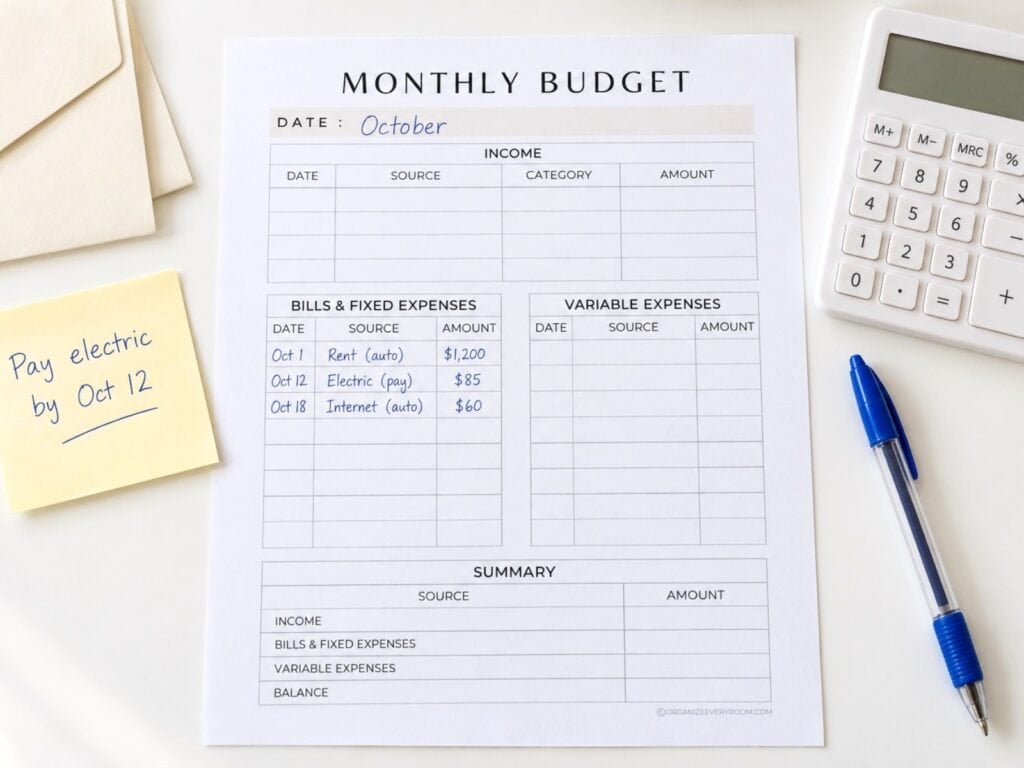
19. Bills and Due Dates List
Keep bill names and due dates together so you can see what needs checking.
Note which bills are automatic and which require action. Add reminders for anything you need to handle manually.
My monthly budget printable provides space to record income and expenses if you want those details alongside your household planning.
20. Subscriptions and Renewals List
List recurring subscriptions, renewal dates, and where to manage them.
Include services you pay for less frequently, since an annual renewal can be easier to forget than a monthly bill.
Review the list when your needs change. A subscription you once used regularly may no longer be worth keeping.
21. Important Dates List
Keep birthdays, anniversaries, and other recurring dates in one reference list.
Then put the dates that need action on your calendar, with enough notice to prepare.
If people in your household use different calendars, my family calendar organization tips can help you decide where shared plans belong.
22. Gift Ideas List
When someone mentions something they would enjoy, write it down.
Record gifts you have already purchased and where you put them. That is especially useful if you buy ahead of an occasion.
Before buying more, check the list. It can prevent duplicate purchases and the last-minute search for a gift you know you bought months ago.
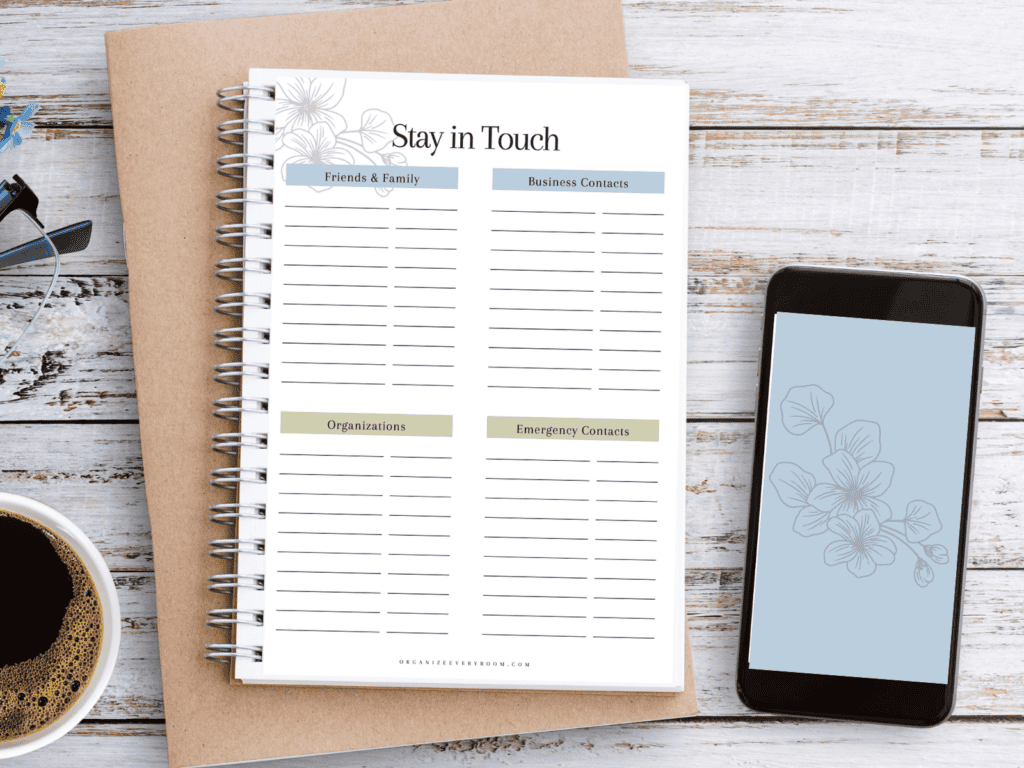
23. Useful Contacts List
Keep frequently needed contacts together: repair services, pet care, trusted neighbors, and emergency contacts.
Include a short note when helpful, such as which appliance a repair service handles.
My printable contact list has sections for different contact types. Keep private household information somewhere appropriate for the people who need access.
Optional Lists for Personal Plans and Digital Clutter
24. Digital Declutter List
Choose a specific digital area to work on: the downloads folder, unused apps, or a group of photos.
Avoid making “organize the computer” the task. Decide what you will sort and where anything you keep belongs.
My digital declutter checklist offers more ideas. Check that important files are saved where you need them before removing copies.
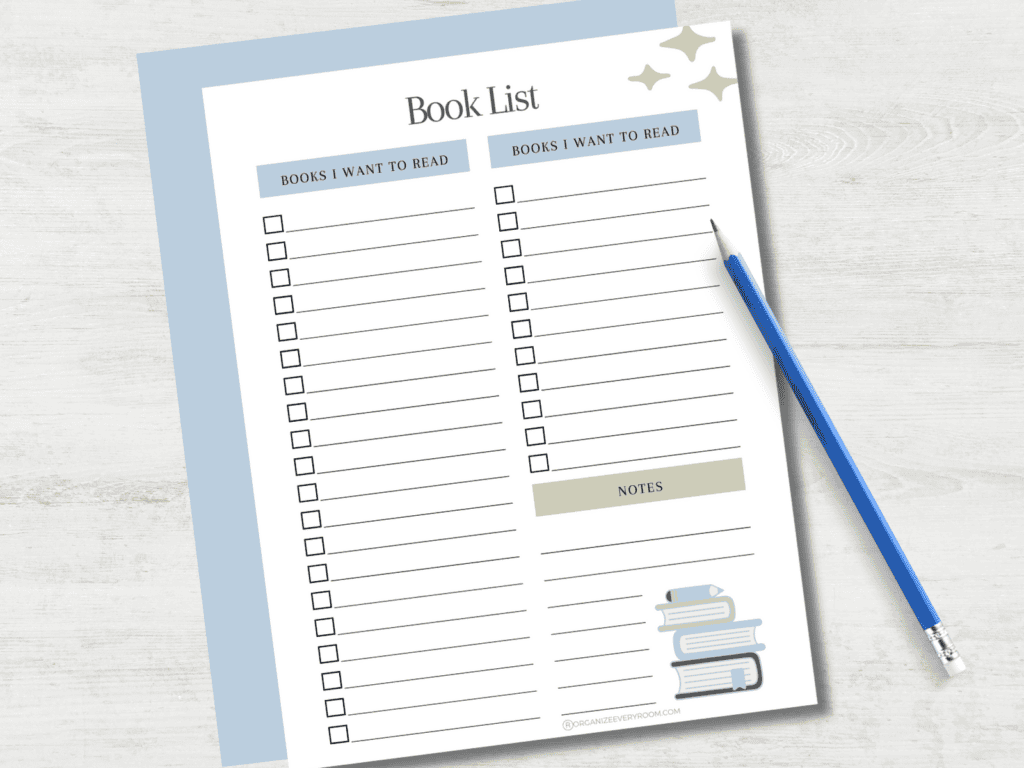
25. Reading and Learning List
Keep recommendations in one place so you can find them when you want something to read or learn.
You do not owe every saved book, article, or podcast your attention. Remove entries that no longer interest you.
Use my printable book list if you enjoy keeping a paper record.
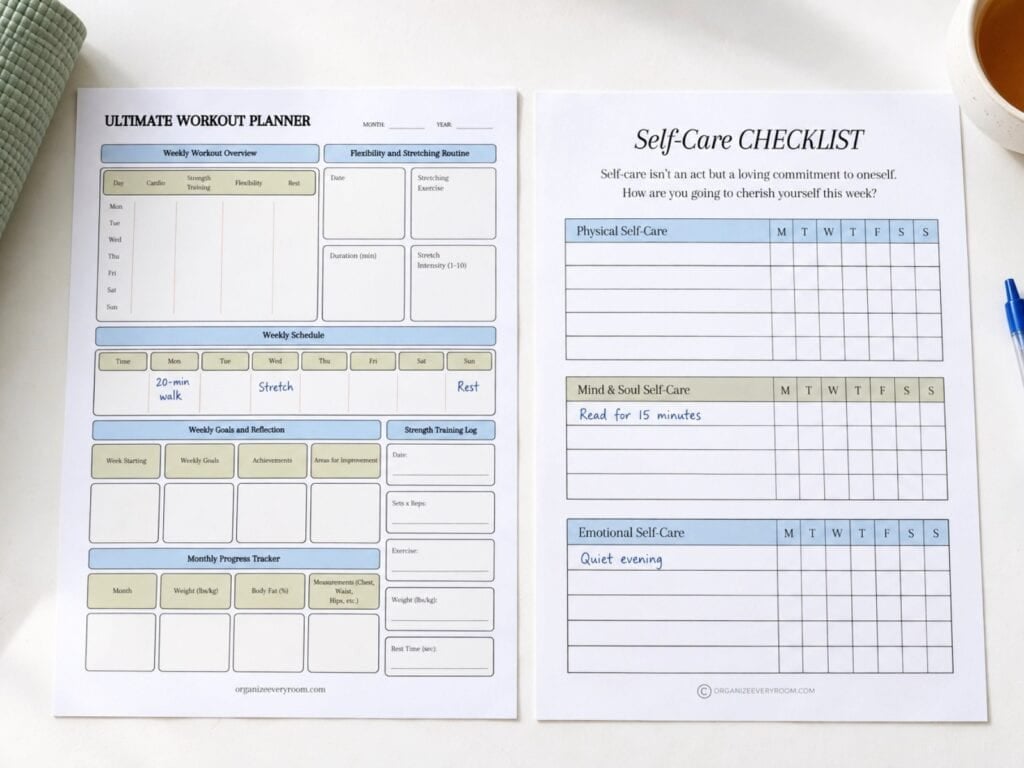
26. Movement and Rest Plan
If planning helps you make time for movement or rest, write down what fits your week.
Keep this focused on your schedule rather than collecting more goals than you can use.
My weekly workout planner and self-care checklist are optional tools. Use only the sections that are helpful to you.
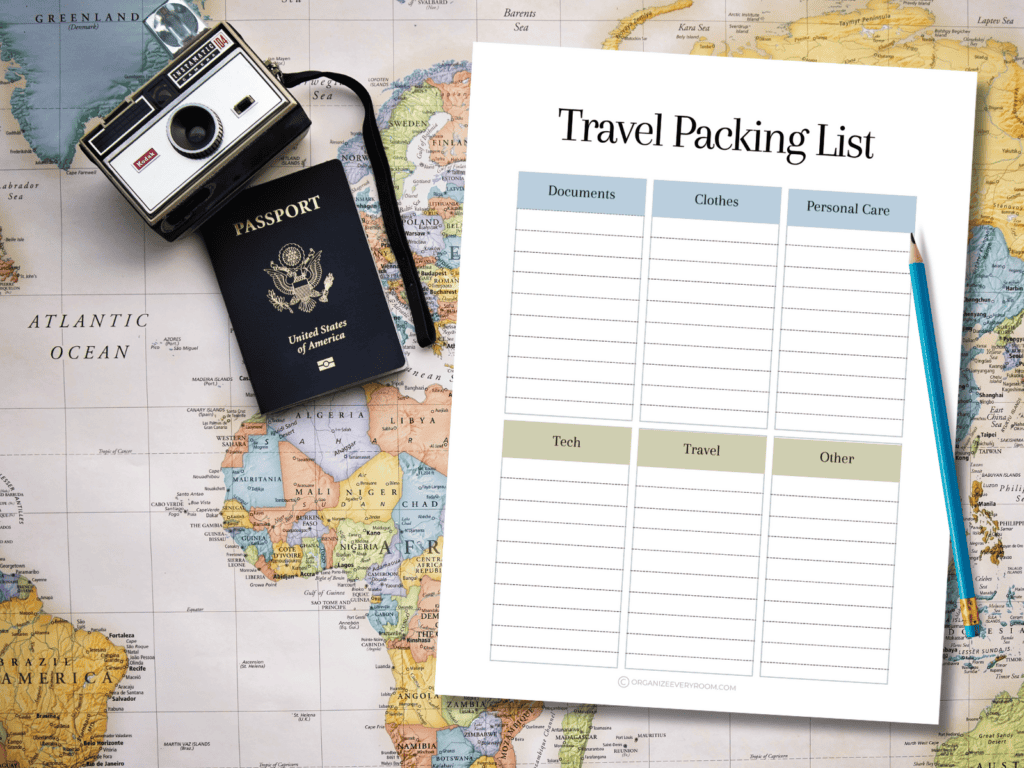
27. Travel Packing List
Keep a reusable packing list and adjust it for each trip.
Include things that are easy to forget, such as chargers, documents, and items needed just before leaving.
After a trip, remove things you packed but did not need and add anything you missed. My free travel packing list gives you categories to start with.
28. Goals and Someday Ideas List
Give future ideas a place without putting all of them on today’s task list.
You might want to learn a skill, take a trip, or change how a room functions. Keep those ideas together until you have the time and interest to act on one.
When you choose a goal, write its next step. My goals printable offers a simple place to record it.
Should You Keep Your Lists on Paper or Your Phone?
Use the place you are most likely to check.
Paper can be convenient for a daily plan you want beside you. A phone can be easier for a grocery list you update away from home. A shared digital list can help when more than one person needs to add items.
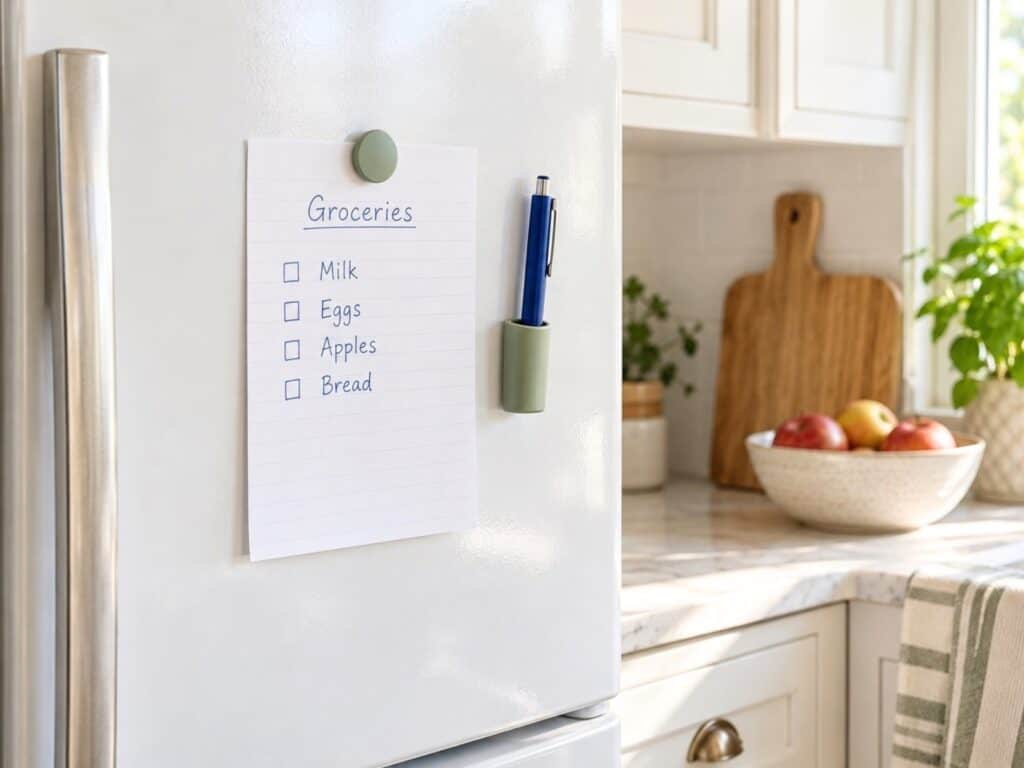
You can use both, but give each list one clear home. If the grocery list is partly on the refrigerator, partly in your phone, and partly on a receipt, you still have to gather everything before shopping.
You do not need a new app to begin. If your current tools are not working, my guide to home organization apps can help you choose something for the specific problem you want to solve.
How to Keep Your Lists Useful
Choose a Next Action
A reminder such as “garage” does not tell you where to begin.
Write “take the empty boxes to recycling” or “sort the shelf beside the door.” You can see what completing the task looks like, and it is easier to judge whether you have time for it.
Keep Dates on Your Calendar
A list holds the task. A calendar helps you remember when it needs attention.
If a return is due Friday, add a reminder before Friday. If you are waiting for an estimate, choose a follow-up date.
Review Active Lists Briefly
Before planning your day or week, check what is finished, what still matters, and what can wait.
Cross off completed tasks. Remove things you have decided not to do. Move future ideas out of your active work.
Reference lists, such as storage locations or contacts, need updating when the information changes. They do not need a daily review.
Make the System Smaller When Life Gets Busy
If keeping up with your lists becomes another chore, simplify.
Use your running task list, a short daily plan, and your calendar. Combine overlapping lists and set aside optional trackers.
You can return to them later if they become useful again.
Start With the List That Solves Today’s Problem
If you keep forgetting groceries, start there. If half-finished tasks are taking up your attention, make a running task list. If cleaning feels hard to plan, choose a reusable checklist.
You do not have to organize every part of your life before one small system can help.
Choose a list, give it an easy-to-find home, and use it for a week. Keep what helps and adjust what does not.
You can find more free organization printables to support the systems you choose.
And if clutter is the problem you want to tackle first, my free 14-Day Declutter Challenge gives you one manageable task each day.