How to Organize With Baskets and Bins in Every Room

A basket can make a cluttered shelf look better, but it only makes life easier if you can find what you need and put it back without rearranging everything.
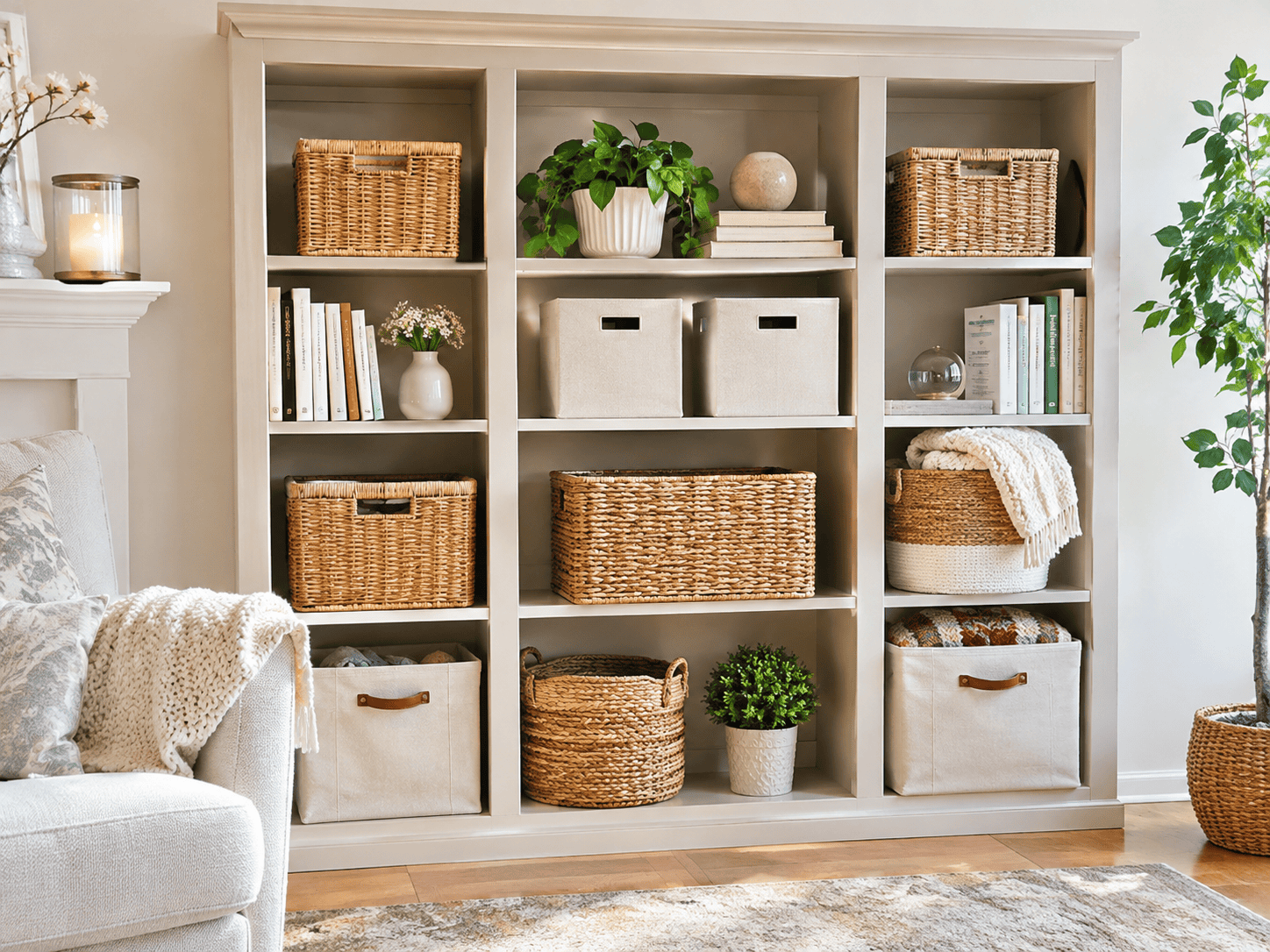
To organize with baskets and bins, start with one category of belongings, remove what you no longer need, and choose a container that fits both the items and the space. Keep everyday things easy to reach, and save lids and higher shelves for things you use less often.
Here’s how to choose useful containers, with ideas for each room and examples from my own guest room and bathroom.
This post contains affiliate links. As an Amazon Associate, I earn from qualifying purchases. You can read my disclosure here.
Before You Buy Baskets or Bins
Sort One Category First
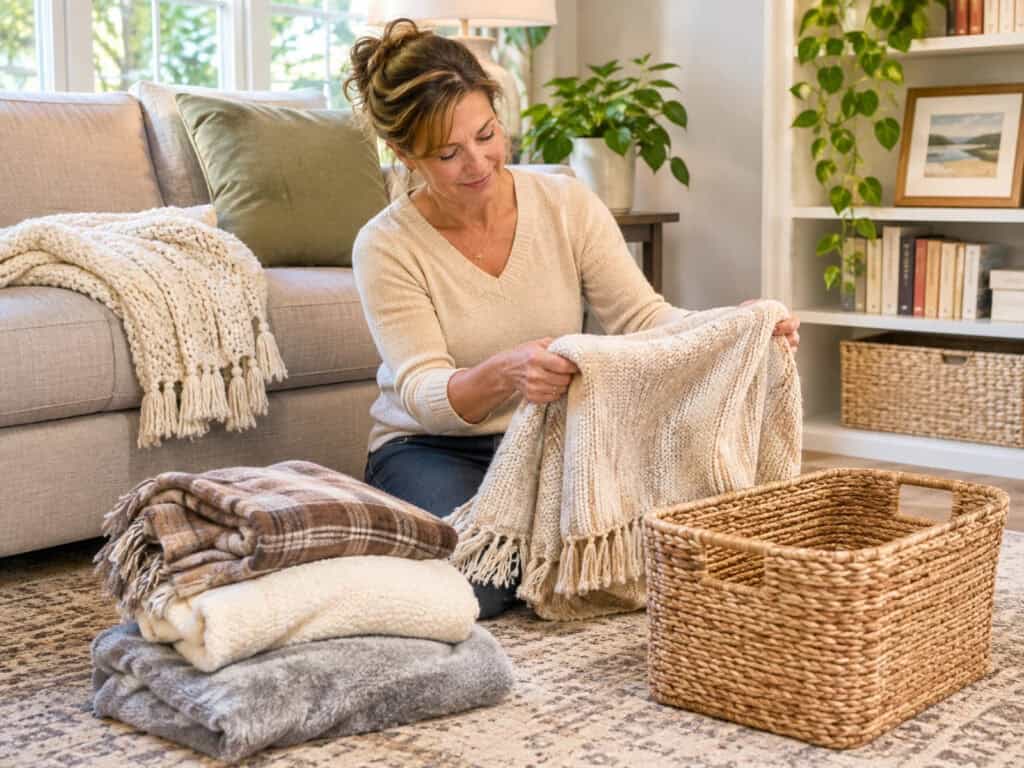
Start with something specific: the snacks on one pantry shelf, the blankets beside the couch, or the toiletries under one sink. Gather those items and decide what belongs there before choosing storage.
Throw away empty packaging, move things that belong elsewhere, and set aside usable items you no longer want. If deciding what to keep is the hard part, use my room-by-room decluttering checklist before shopping for containers.
Then look around your home. An empty basket, a clean shoebox, or a container from another room may be enough. Try it for a few days to see whether the location and category make sense.
Measure the Space and the Opening
Write down the available width, depth, and height. Check the narrowest point the bin must pass through, including cabinet hinges, door frames, and the space under your bed.
- Allow room to grip the handles and pull the container out.
- Leave enough space above an open basket to reach inside, or plan to remove it from the shelf.
- Check a container’s outside dimensions for fit and its inside dimensions for what it can hold.
- For drawer trays, measure the inside of the drawer and check that it still closes over the tallest item.
A bin that technically fits but has to be tilted, squeezed, or emptied to come out will be frustrating to use. If you’re buying several, test one before ordering the rest.
Choose the Container for How You’ll Use It
The most useful choice depends on what you’re storing, how often you reach for it, and where the container will sit.
- Open baskets: Useful for blankets, towels, or toys you reach for often. Choose an opening wide enough to put things back easily.
- Lidded bins: Useful for seasonal decorations and other occasional items. Daily supplies become harder to reach when you have to unstack several bins.
- Shallow trays: Keep small items visible in drawers. A deep bin of makeup, pens, or charging cables can quickly become another place to rummage.
- Clear plastic bins: Help you see snacks, toiletries, or craft supplies without opening every container.
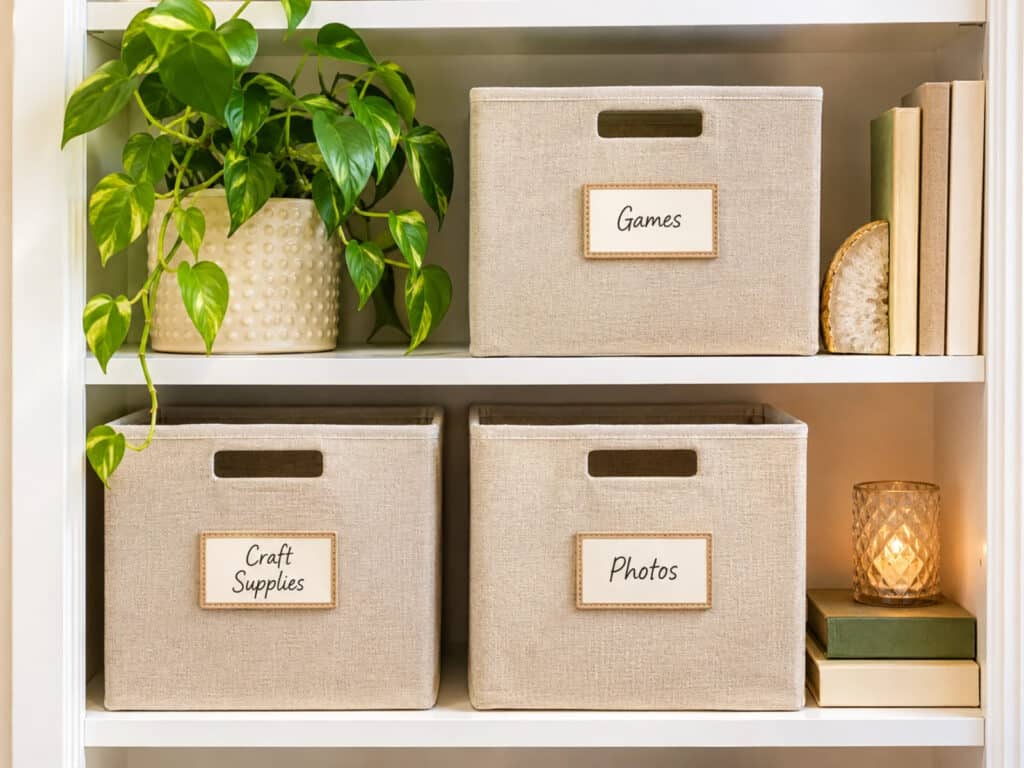
- Opaque baskets or fabric boxes: Reduce visual clutter on open shelves. Add a simple label when the contents aren’t obvious.
- Wire baskets: Keep contents visible, but check that small items won’t slip through and that the wire won’t snag what you’re storing.
Woven baskets and fabric boxes suit dry areas. For a space where spills are likely, a wipeable container is usually easier to maintain. A plastic lid does not automatically make a bin waterproof or suitable for outdoor storage.
How I Use Baskets and Bins in My Home
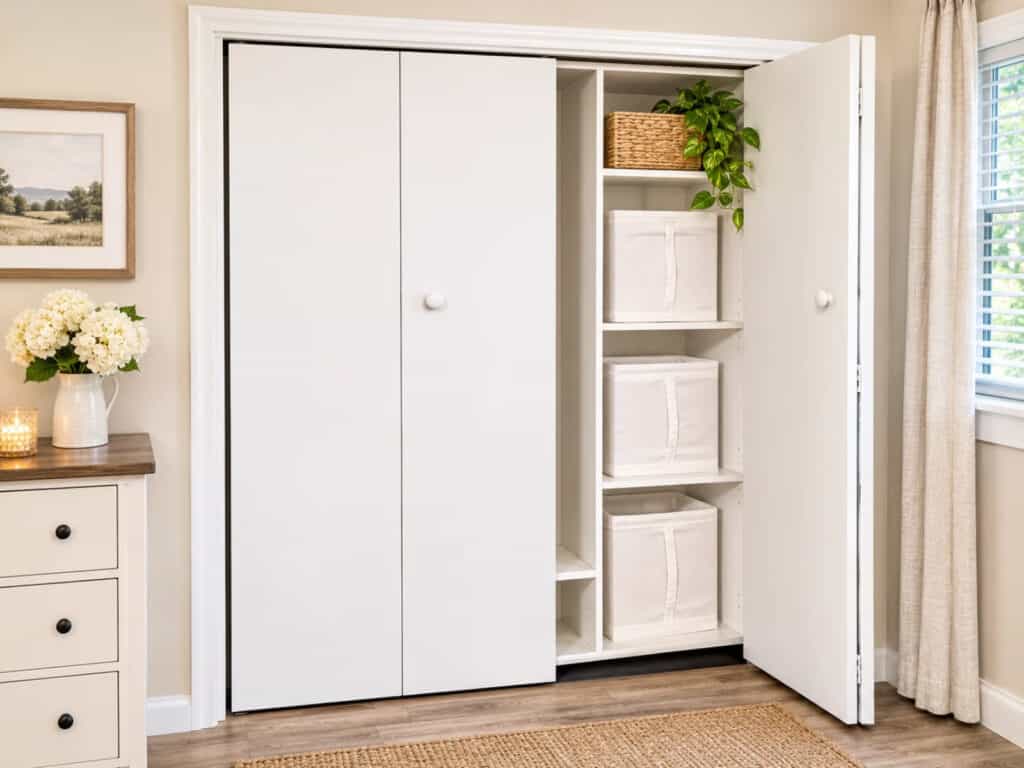
Guest-Room Bins Leave Space for Visitors
In our spare-bedroom closet, I use three matching cream-colored fabric bins. One is for folded clothes, one is for underwear and socks, and the third gives guests extra space for whatever they need.
The matching bins make the shelf look tidy, but leaving room for our guests is what makes them useful. If you store your own belongings in a guest closet, clear a section before visitors arrive so they have somewhere to unpack.
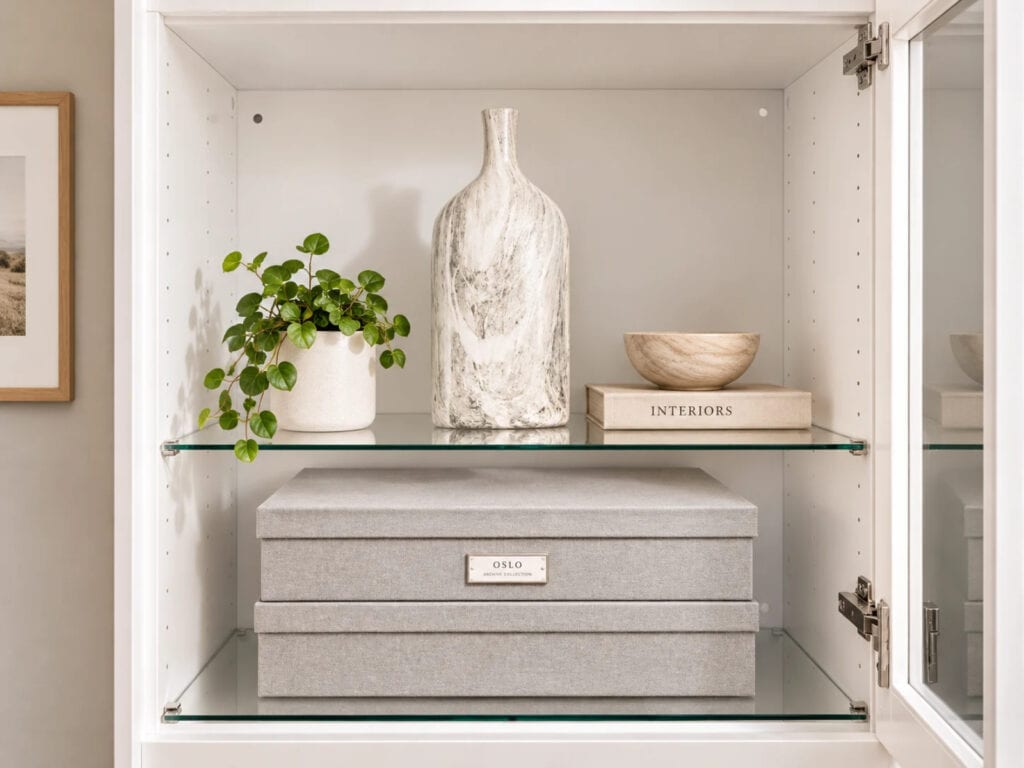
Storage Boxes Keep Keepsakes Together
Two gray boxes on our IKEA shelving hold photos and keepsakes alongside the decorative items. They give those belongings a defined home without leaving everything on display. If your pictures are scattered around the house, start by gathering and organizing your photos before deciding how much storage you need.
A decorative box can keep a shelf tidy, but it isn’t necessarily archival storage. For irreplaceable photos or documents, check that any materials touching them are appropriate for long-term preservation.

Small Bathroom Organizers Separate Everyday Items
My bathroom drawers used to hold a jumble of skincare products and makeup. Clear acrylic organizers now separate those categories and keep small items from rolling around.
For your own drawer, put the items you use most often toward the front. Leave enough room to pick them up easily, and keep unopened backups somewhere separate so they don’t crowd your daily supplies.
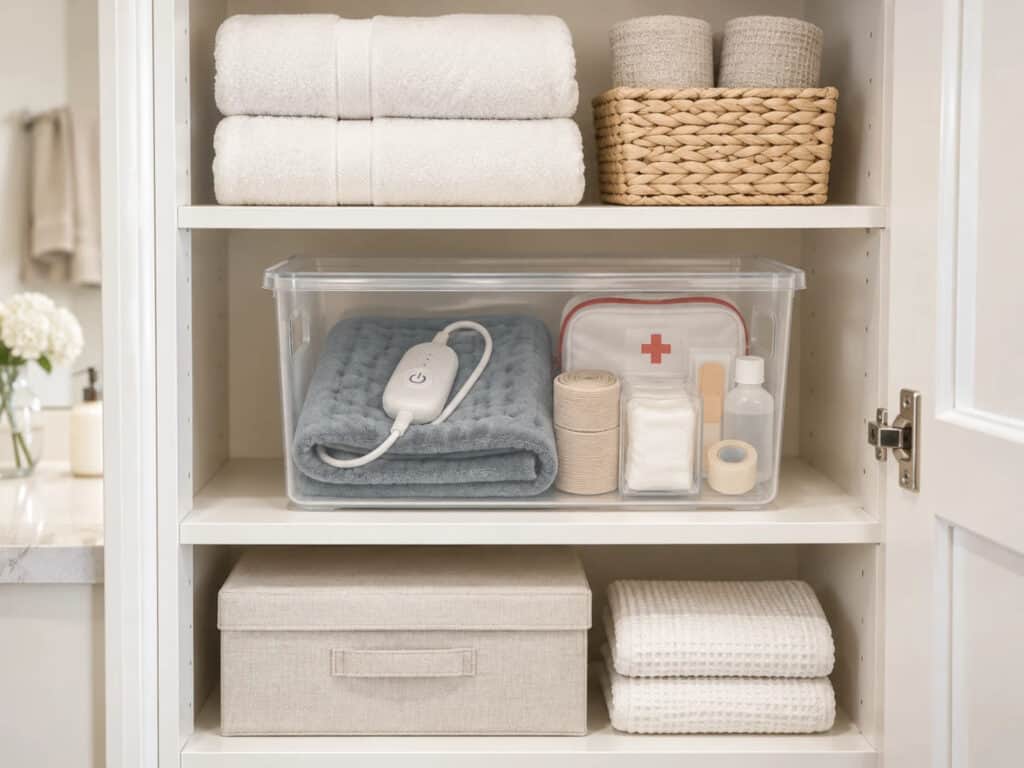
A Clear Tote Holds Bulkier Supplies
This tote in my bathroom closet holds a heating pad and first-aid supplies. Its size works for the bulkier items, and the clear sides help me see what’s inside.
Medicines need a separate storage decision: follow their labels and keep them in their original containers, away from children. MedlinePlus advises choosing a cool, dry place; bathroom heat and humidity can damage many medicines. A convenient bathroom basket isn’t necessarily a suitable medicine cabinet.
Room-by-Room Ideas for Baskets and Bins
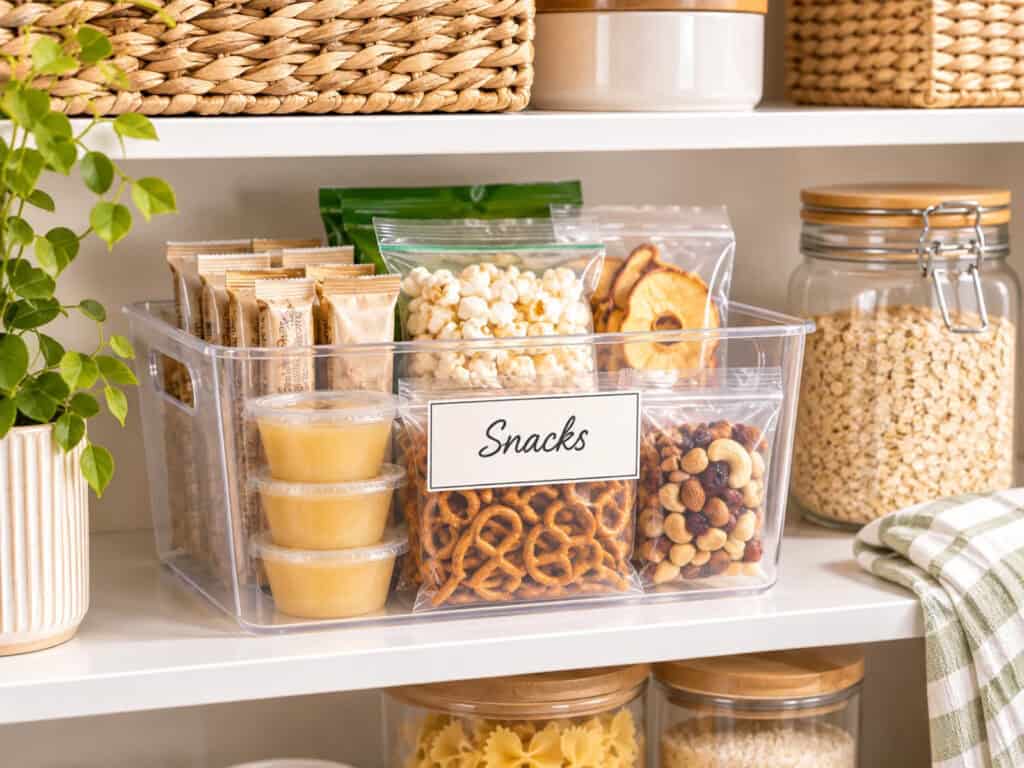
Kitchen and Pantry: Group What You Use Together
An open bin can turn a deep pantry shelf into a pull-out group of supplies. Try one for snacks, one for breakfast packets, or one for baking ingredients you tend to use together.
- Use narrow bins for small packets that disappear behind larger packages.
- Put heavier items on a shelf you can reach comfortably, and avoid filling a large bin so heavily that it’s hard to lift.
- Keep a small amount of backup stock behind or near the open package so you can see what needs using first.
- Choose containers intended for food contact if food will touch the container directly. A general storage basket can hold packaged food.
Before buying matching sets, work out your categories and shelf layout. My pantry organization guide walks through that process in more detail.
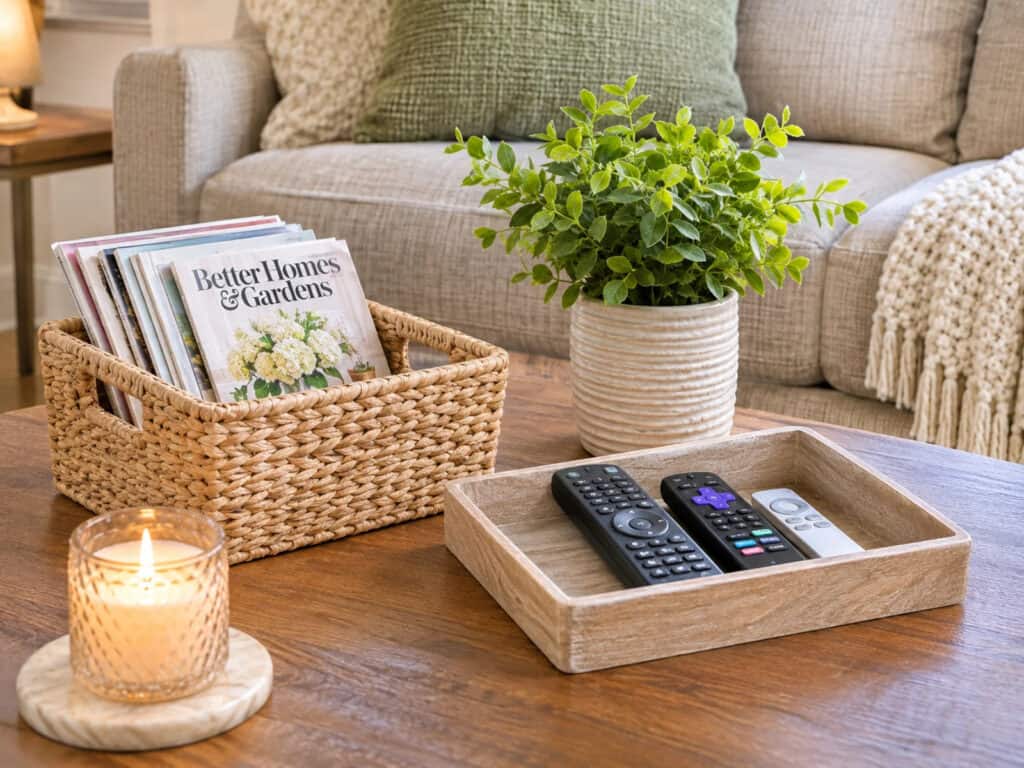
Living Room: Give Everyday Clutter a Small Home
Place a blanket basket beside the seat where you actually use the blankets. Keep remotes in a shallow tray near the couch and current magazines in a small basket with a clear limit.
If toys regularly end up in the living room, one accessible basket can make putting them away easier. Avoid turning it into a container for everything that belongs upstairs; return those items to their rooms when you reset the space.
Use a basket that fits the amount you want to keep in the room. When the lid won’t close or blankets spill onto the floor, check the contents before buying a bigger one.
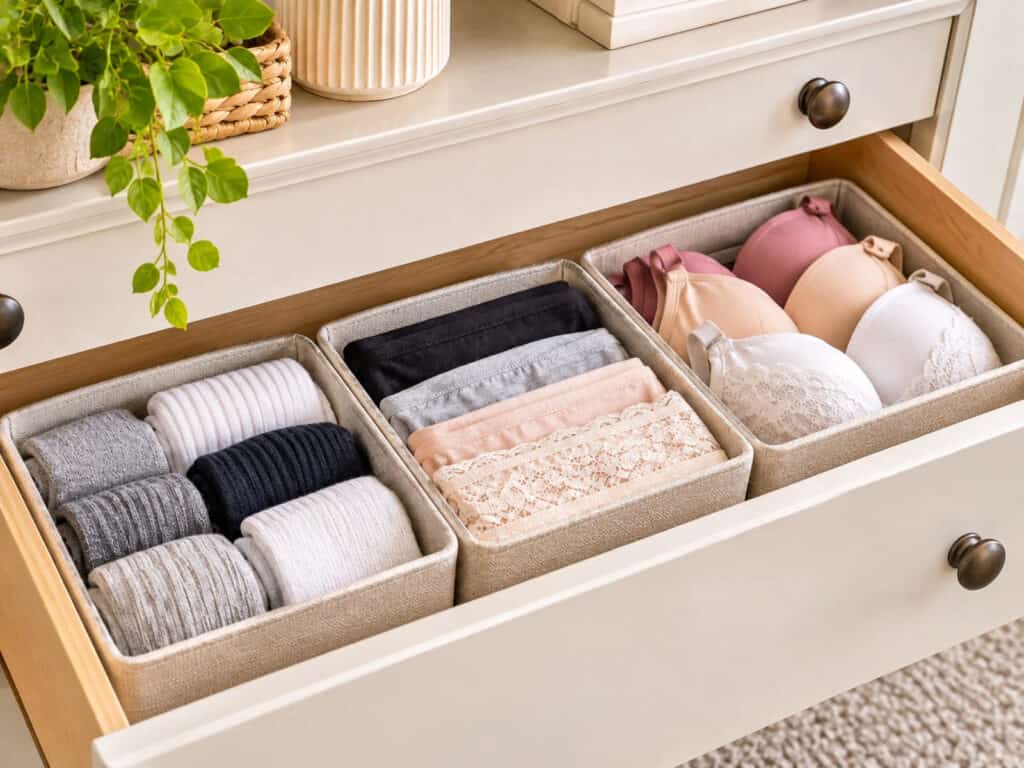
Bedroom and Closet: Make Clothing Easy to Reach
Fabric bins can separate socks, workout clothes, scarves, or folded seasonal clothing. Put everyday categories where you can reach them without a step stool or moving another container.
For under-bed storage, check the height of the filled container and the route it must take around bed legs. Soft bags can work for bedding; a rigid container may be easier to slide out frequently. Only put away clean, fully dry items.
Before packing away clothing for another season, take a few minutes to decide what still fits your life. My seasonal decluttering guide can help you avoid storing things you already know you won’t use.
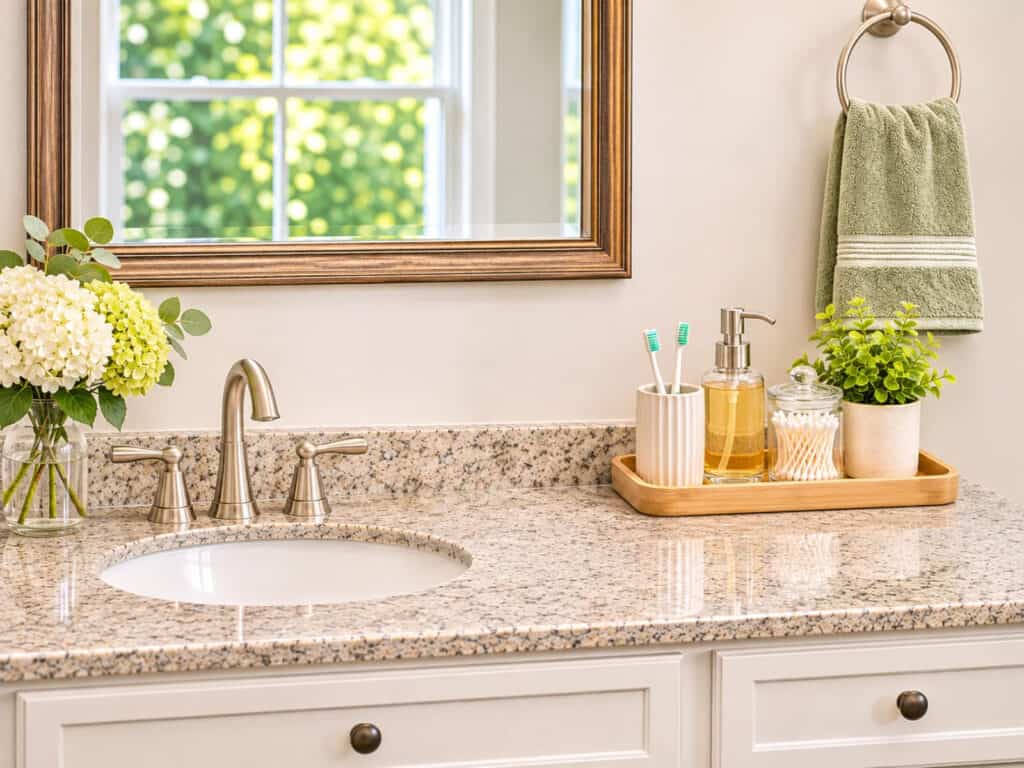
Bathroom: Separate Daily Supplies From Backups
Use a small tray for daily toiletries and a separate bin for spare soap, toothpaste, or unopened products. You should be able to see the backups without digging through the things you use every morning.
Under the sink, measure around the plumbing before buying a pull-out organizer. Keep cleaning products in their original containers and secure them appropriately if children can access the area. Wipe up leaks and let the shelf and container dry before putting things back.
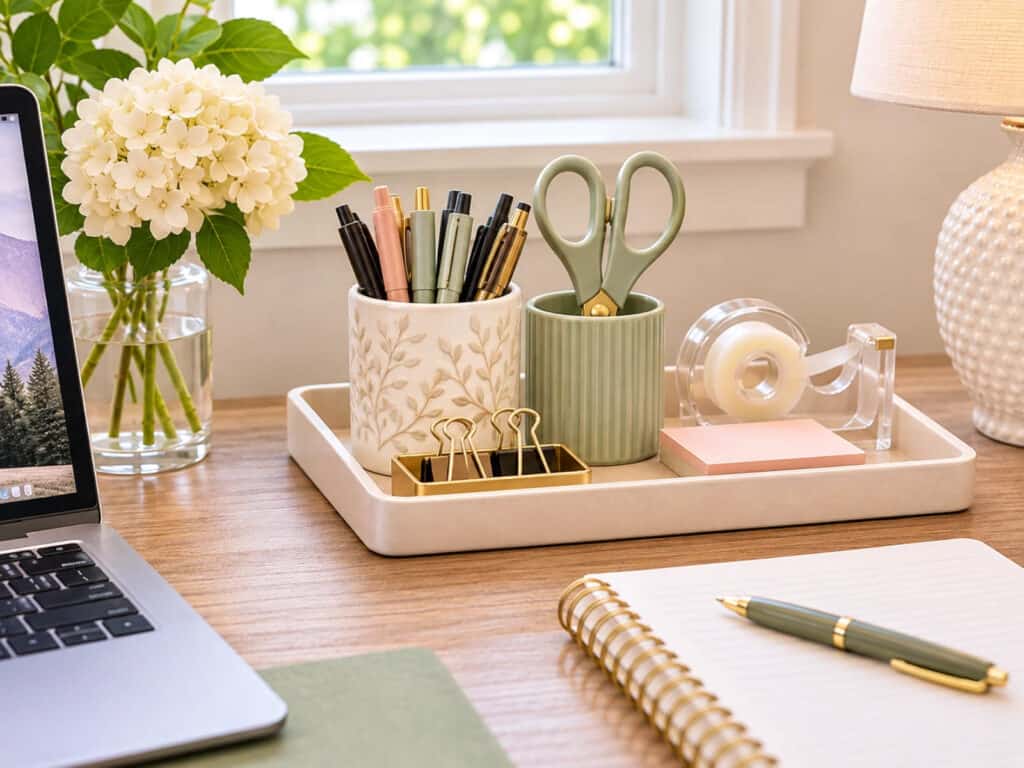
Home Office: Keep Active Work Out of the Supply Bin
A shallow tray can hold pens and scissors; a separate bin can hold extra notebooks, envelopes, and unopened supplies. Store cables by purpose so your current charger doesn’t disappear into a box of old adapters.
Give paperwork that needs action its own visible place. Mixing bills, receipts, and spare office supplies in a deep basket makes the next task harder to find. For a fuller setup, see my home office organization ideas.
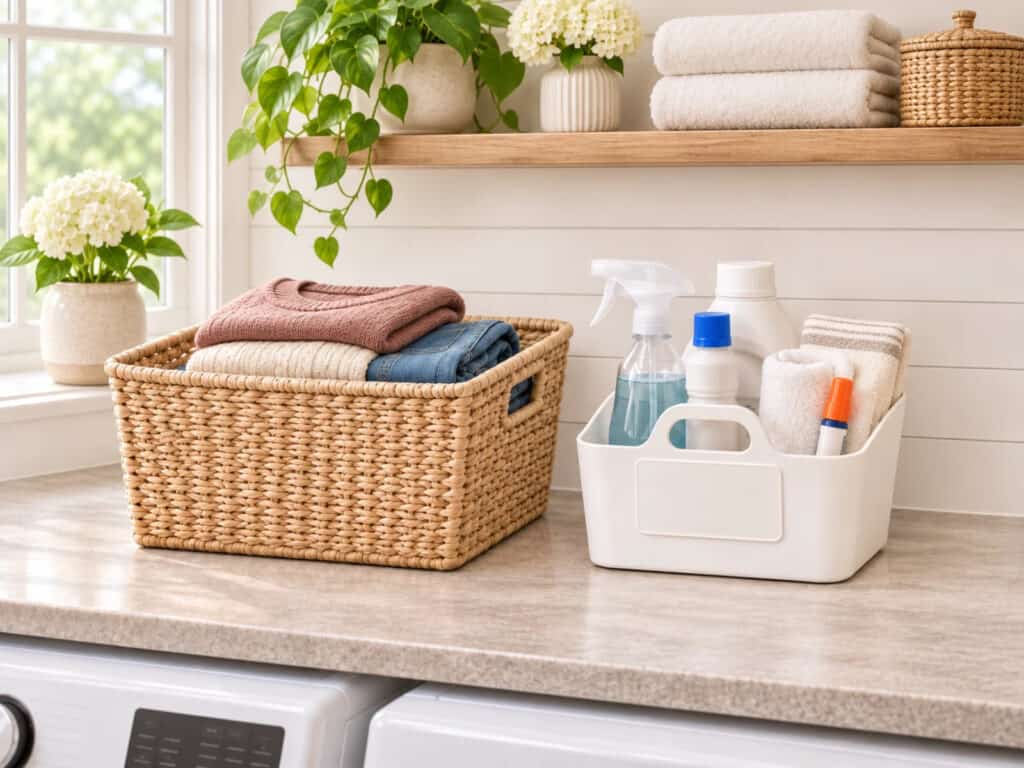
Laundry Room: Store Supplies Near the Task
Group stain-treatment products in one small caddy and keep a basket for clothes waiting to go back to their rooms. If a sock needs a match, give it a small designated container and check it when you fold the next load.
Keep liquid laundry packets in their original, closed packaging, locked up and out of children’s sight and reach. Don’t pour them into a decorative jar or an open storage basket.
If shelves and floor space are limited, start with one workable spot for supplies and one for finished laundry. These small laundry room organization ideas can help you plan the space.
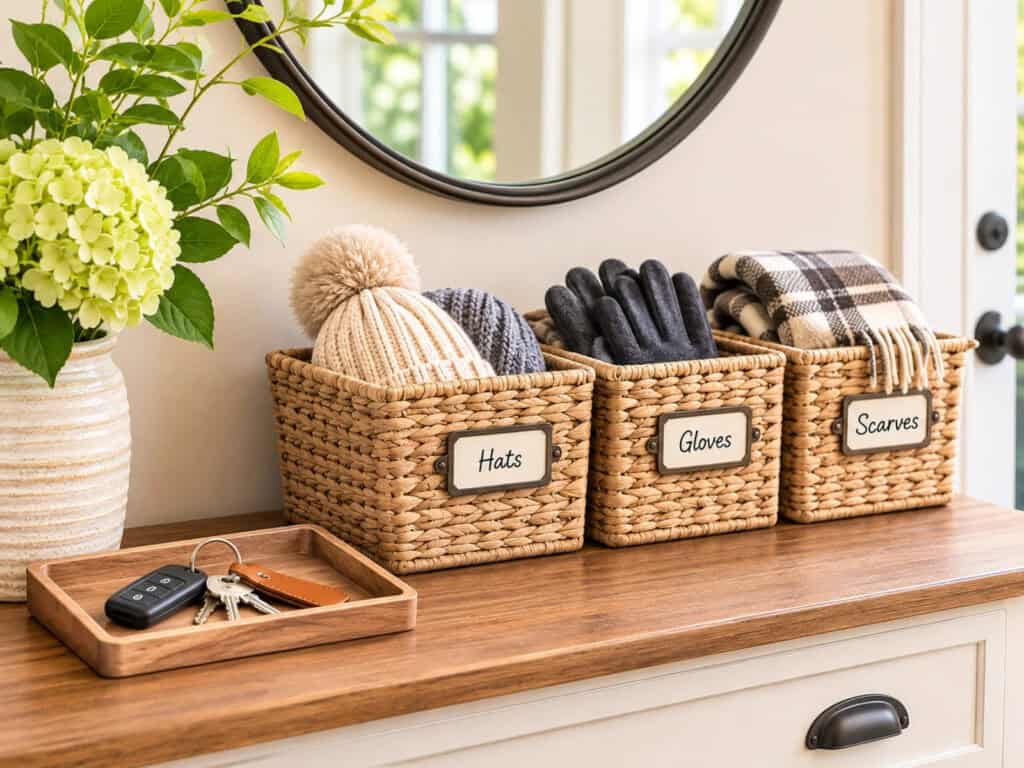
Entryway: Keep the Categories Small
A small tray can hold keys, while a basket can hold hats or gloves. For several people sharing the space, individual labeled baskets may be easier to maintain than one deep bin.
Keep walkways clear and choose storage that lets people put things away when they come through the door. A lid or a high shelf may be enough of an obstacle that belongings end up beside the basket instead.
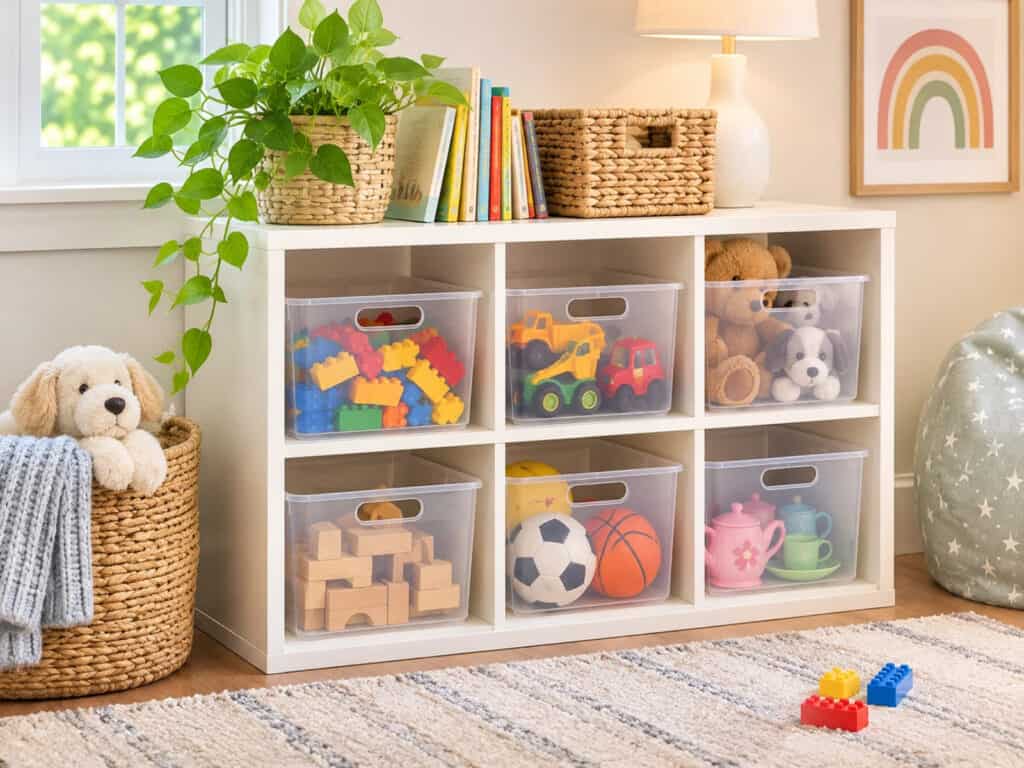
Kids’ Spaces: Make Cleanup Easy to Understand
Use lightweight, open bins at a reachable height for everyday toys. Broad categories such as blocks, vehicles, or art supplies are often easier to follow than a complicated sorting system.
Add picture labels for children who don’t read yet. Keep the amount in each bin manageable and put occasional toys elsewhere if there isn’t enough room to see or use what’s available.
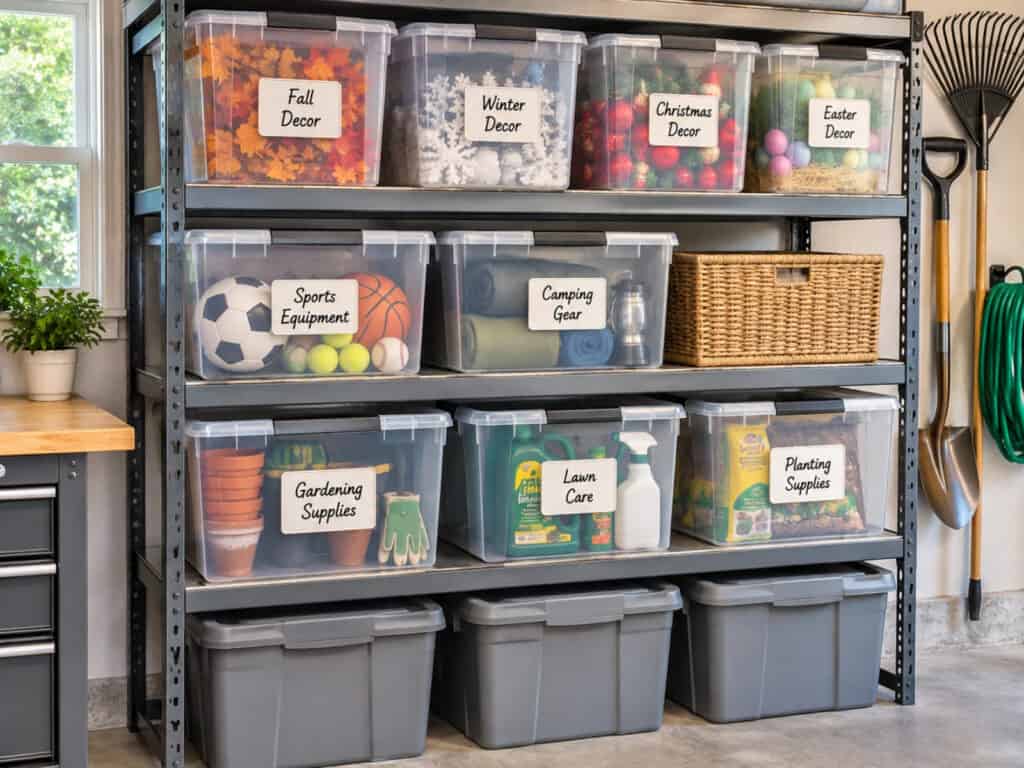
Garage and Seasonal Storage: Plan for Weight and Access
Group decorations, sports equipment, or gardening supplies by activity. Label the side you’ll see on the shelf, and put heavier containers lower down.
Choose containers rated for their intended conditions, and follow the manufacturer’s stacking and weight guidance. Keep delicate photos, important papers, and temperature-sensitive belongings in a more suitable indoor location. A storage bin won’t solve dampness or extreme temperatures.
Baskets and Bins to Consider After You Measure
These options serve different purposes. Use the category and fit notes to narrow your choice, then check the current listing’s dimensions and materials. You don’t need a matching set for every room.
Clear Bins for Pantry Categories

mDesign handled bins: An option for grouping packaged snacks or other pantry items you want to pull out together. Check the loaded weight as well as the shelf fit.
Fabric Organizers for Clothing

IKEA SKUBB organizers: Consider these for separating smaller clothing categories in drawers or on suitable shelves. Check the sizes included in the set against your space.
Small Trays for Drawers
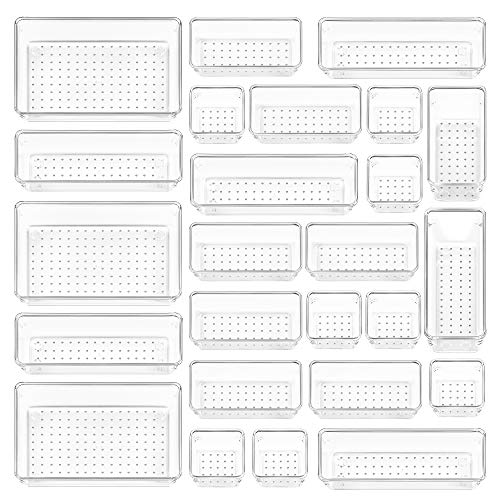
Vtopmart clear drawer organizers: Separate trays let you arrange small categories around the drawer’s dimensions. Plan which sizes you actually need before buying a large set.
A Compartment Organizer for the Vanity

STORi four-compartment organizer: This is a divided vanity organizer for items such as makeup and brushes. Check its height if you plan to use it inside a drawer.
Pull-Out Baskets for a Cabinet

madesmart two-tier organizer: Consider this when a second level would make a cabinet easier to use. Measure around pipes and hinges, and allow room to slide the baskets out.
Woven Baskets for Open Shelves
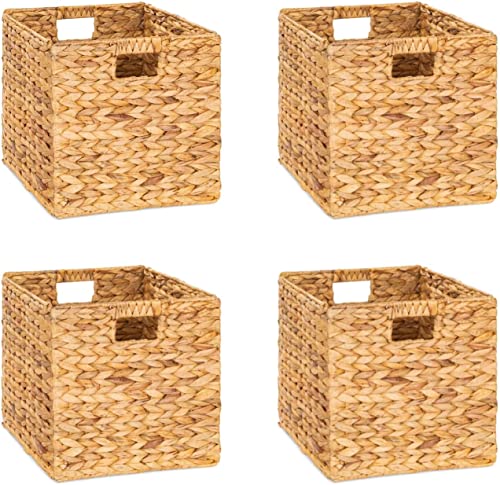
M4DECOR water hyacinth baskets: These are an option for cube shelves or open storage in a dry room. Check the shelf opening against the basket’s outside dimensions, including the rim.
A Rope Basket for Blankets

OIAHOMY cotton rope basket: A large open basket can hold blankets beside a couch. Check its footprint first so it doesn’t crowd the walkway.
Small Woven-Look Plastic Baskets

White woven plastic storage baskets: These can separate small categories on a shelf. They are plastic baskets, so check the actual measurements and material rather than choosing only by their woven appearance.
Drawer Units for Frequently Used Supplies

IRIS stacking drawers: These are sliding drawer units, rather than lift-off-lid totes. They may suit craft or office supplies when you want access without lifting a container off the top. Follow the product’s stacking instructions.
Lidded Totes for Occasional Storage

Sterilite lidded bins: Consider these for grouped seasonal belongings in a suitable storage area. Don’t assume a standard lidded bin is weatherproof, and keep the loaded weight manageable.
Soft Bags for Under the Bed

Budding Joy under-bed storage bags: An option for clean, dry bedding or seasonal clothing. Measure the clearance under your bed and avoid overfilling the bags.
Keep the System Easy to Maintain
Label a container when it helps someone know where to find or return things. “Batteries,” “winter gloves,” or “extra toothpaste” is more useful than “miscellaneous.” Put the label on the side you can see.
A piece of paper and tape can be enough while you test the setup. If you want coordinated labels later, you can make custom labels in Canva.
- When you put things away: Return them to their category instead of dropping them into the nearest empty basket.
- When a bin gets full: Remove misplaced items and review what’s inside before adding another container.
- When something is hard to reach: Try a lower shelf, a shallower bin, or a smaller category.
- When you clean: Empty the container, follow its care instructions, and let it dry fully before refilling it.
You don’t need to organize the whole house at once. Choose one spot that regularly frustrates you, sort what belongs there, and test a container you already own. A week of using it will tell you more than buying a shelf full of matching baskets.