45 Creative Storage Solutions for Small Spaces That Actually Work

Living in a small space can make everyday clutter feel impossible to control.
Shoes collect by the door. Kitchen counters disappear under appliances and mail. Closets become so full that putting something away feels like a project.
The good news is that you may have more storage space than you realize.
Walls, doors, corners, cabinet interiors, furniture, and narrow gaps can all provide useful storage without making your home feel crowded. The key is choosing solutions that fit your belongings, routines, budget, and available space.
These creative storage solutions will help you make better use of a small home, apartment, or room—without filling it with organizing products you do not need.
Declutter Before You Add More Storage
Before buying baskets, bins, shelves, or furniture, take a few minutes to decide what actually deserves space in your home.
Storage products can organize the things you use, but they cannot solve the problem of owning too much.
Start with the area causing the most frustration. Remove anything that is broken, expired, duplicated, unused, or no longer needed. Then group similar items together so you can see how much storage the remaining items require.
Ask yourself:
- Do I use this often enough to keep it nearby?
- Could this item be stored somewhere more appropriate?
- Do I already own another item that serves the same purpose?
- Would I notice if this disappeared?
- Is this worth the space it takes up?
Once you know what you are keeping, you can choose storage that fits your belongings instead of trying to make your belongings fit random containers.
If you need help decluttering try our free 14-Day Declutter Challenge.
How to Choose the Right Storage Solution
Before adding a new storage product or system, consider six things:
Frequency of Use
Keep frequently used items easy to reach. Store seasonal, sentimental, and rarely used belongings higher up, farther back, or under furniture.
Available Space
Measure the height, width, and depth of the area. Remember to account for hinges, baseboards, outlets, door swings, drawer pulls, and nearby furniture.
Item Size
Measure the items you plan to store—not just the empty space. A narrow cart is not helpful if your detergent bottles do not fit on it.
Open or Hidden Storage
Open storage makes items easy to see and access, but it can look cluttered when overfilled. Closed storage creates a calmer appearance but may require labels so nothing gets forgotten.
Installation Limits
Renters may need adhesive, tension-mounted, freestanding, or over-the-door options. Homeowners may prefer built-ins or wall-mounted systems.
Budget
Start with the least expensive solution that solves the actual problem. Repurposing something you already own is often better than purchasing another organizer.
Vertical Storage Ideas
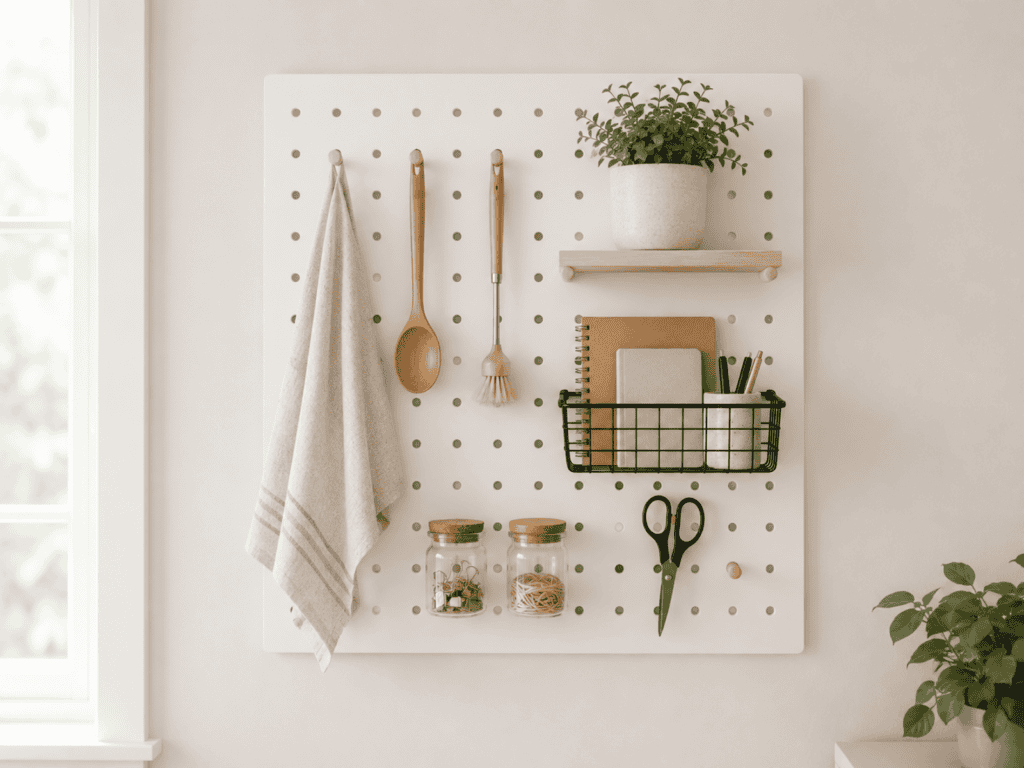
Look up – your walls are valuable real estate. Vertical storage is your secret weapon for maximizing every square inch without eating into precious floor space in small spaces.
1. Install Adjustable Wall Shelving
Adjustable track shelving can change as your storage needs change. Shelves can be moved higher or lower, and many systems allow you to add baskets, hooks, or cabinets.
Use adjustable shelving for books, pantry items, office supplies, craft materials, or folded clothing. This is especially useful in spaces that serve more than one purpose.
2. Add Shelves Above Doors and Windows
The wall space above a doorway or window is often ignored.
Install a shelf there for books, baskets, extra towels, seasonal decorations, or attractive storage boxes. Since the shelf will be difficult to reach, use it for items you do not need every day.
Choose containers with lids to reduce dust.
3. Use Floating Shelves in Awkward Corners
A small corner may not have enough floor space for furniture, but it may be perfect for two or three floating shelves. Use corner shelves for toiletries, cookbooks, small plants, framed photos, or lightweight baskets.
Avoid filling every shelf completely. Leaving some open space will help the area feel organized rather than crowded.
4. Create a Pegboard Storage Wall
Pegboards are not limited to garages and workshops.
Use one in a kitchen for utensils, in a craft room for supplies, in an entryway for keys and bags, or in a home office for tools and paperwork.
Because the hooks, baskets, and shelves can be moved, the system can evolve as your needs change.
5. Mount Baskets on the Wall
Wall-mounted baskets provide storage without requiring a full bookcase or cabinet.
Use them for produce in the kitchen, towels in the bathroom, toys in a child’s room, mail in the entryway, or workout equipment near a home exercise area.
Make sure the mounting hardware can support the weight of the contents.
6. Use the Side of a Cabinet or Bookcase
The exposed side of a cabinet, bookcase, or kitchen island can become a useful storage zone.
Add hooks, narrow shelves, a magnetic strip, a file holder, or a small basket. This space can hold cutting boards, oven mitts, reusable bags, headphones, charging cords, or frequently used paperwork.
7. Hang Items from the Ceiling
Ceiling-mounted storage works best for lightweight or occasional-use items.
A hanging pot rack can free up kitchen cabinets. Suspended shelves can hold plants or decorative items. Ceiling-mounted racks in a garage or utility room can store seasonal bins.
Avoid placing heavy storage over beds, sofas, or areas where people regularly sit.
Door Storage Ideas
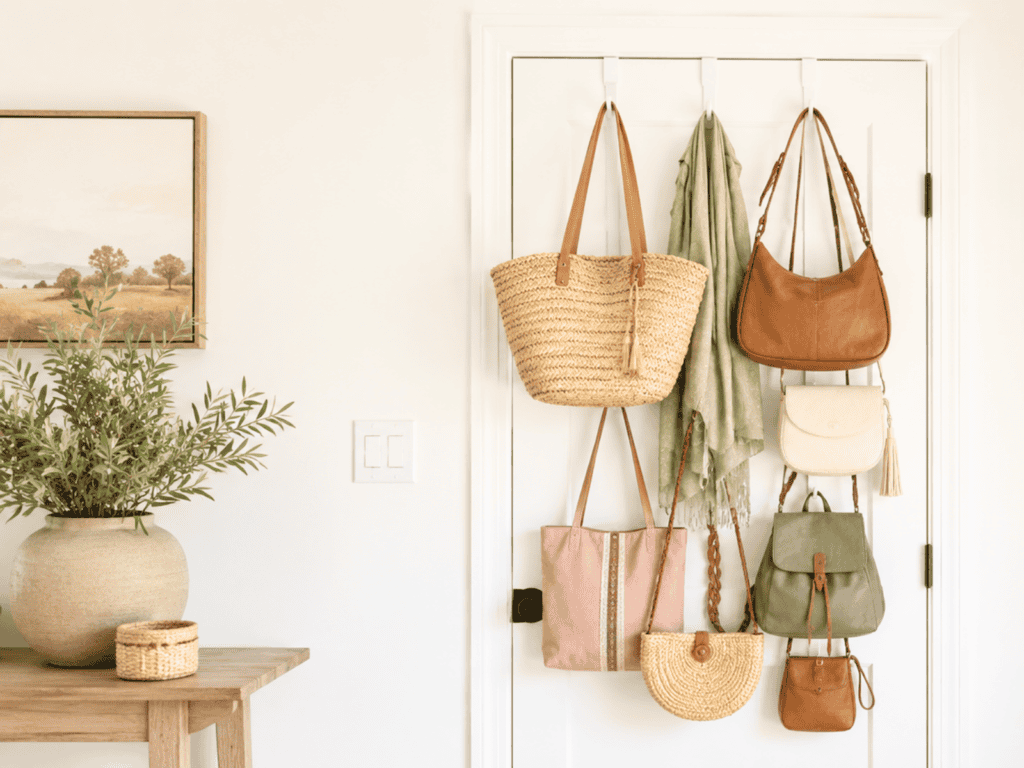
The back of a door can provide several feet of storage while using almost no floor space.
8. Repurpose an Over-the-Door Shoe Organizer
Clear-pocket shoe organizers can store much more than shoes.
Try one for:
- Cleaning supplies
- Toiletries
- Hair accessories
- Small toys
- Craft supplies
- Winter hats and gloves
- Water bottles
- Charging cords
Keep heavy items in the lowest pockets so the organizer does not pull forward.
9. Add Hooks to the Back of a Door
Use hooks for robes, towels, purses, hats, reusable shopping bags, or tomorrow’s outfit.
Choose slim hooks that allow the door to close properly. For rentals, look for over-the-door or removable adhesive options.
Avoid hanging too many heavy items on hollow doors.
10. Turn a Pantry Door Into Storage
A pantry door can hold spices, wraps, snacks, seasoning packets, or small jars.
Use a shallow rack so the shelves do not hit items inside the pantry when the door closes. Measure the available clearance before installing anything.
11. Add a Door-Mounted Wrapping Station
Store wrapping paper, gift bags, ribbon, scissors, and tape on the back of a closet door.
A combination of baskets, dowels, hooks, and file holders can keep supplies together without taking over an entire closet shelf.
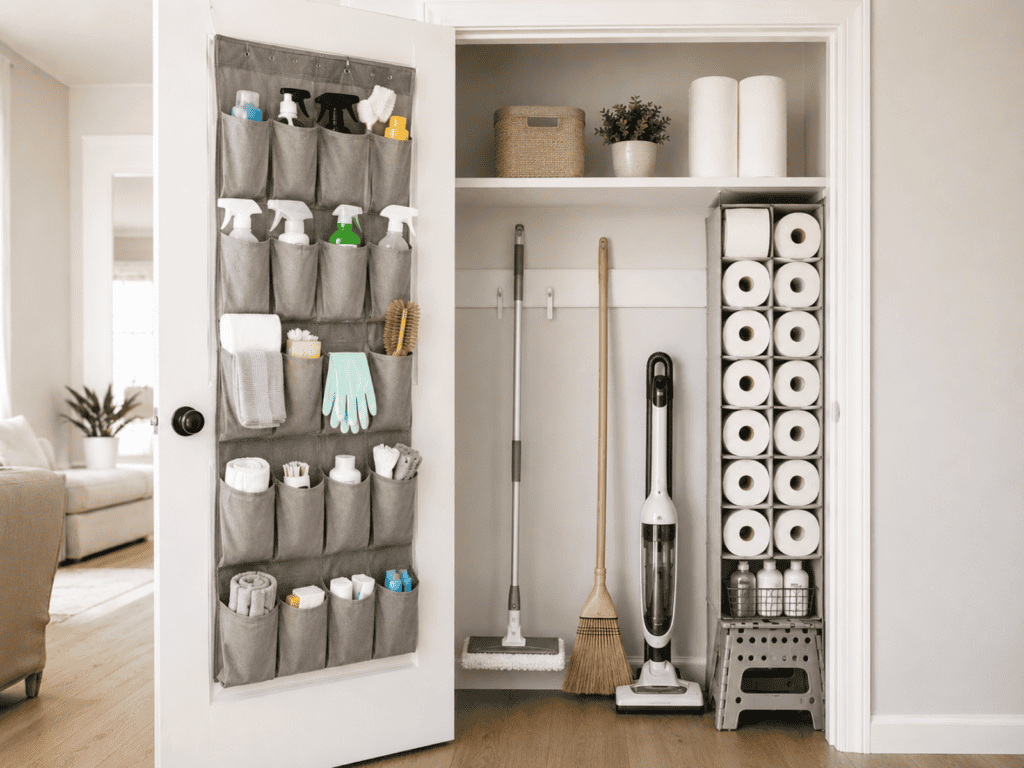
12. Store Cleaning Tools on a Utility Door
Mount broom and mop grippers on the back of a laundry room, basement, or utility closet door.
Keeping tools vertical prevents them from falling over and makes the closet easier to use. Leave enough clearance for the door to open completely.
Multifunctional Furniture
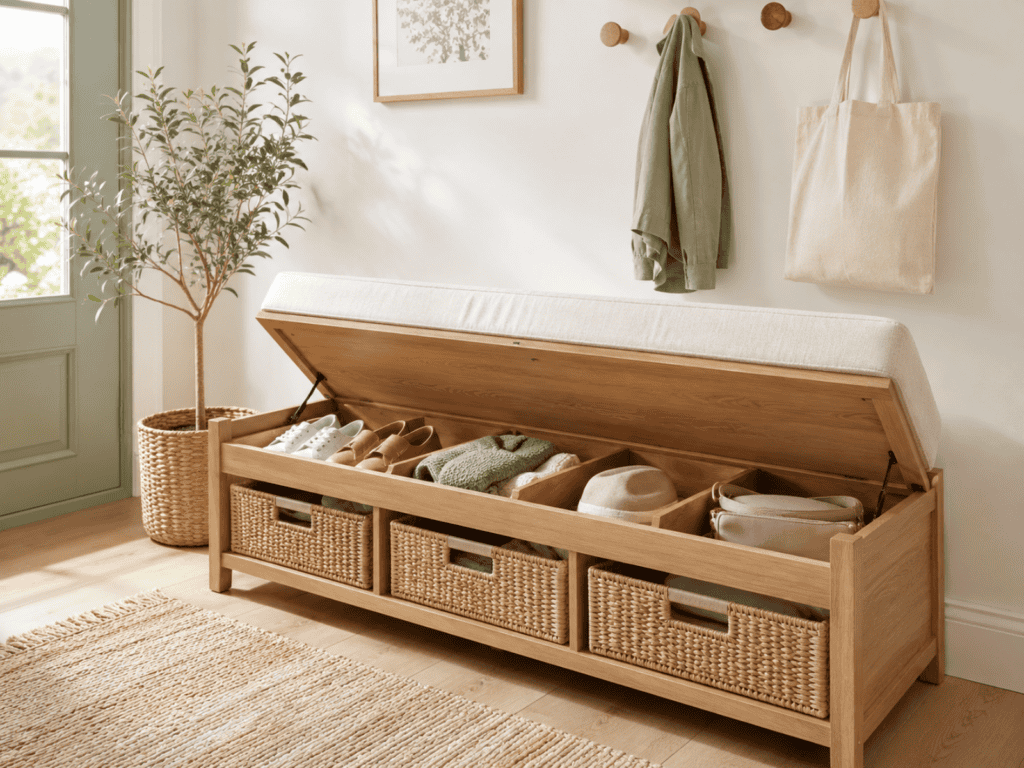
In a small home, furniture should do more than one job whenever possible.
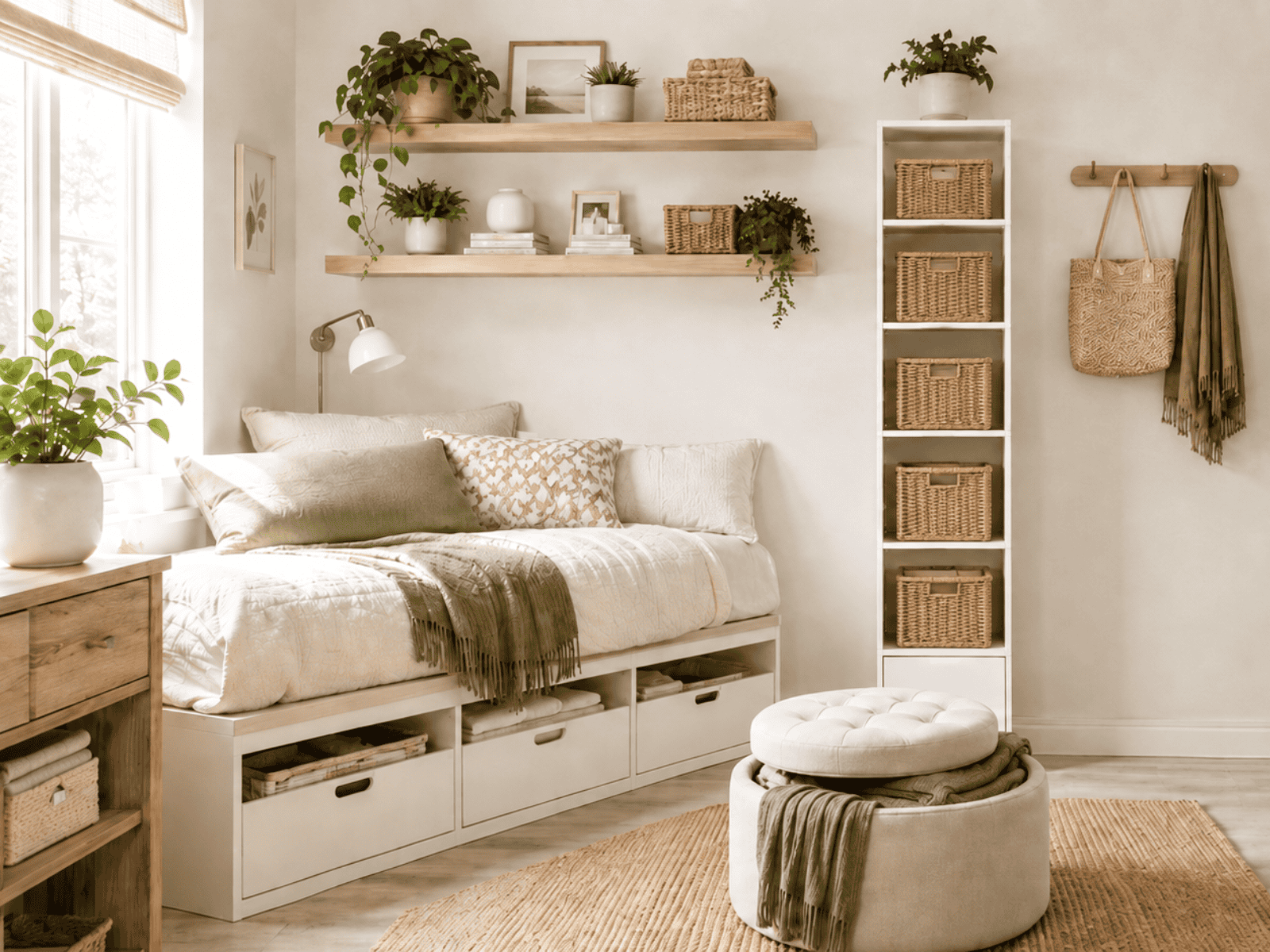
13. Choose a Storage Ottoman
A storage ottoman can work as a footrest, extra seat, coffee table, or hidden storage container.
Use it for blankets, games, toys, exercise equipment, or seasonal accessories. Look for a sturdy lid and hinges that will not slam shut.
14. Use a Lift-Top Coffee Table
A lift-top coffee table can provide hidden storage and a raised work surface.
It is useful in a living room that also functions as a home office or dining space. Store remotes, chargers, notebooks, games, and laptop accessories inside.
Before buying, make sure the table can open without hitting nearby furniture.
15. Add a Storage Bench
A storage bench can provide seating and concealed storage in an entryway, bedroom, living room, or dining nook.
Use baskets or divided compartments inside so the bench does not become a large box of mixed clutter. In an entryway, assign one section to each household member.
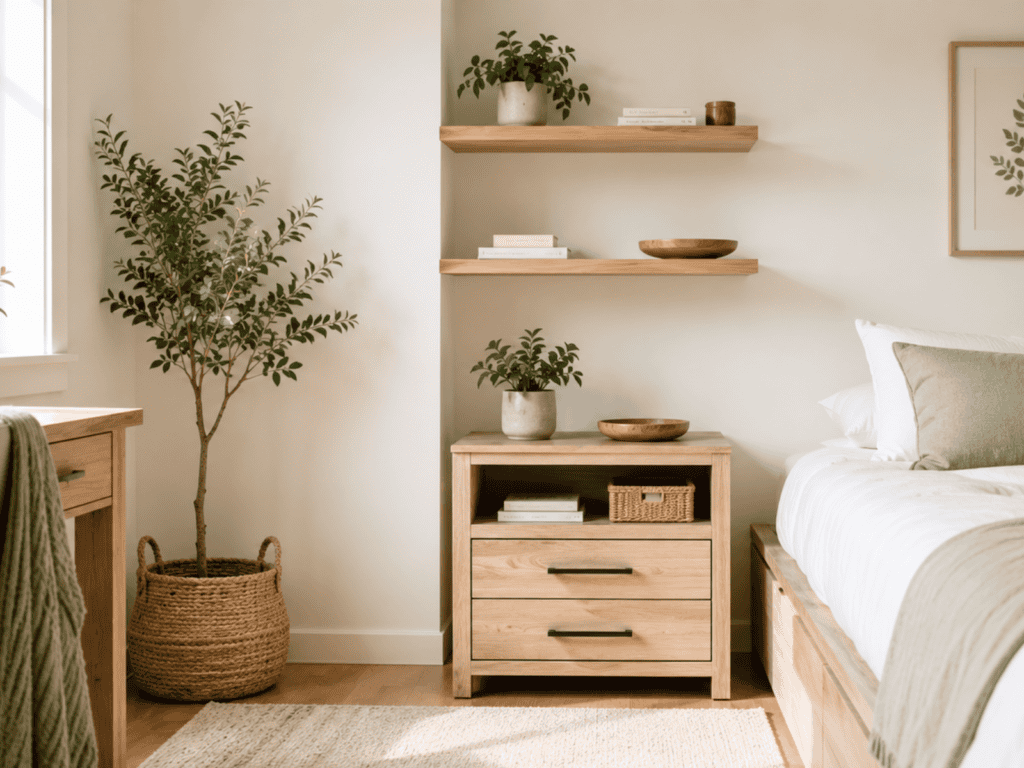
16. Choose Nightstands With Drawers
An open side table may look airy, but it can also leave everyday items visible.
A nightstand with drawers can hide medication, chargers, glasses, books, tissues, and other bedside necessities.
Choose a narrow model if the space beside your bed is limited.
17. Use a Bed With Built-In Drawers
A platform bed with drawers can replace a dresser in a small bedroom.
Use the drawers for clothing, shoes, bedding, or seasonal items. Measure the surrounding floor space to make sure each drawer can open fully.
18. Try a Drop-Leaf Dining Table
A drop-leaf table can stay compact for everyday use and expand when you need more dining or work space.
Some models include drawers or shelving for placemats, table linens, serving pieces, or office supplies.
Place the table against a wall when only one side is needed.
19. Install a Fold-Down Desk
A wall-mounted desk creates a work area without permanently occupying floor space.
Choose a model with interior compartments for notebooks, chargers, and basic supplies. When work is finished, close the desk to reduce visual clutter.
Check the weight limit before placing a monitor or heavy equipment on it.
20. Use Nesting Tables
Nesting tables provide several surfaces while occupying the footprint of one.
Pull them apart when you need side tables, snack tables, or extra work surfaces. Stack them together when they are not in use.
Choose simple shapes that are easy to move.
Hidden and Overlooked Storage Spaces
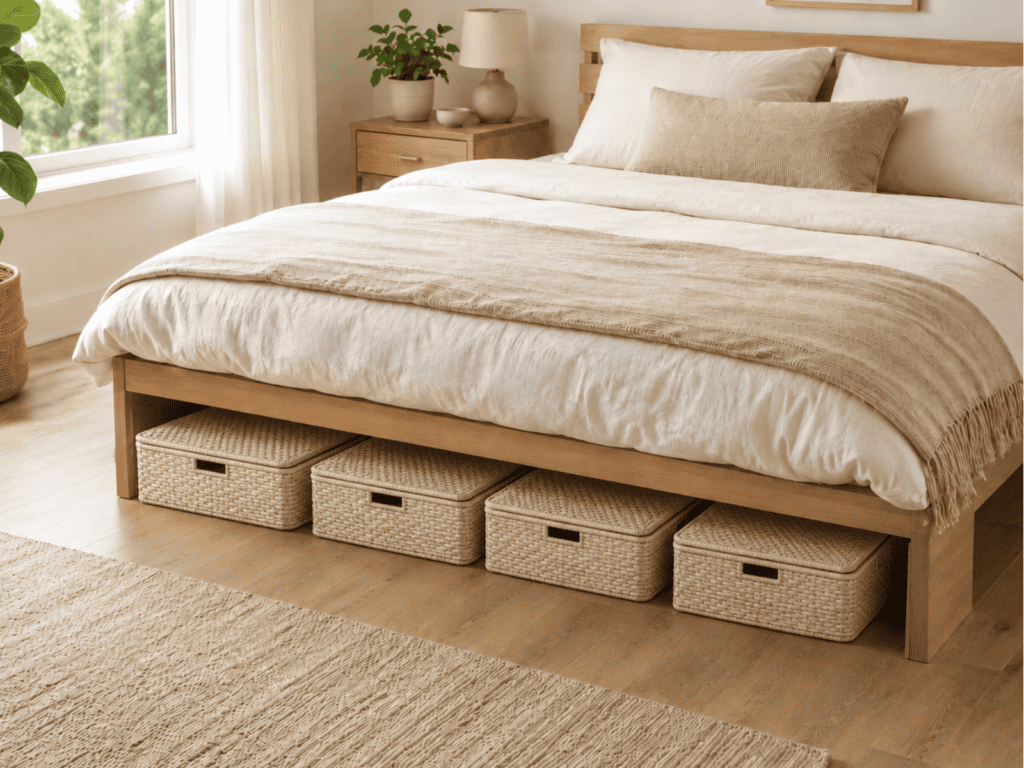
Some of the most useful storage areas are spaces that normally remain empty.
21. Add Under-Bed Storage
Use low bins, drawers, or zippered bags under the bed for off-season clothing, extra bedding, shoes, or sentimental items.
Measure from the floor to the lowest part of the bed frame before purchasing containers. Choose lidded storage to protect items from dust, and label the side facing outward.
22. Use the Space Under a Sofa
Some sofas have enough clearance for shallow storage containers.
Use the space for board games, puzzles, exercise equipment, extra blankets, or rarely used electronics. Containers with wheels or handles are easier to retrieve.
23. Install Toe-Kick Drawers
The recessed space beneath lower kitchen cabinets can sometimes be converted into shallow drawers.
Toe-kick drawers work well for baking sheets, serving trays, table linens, pet bowls, or other flat items. This is usually a permanent improvement and may require professional installation.
24. Add Between-the-Stud Shelving
The space between wall studs can become shallow recessed storage. It can work well for spices, toiletries, medicine, cleaning supplies, or small decorative items.
Because plumbing and electrical wiring may be hidden behind walls, check the area carefully before cutting into drywall.
25. Use the Space Above the Refrigerator
The top of the refrigerator often becomes a cluttered drop zone.
Add one or two matching baskets for items such as extra paper products, less frequently used kitchen linens, or lightweight serving pieces.
Avoid storing items that can be damaged by heat.
26. Add Storage Under the Stairs
The area under a staircase may be large enough for cabinets, drawers, shelves, a small desk, or a pet station.
A custom installation can maximize the space, but a simple bookcase, rolling cart, or set of labeled bins may also work.
Store frequently used items near the front and seasonal items farther back.
27. Use Narrow Rolling Carts
A slim rolling cart can fit beside a refrigerator, washer, vanity, desk, or cabinet.
Use one for spices, laundry products, cleaning supplies, toiletries, craft materials, or office supplies.
Measure the narrowest point of the gap and check the height of the items you plan to store.
28. Place Bins on Top of Cabinets
If your cabinets do not reach the ceiling, the open area above them can provide extra storage.
Use matching lidded baskets for lightweight, rarely used items. Labels will prevent you from forgetting what is stored there.
Avoid creating a row of unrelated objects that makes the room look cluttered.
Creative Kitchen Storage Solutions
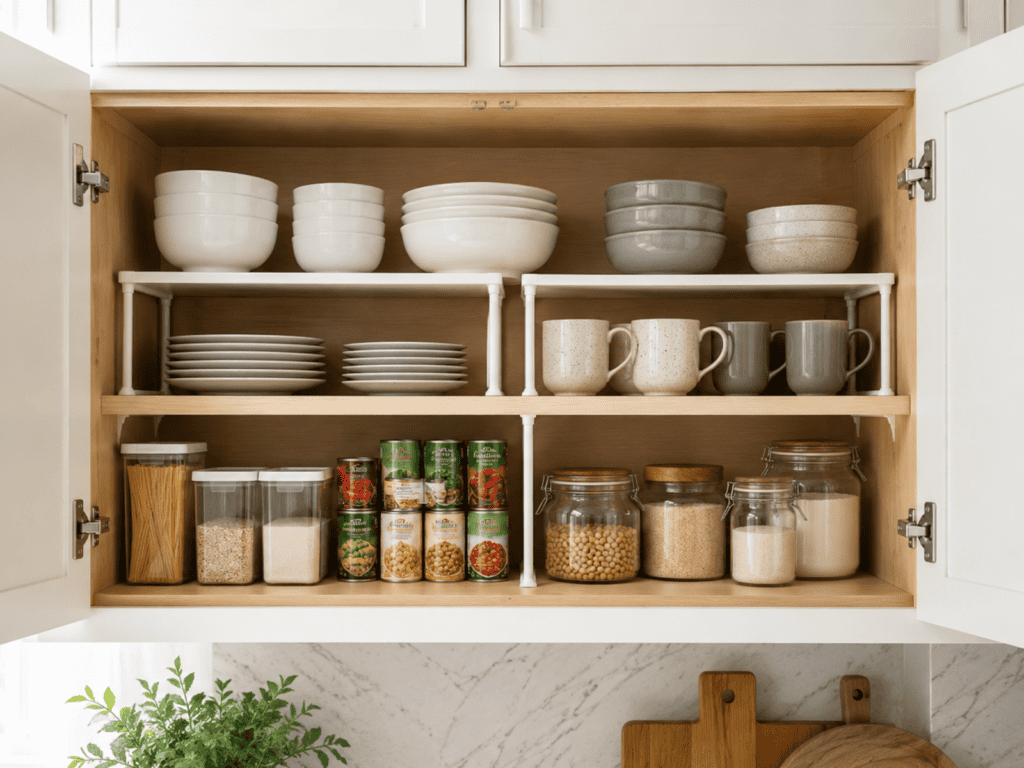
A small kitchen needs storage that keeps frequently used items accessible without covering every counter.
29. Add Shelf Risers Inside Cabinets
Shelf risers create an additional level inside a cabinet.
Use them for plates, bowls, mugs, canned goods, or pantry containers. Adjustable risers are helpful when cabinet shelves cannot be moved.
Do not stack items so high that removing one causes everything else to fall.
30. Install Under-Shelf Baskets
An under-shelf basket slides onto an existing shelf and uses the empty space below it.
These baskets are useful for napkins, food storage lids, wraps, lightweight dishes, or small pantry items. Check the shelf thickness before buying.
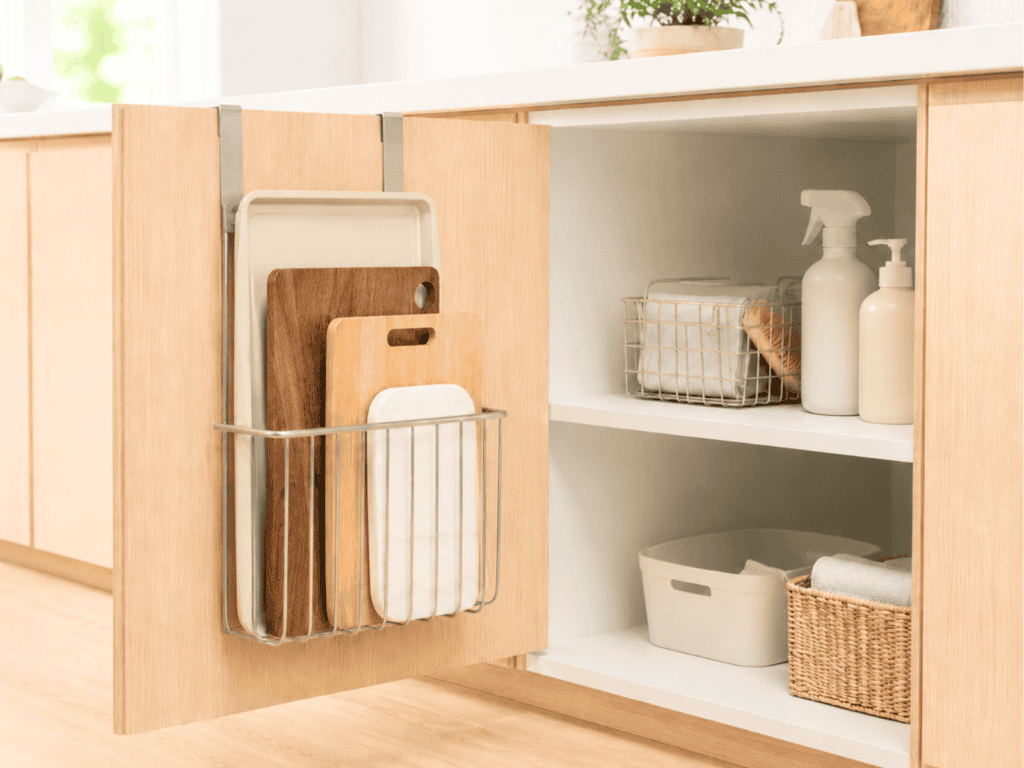
31. Store Baking Sheets Vertically
Use a rack or dividers to store baking sheets, cutting boards, muffin tins, and serving trays upright.
Vertical storage makes each item easier to remove and prevents heavy stacks from sliding around. A tension rod can sometimes serve as a simple divider.
32. Use the Inside of Cabinet Doors
Add shallow racks, hooks, or adhesive organizers to cabinet doors.
Use them for measuring spoons, pot lids, cutting boards, cleaning gloves, food storage wraps, or small packets. Make sure the organizer will not hit the shelves when the door closes.
33. Add a Tension Rod Under the Sink
A tension rod can create hanging storage for spray bottles beneath a sink.
This leaves more room on the cabinet floor for bins or pull-out drawers. Do not overload the rod, and make sure it cannot damage plumbing.
34. Install a Pull-Out Cabinet Organizer
Pull-out shelves and baskets make deep cabinets easier to use.
Instead of reaching past items in the front, you can slide the contents out and see everything at once. This is particularly helpful for pots, pans, appliances, pantry goods, and cleaning supplies.
35. Use a Rolling Cart as a Movable Station
A rolling cart can function as a coffee station, baking cart, snack station, bar cart, homeschool station, or extra pantry.
Move it where it is needed and roll it out of the way when you need more floor space. Avoid combining unrelated categories on the same cart.
36. Choose Nesting and Collapsible Kitchen Tools
Nesting bowls, stackable containers, collapsible colanders, and fold-flat dish racks take up less cabinet space.
Before replacing kitchen tools, consider how often you use the item and whether the space savings justify the purchase.
Do not buy collapsible versions simply because they are marketed for small spaces.
Small Bathroom Storage Ideas
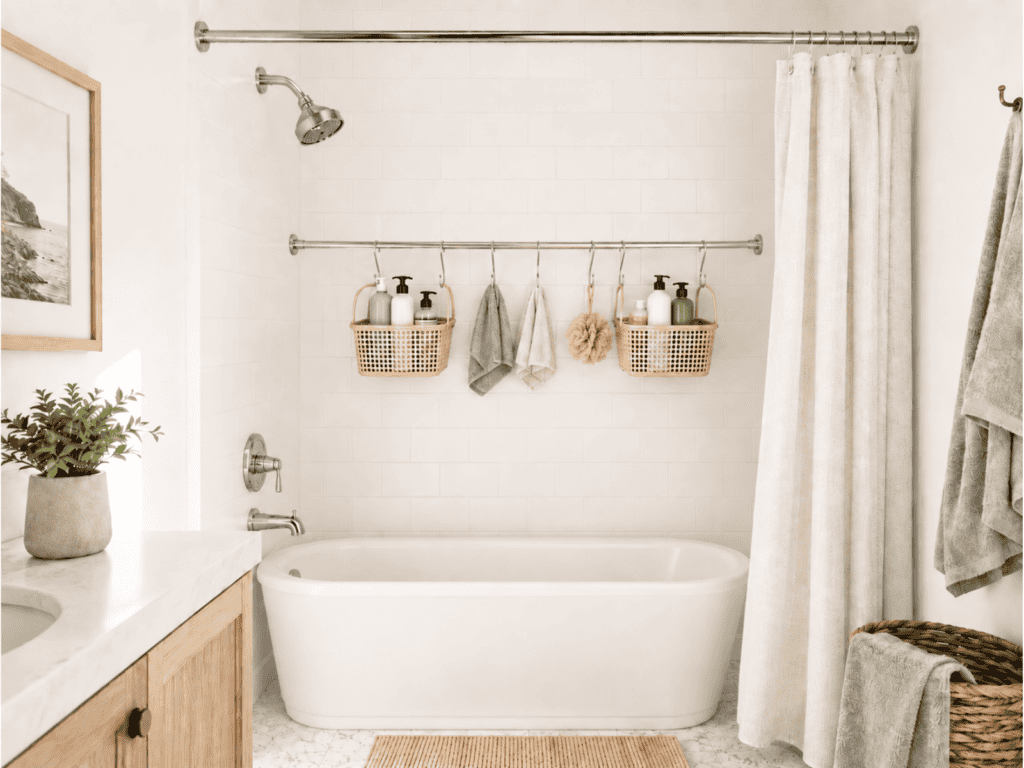
Bathrooms contain many small items, which can make limited storage feel chaotic.
37. Use the Space Above the Toilet
Install shelves or a narrow cabinet above the toilet for towels, toilet paper, backup toiletries, or decorative baskets.
Closed storage can make the room look calmer and protect personal items from dust. Leave enough space above the toilet tank for maintenance.
38. Add a Second Shower Rod
Place a tension rod inside the shower for hanging waterproof baskets, washcloths, or bath products.
This is an inexpensive, renter-friendly way to add storage without drilling into tile. Make sure the rod is secure and does not interfere with movement.
39. Use Magnetic Storage
A magnetic strip inside a medicine cabinet can hold tweezers, nail clippers, bobby pins, or small grooming tools.
Magnetic containers can also hold tiny items such as hair ties if the medicine cabinet has a magnetic surface. Keep sharp items out of children’s reach.
40. Organize Around Under-Sink Plumbing
Instead of trying to fit one large organizer beneath the sink, use several narrow bins, stackable drawers, or a U-shaped pull-out system.
Group products by category, such as daily care, hair products, cleaning supplies, and backups. Measure around pipes before purchasing anything.
41. Add Hooks Instead of Another Towel Bar
Hooks require less uninterrupted wall space than a towel bar and can be easier for children to use.
Install them behind the door, beside the shower, or on an unused wall.
Give each household member a separate hook to prevent towels from piling up.
Closet and Bedroom Storage Ideas
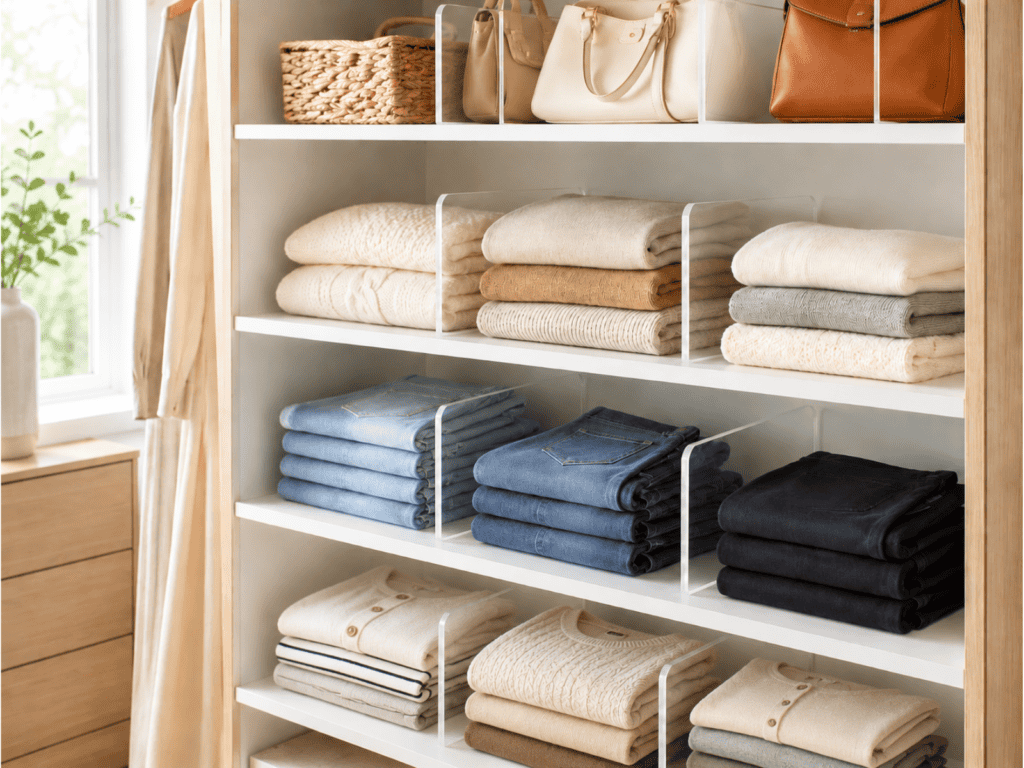
A small closet works best when every category has a defined home.
42. Double the Hanging Space
Add a second closet rod beneath the existing rod for shirts, skirts, folded pants, or children’s clothing. Reserve one full-height section for dresses, coats, and other long garments.
Before installing a second rod, remove clothing you no longer wear so you are not simply making room for more clutter.
43. Add Shelf Dividers
Shelf dividers prevent stacks of sweaters, jeans, and handbags from leaning into each other.
They can make a wide shelf function like several smaller compartments. Keep stacks low enough that you can remove an item without disturbing the entire pile.
44. Use the Closet Floor Intentionally
The closet floor can hold a shoe rack, rolling drawers, labeled bins, or a small dresser.
Avoid leaving loose shoes and bags in an undefined pile. Select one storage system that fits the width of the closet and the items you actually own.
45. Rotate Seasonal Clothing
Keep current-season clothing in the most accessible part of the closet.
Store off-season clothing in labeled bins, under-bed containers, or a less accessible upper shelf. Before putting anything into seasonal storage, clean it and remove pieces you did not wear.
A seasonal rotation can reduce visual clutter and make everyday clothing easier to find.
Renter-Friendly Storage Solutions
You can add meaningful storage without making permanent changes. Good renter-friendly options include:
- Over-the-door organizers
- Freestanding shelving
- Tension rods
- Rolling carts
- Removable adhesive hooks
- Under-bed containers
- Storage ottomans
- Shelf risers
- Cabinet door organizers
- Modular drawers
- Narrow bookcases
- Pegboards that lean against a wall
- Garment racks
- Storage benches
Check the manufacturer’s instructions before applying adhesive products. Even products described as removable can damage weak paint or delicate surfaces.
How to Keep a Small Space From Looking Cluttered
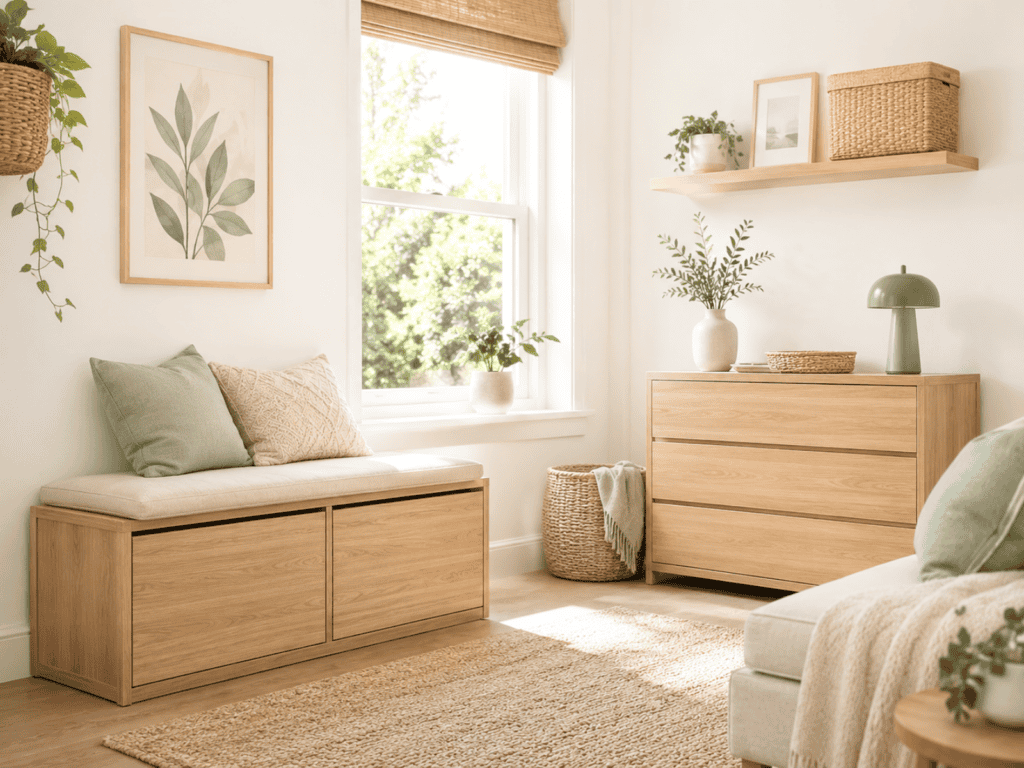
Adding storage is only part of the solution. The way you use it also affects how calm or crowded the room feels.
Choose Fewer, Larger Storage Pieces
Several tiny organizers can create more visual clutter than one appropriately sized cabinet, basket, or set of drawers.
Repeat Colors and Materials
Matching containers are not required, but repeating a small number of colors and materials creates a more consistent appearance.
Use Closed Storage for Busy Categories
Cords, paperwork, toys, toiletries, and small accessories can look chaotic even when grouped neatly. Store visually busy categories behind doors or inside opaque containers.
Leave Some Open Space
Do not fill every shelf, wall, corner, and surface. A little empty space makes storage easier to use and gives the room room to breathe.
Keep Daily Items Easy to Put Away
A system will not last if putting something away requires moving several other objects. Everyday storage should be simple enough to use when you are tired or in a hurry.
Storage Products That May Not Be Worth Buying
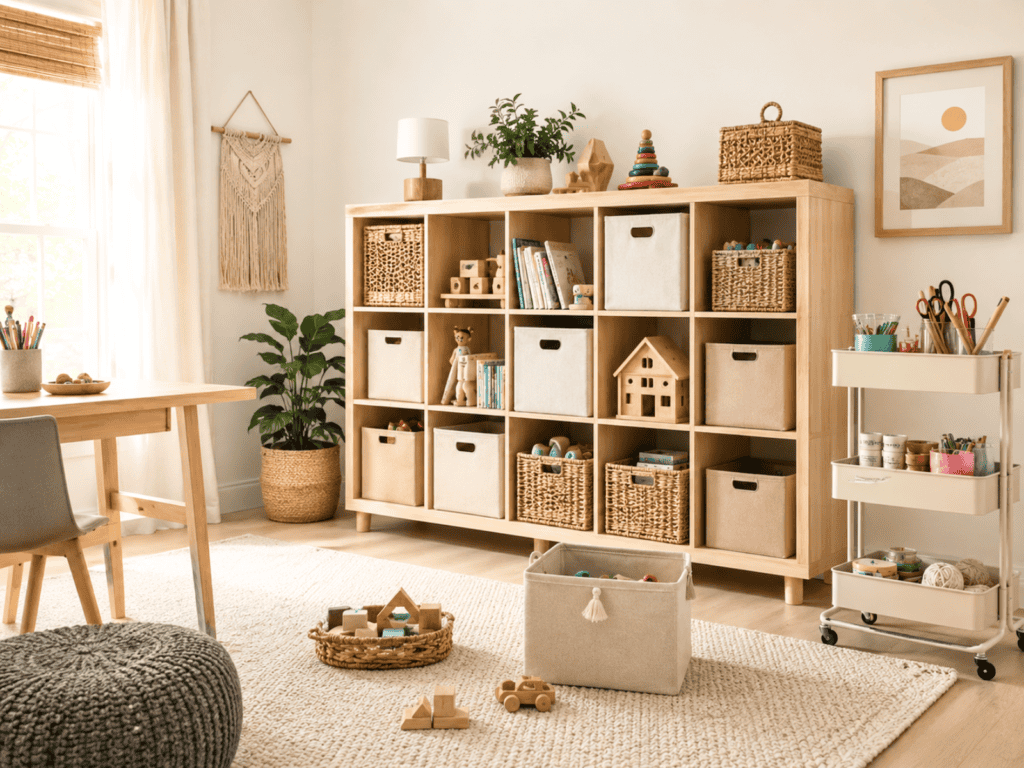
Not every organizing product will improve your home. Think carefully before buying:
Containers Without a Specific Purpose
Do not buy bins before deciding what they will hold and where they will go.
Organizers That Are Difficult to Clean
Complicated shapes, fabric compartments, and organizers with many small parts may require more maintenance than they are worth.
Products That Waste Space
Some organizers create narrow compartments that do not fit the items you own. Measure your belongings before buying.
Permanent Systems for Temporary Needs
Children’s belongings, hobby supplies, and household routines can change. Flexible storage may be better than an expensive custom solution.
Products That Add Extra Steps
If you must remove a lid, pull out a container, move another container, and open a smaller box to reach something you use every day, the system is probably too complicated.
Simple Storage Maintenance Tips
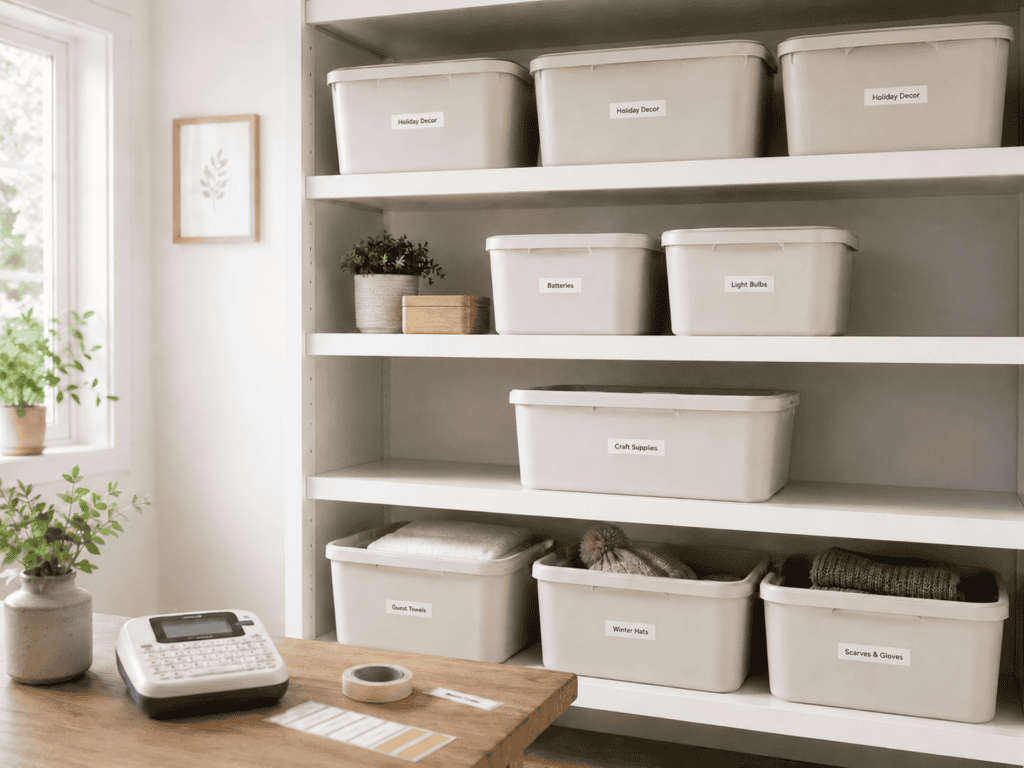
The best storage system is one you can maintain.
Reset One Area Each Week
Spend 10 to 15 minutes returning items to their assigned homes. Choose one drawer, shelf, cabinet, or basket instead of trying to reorganize the entire house.
Review Storage Before Shopping
Before buying household supplies, check your pantry, bathroom cabinets, and storage areas. This helps prevent duplicate purchases.
Use the One-In, One-Out Guideline
When a new item enters a crowded category, consider removing an older item. This is especially helpful for clothing, mugs, toys, towels, and beauty products.
Label What You Cannot See
Label opaque containers, high shelves, seasonal bins, and storage areas used by multiple people. A label should be specific enough to help someone put an item away correctly.
Adjust Systems That Are Not Working
Do not keep forcing yourself to use a system that does not match your habits.
If shoes always land beside the door, add shoe storage there. If mail collects on the kitchen counter, create a mail station nearby. Organize around your real routines rather than the routine you think you should have.
Final Thoughts
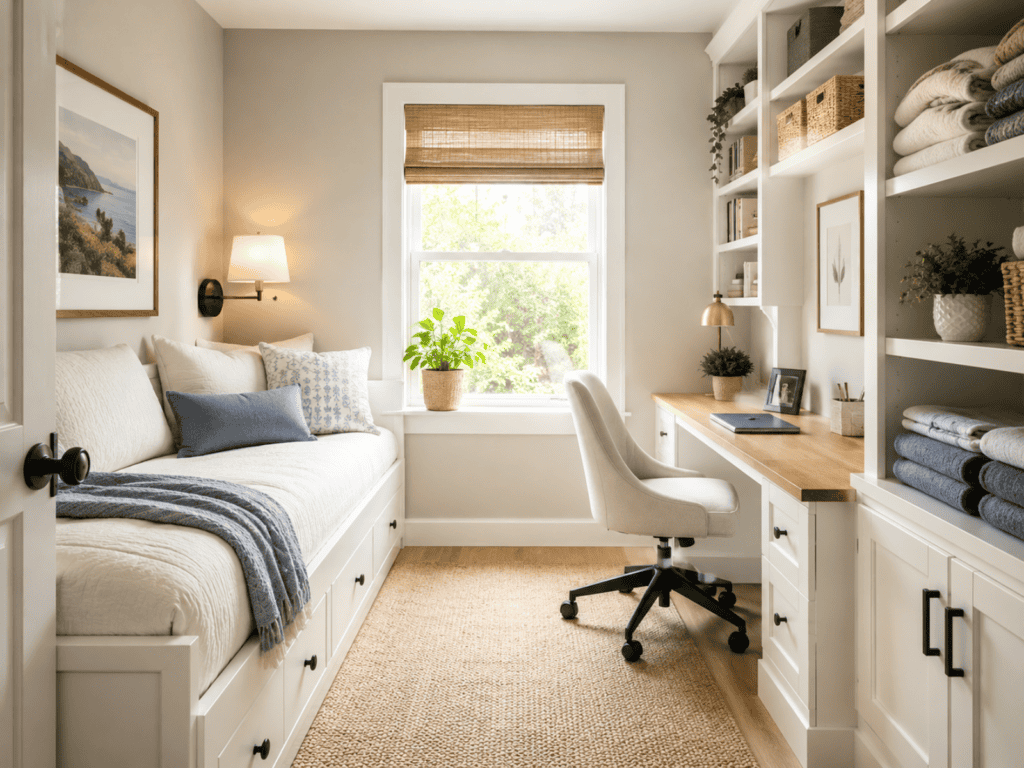
Creative storage is not about squeezing something into every available inch. It is about making your home easier to use.
Look up at your walls, behind your doors, beneath your furniture, inside your cabinets, and between existing pieces. Then choose one solution that addresses a real problem.
You do not need to implement all 45 ideas. Start with the space that frustrates you most, remove what no longer belongs there, and add only the storage needed for what remains.
A small home can feel calm, functional, and organized when your storage supports the way you actually live.