How to Organize a Small Kitchen When You’re Out of Space

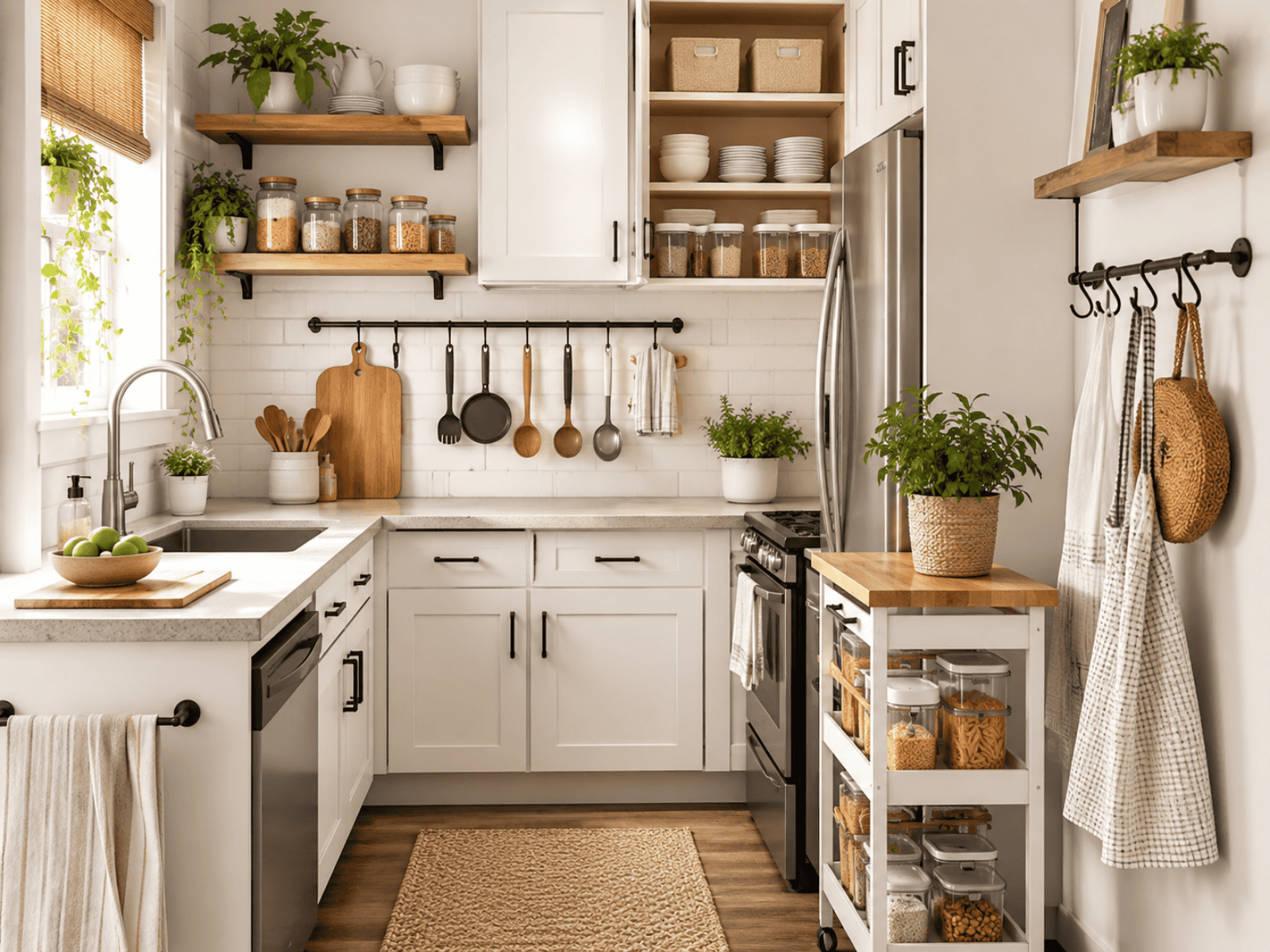
A small kitchen can feel overwhelming fast.
The counters fill up quickly. The cabinets are packed. There never seems to be enough room for food, dishes, small appliances, lunch supplies, cleaning products, and everything else a kitchen needs to hold.
And when every inch has to work harder, even a little clutter can make the whole kitchen feel messy.
But small kitchen organization is not about creating a perfect kitchen. It is about making your kitchen easier to use.
You do not need a full remodel, expensive storage system, or dozens of matching bins. You need fewer things fighting for space, simple zones that support your daily routines, and a few habits that keep the kitchen from falling apart every day.
If your small kitchen feels like it is completely out of space, start here.
Start With the Counters
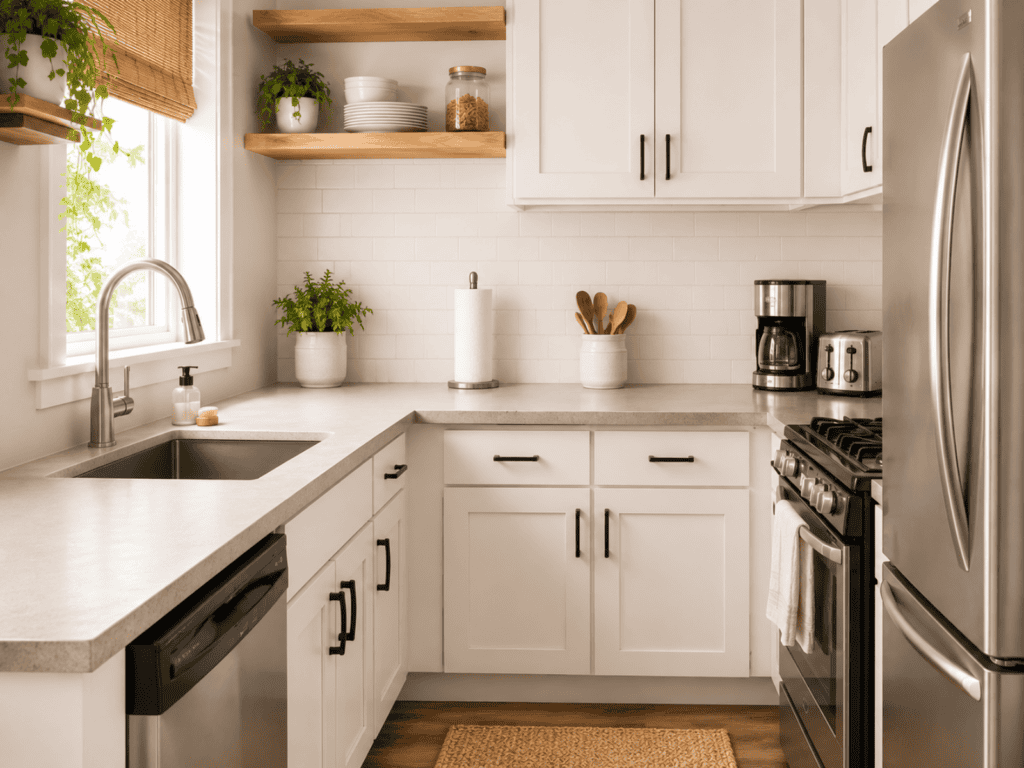
When a small kitchen feels impossible, start with the counters.
Counters are supposed to be work space, not storage space. But in a small kitchen, they often become the landing place for mail, dishes, groceries, appliances, lunch bags, water bottles, and random items that do not have a home.
Before you organize a single cabinet or buy another container, clear off as much counter space as you can.
Keep only the items you use every day or almost every day. This might include your coffee maker, toaster, dish soap, paper towels, or a small utensil crock.
Everything else should earn its place.
Ask yourself:
- Do I use this every day?
- Does this make cooking easier?
- Is this here because it belongs here?
- Or is it here because I never found another place for it?
Even clearing one small section of counter can make a tiny kitchen feel calmer and easier to use.
Remove Duplicates Before You Organize
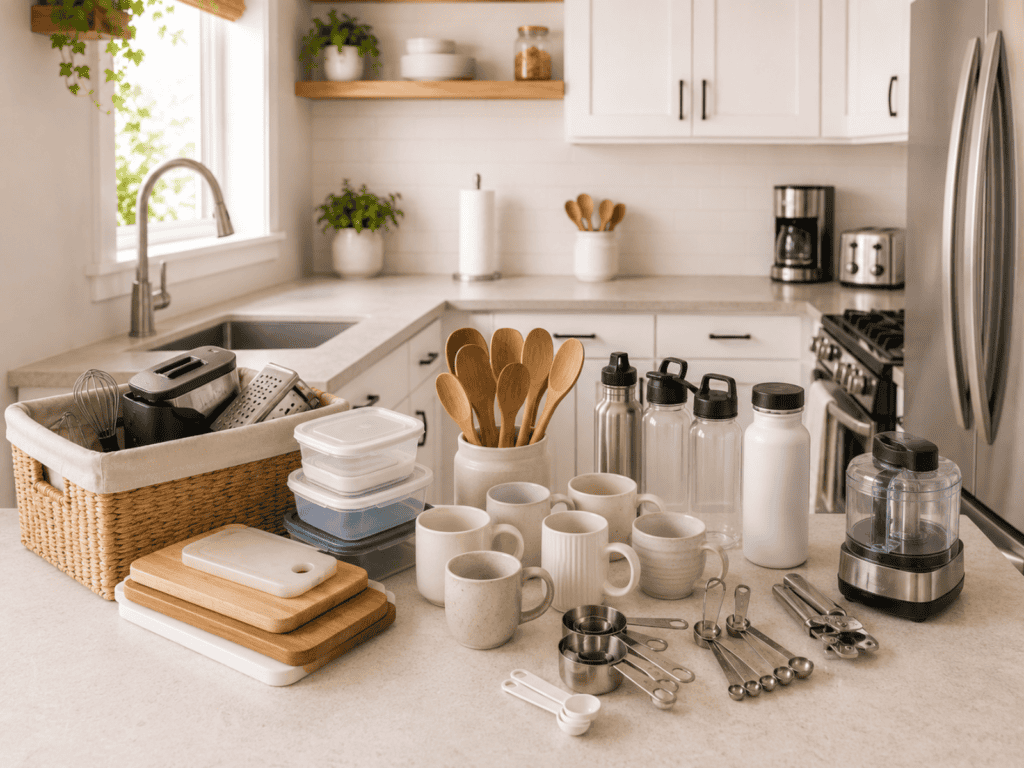
Small kitchens do not have room for “just in case” clutter.
Before you start rearranging shelves or buying organizers, look for duplicates. You may be surprised how much space is being used by extra spatulas, mugs, water bottles, food storage containers, baking pans, cutting boards, and small appliances.
You may not need:
- Five wooden spoons
- Three can openers
- A stack of chipped mugs
- Lids with no matching containers
- Appliances you only used once
- Extra serving dishes you never reach for
- Expired pantry items
- Too many water bottles
- Duplicate measuring cups or spoons
Decluttering duplicates is one of the fastest ways to create space in a small kitchen without spending any money. Need help deciding what to let go of? Start with this list of things to declutter in your kitchen.
Keep your favorites. Keep what you actually use. Let go of the extras that are making your kitchen harder to function in.
Create One Daily-Use Zone
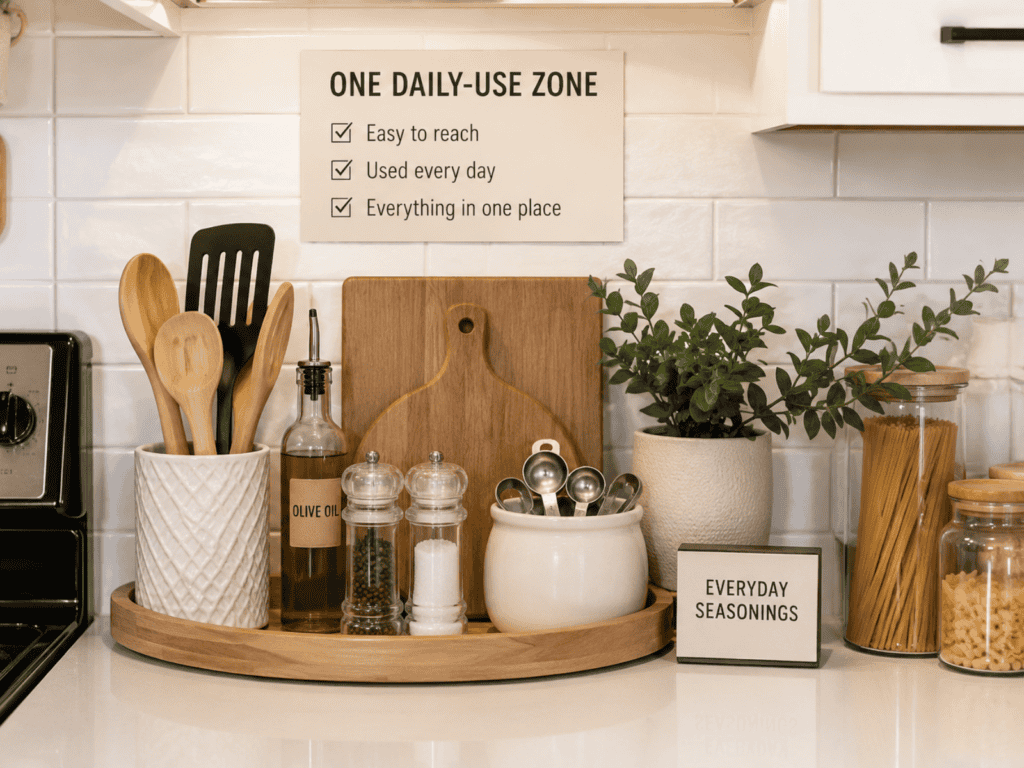
In a small kitchen, your most-used items should be the easiest to reach.
Create one daily-use zone for the things you grab constantly. This may include plates, bowls, drinking glasses, coffee supplies, lunch containers, or basic cooking tools.
The goal is to stop spreading daily items all over the kitchen.
For example, if you make coffee every morning, keep your mugs, coffee, filters, sweetener, and stirring spoons close together.
If you pack lunches every day, keep lunch containers, reusable bags, napkins, water bottles, and snacks in one area.
If you cook dinner most nights, keep your favorite pan, utensils, oil, and everyday seasonings near the stove.
A small kitchen works better when your routines are supported by the way the kitchen is arranged.
Use Small Kitchen Zones
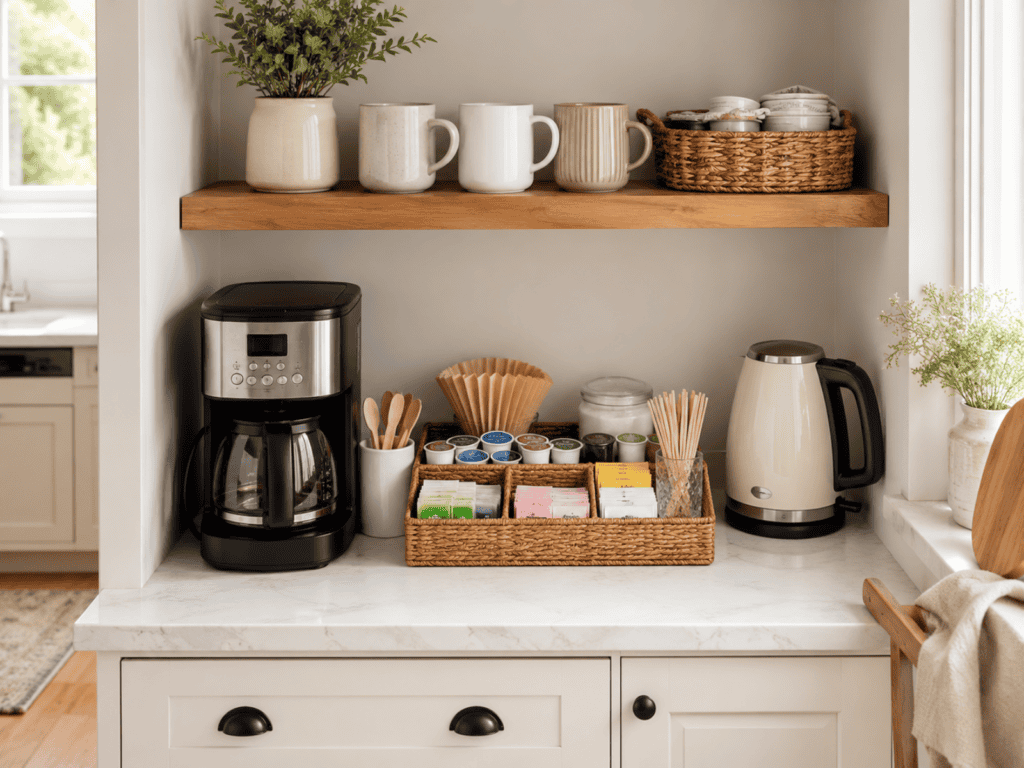
Zones help a small kitchen feel less chaotic because everything has a purpose and a place.
You do not need a large kitchen to create zones. Even one drawer, one shelf, one cabinet, or one basket can become a zone.
Think about what you do in your kitchen every day, then group the items for those tasks together.
Cooking Zone
Keep cooking tools near the stove when possible.
This might include:
- Spatulas
- Wooden spoons
- Oven mitts
- Oils
- Everyday spices
- Favorite pans
- Cutting board
- Measuring spoons
Avoid storing rarely used gadgets in your main cooking space. The things you use most often should get the best spots.
If you only use something once or twice a year, it does not need to live in your easiest-to-reach cabinet.
Coffee or Tea Zone
A coffee or tea zone can be as simple as one shelf, tray, drawer, or small basket.
Keep mugs, coffee pods, tea bags, filters, sweetener, and stirrers together. This keeps your morning routine from spreading across multiple cabinets and drawers.
If you are short on cabinet space, use a small bin to hold coffee or tea supplies. You can pull it out when needed and tuck it away when you are done.
Lunch-Packing Zone
If you pack lunches, create a small lunch-packing area.
Store lunch containers, reusable bags, snack bins, napkins, and water bottles near each other. This saves time and keeps lunch supplies from taking over the kitchen.
A lunch-packing zone does not have to be fancy. One drawer, one cabinet shelf, or one basket in the pantry can make mornings easier.
Cleaning Zone
Your cleaning zone might be under the sink, on the inside of a cabinet door, or in a small caddy.
Keep dish soap, sponges, dishwasher tabs, trash bags, and basic cleaning supplies together.
Do not let this area become a dumping ground for every cleaner you own. Small kitchens work better when each space has a clear purpose.
Pantry Overflow Zone
If your kitchen has little or no pantry space, choose one overflow spot.
This might be a cabinet shelf, slim rolling cart, closet shelf, basement shelf, or basket in a nearby dining area. Use it only for extra food, not random kitchen clutter.
Pantry overflow works best when you keep it simple and check it regularly. If you cannot see what you have, you will probably overbuy.
What Not to Store in a Small Kitchen
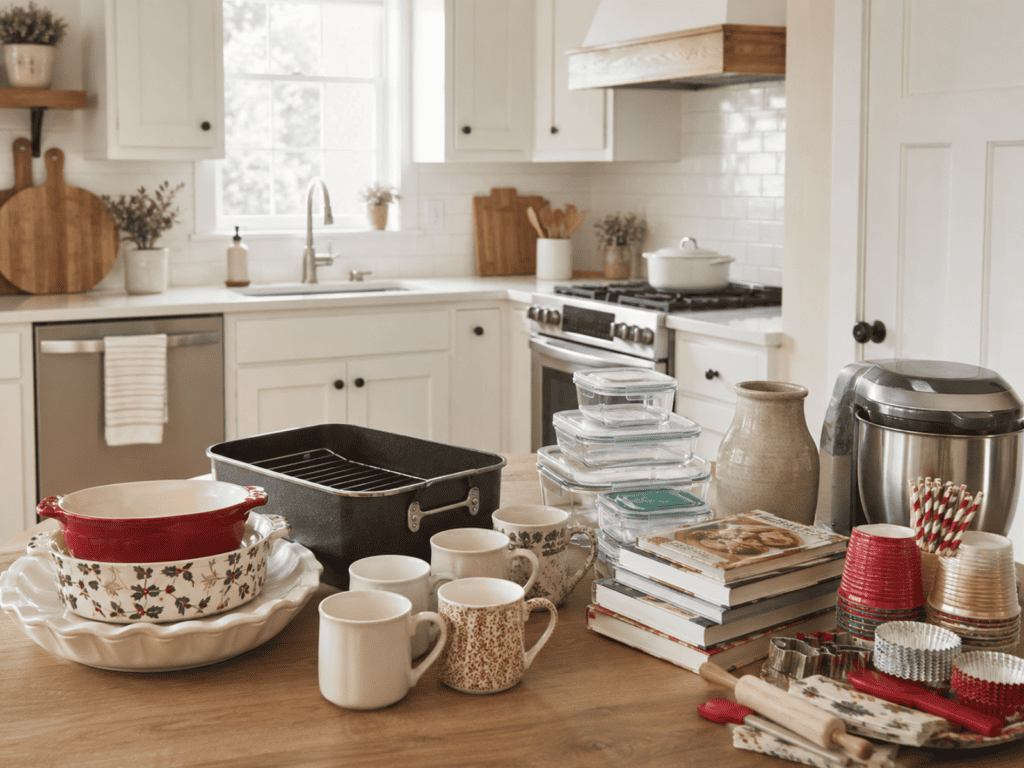
One of the best ways to organize a small kitchen is to stop storing the wrong things in it.
Your kitchen does not need to hold every entertaining item, seasonal dish, bulk grocery purchase, cleaning product, paper good, or appliance you own.
Consider moving these items out of the kitchen:
- Holiday serving dishes
- Large roasting pans used once or twice a year
- Bulk paper towels
- Extra water bottles
- Rarely used appliances
- Party supplies
- Extra vases
- Cookbooks you never open
- Overflow cleaning products
- Duplicate food storage containers
- Extra mugs
- Seasonal baking supplies
A small kitchen should hold what helps you cook, eat, clean, and function on a regular basis. If something is only used occasionally, it can usually live somewhere else.
Use Vertical Space
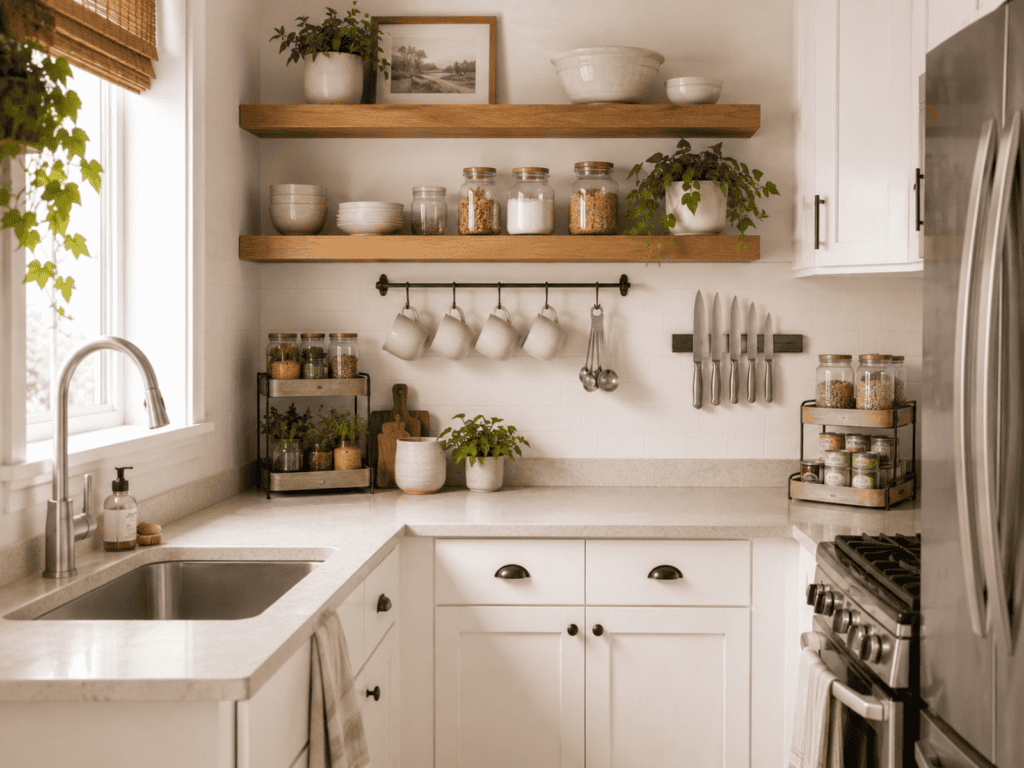
Small kitchens often have more vertical space than cabinet space. Look for ways to use height without making the kitchen feel crowded.
Shelf risers can help you stack plates, bowls, mugs, pantry items, or canned goods without creating messy piles.
You can also use:
- Hooks for mugs or measuring spoons
- A magnetic strip for knives
- Over-cabinet organizers for cutting boards or wraps
- Wall shelves for frequently used items
- Stackable bins for pantry overflow
- Tiered organizers for spices or cans
The key is to use vertical space intentionally.
Do not cover every wall or cabinet door with storage. Too much visible storage can make a small kitchen feel busier. Choose the areas where vertical storage will actually make your daily routine easier.
Make Cabinets Work Harder
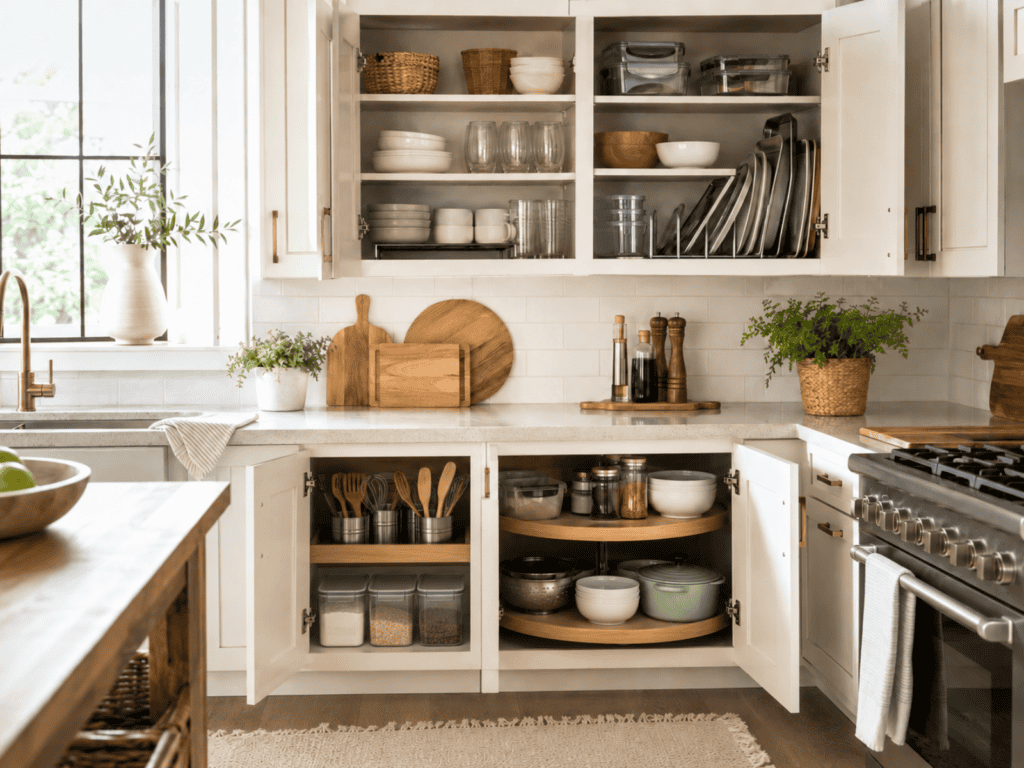
Small kitchen cabinets need to be easy to access.
If you cannot see what is inside a cabinet, you will probably forget what you own. That leads to overbuying, duplicates, and messy shelves.
Start by emptying one cabinet at a time. Wipe the shelves, remove anything you no longer use, and group similar items together.
Then put things back based on how often you use them.
Keep everyday dishes, glasses, and cooking tools in the easiest spots. Move rarely used items to higher shelves or out of the kitchen completely.
Helpful cabinet organizers include:
- Shelf risers
- Lazy Susans
- Clear bins
- Lid organizers
- Stackable containers
- Pull-out baskets
- Over-the-door organizers
You do not need all of these. Choose the ones that solve an actual problem in your kitchen. For a deeper cabinet-by-cabinet reset, see these kitchen cabinet organization ideas.
Be Careful With Small Appliances
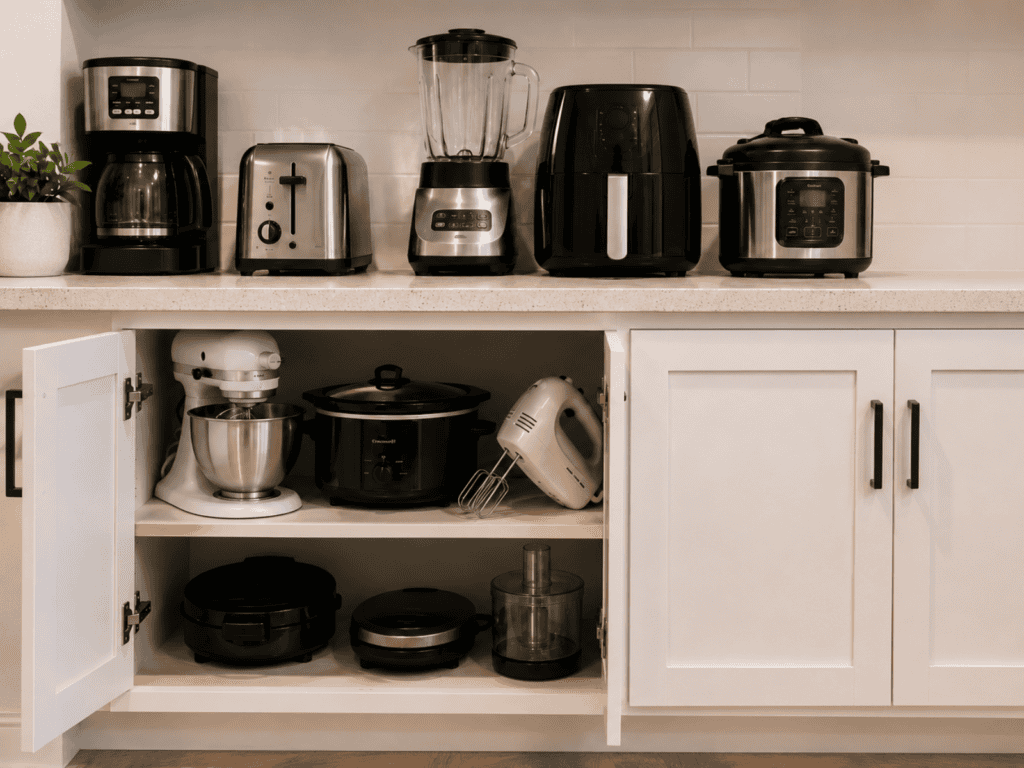
Small appliances can quickly take over a small kitchen.
A toaster, blender, air fryer, slow cooker, stand mixer, hand mixer, coffee maker, waffle maker, and pressure cooker may all be useful, but they do not all need prime kitchen space.
Keep out the appliances you use daily or several times a week.
Store occasional appliances in a cabinet, closet, basement shelf, pantry shelf, or another nearby storage area.
If you have not used an appliance in the past year, ask yourself if it still deserves space in your kitchen.
This does not mean you have to get rid of everything. It just means the appliances you use most should be the easiest to reach.
Simplify Food Storage Containers
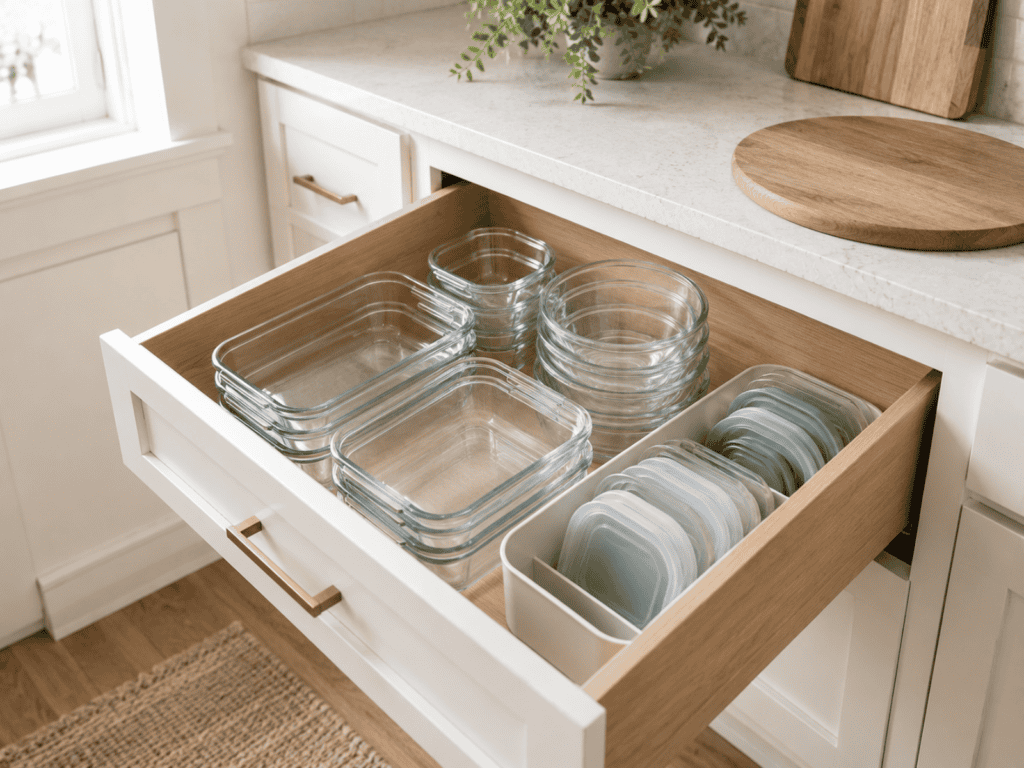
Food storage containers can waste a lot of space in a small kitchen.
Start by matching every container with its lid. Get rid of anything cracked, stained, warped, missing a lid, or missing a container.
Then look at what you actually use.
You may not need every size and shape. Keeping a smaller set of containers that stack neatly is usually more helpful than keeping a large collection that constantly falls over.
Store lids upright in a small bin or divider so they do not slide everywhere. This one area can make a big difference in a small kitchen.
Use Drawer Dividers
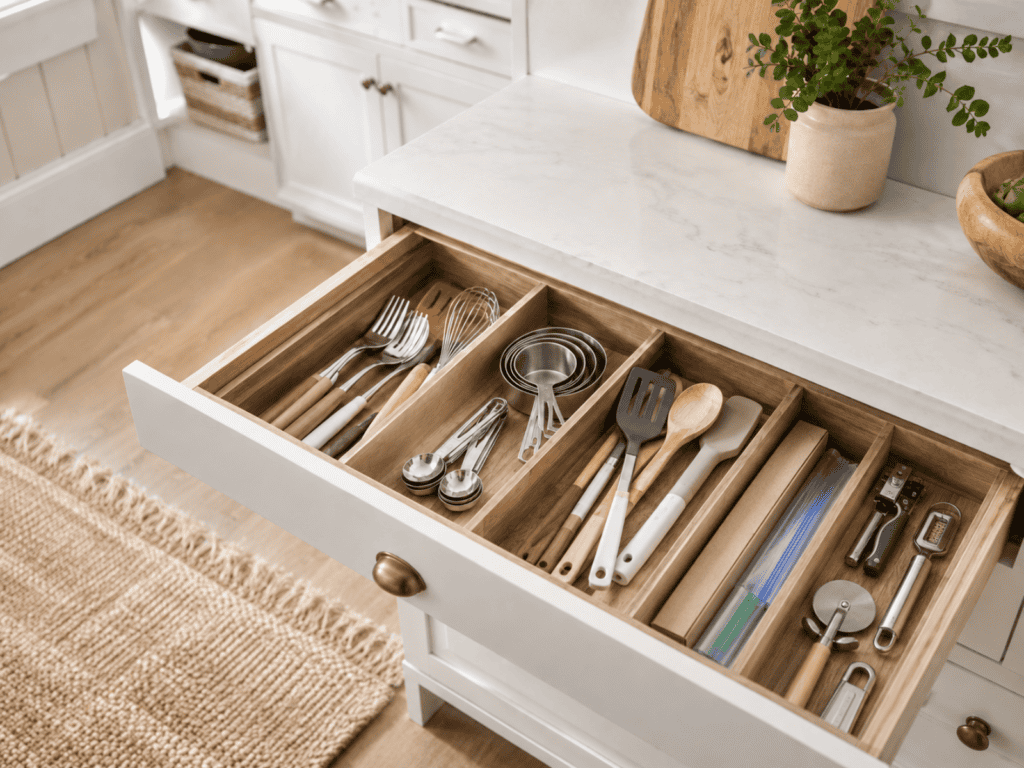
Drawers get messy fast in a small kitchen because they often hold too many categories. Drawer dividers can help separate utensils, measuring spoons, cooking tools, wraps, lids, or small gadgets.
Before adding dividers, empty the drawer completely. Remove anything broken, duplicated, or rarely used. Then group similar items together.
A drawer divider will not fix an overstuffed drawer, but it can help a decluttered drawer stay organized.
Use the Inside of Cabinet Doors
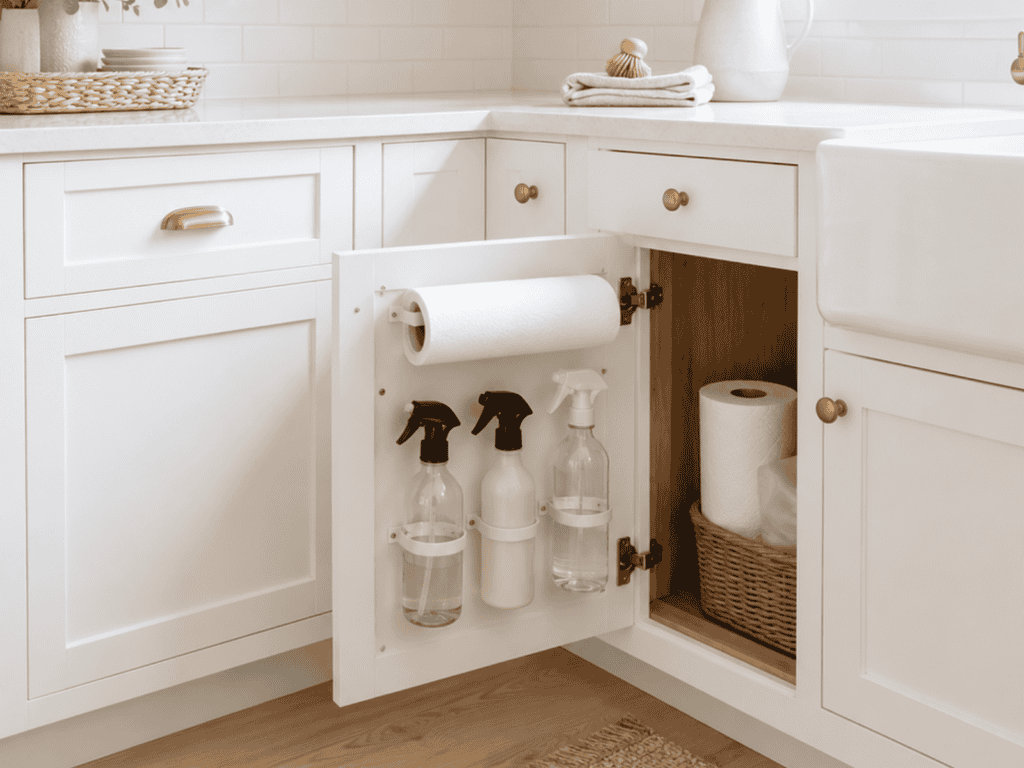
The inside of cabinet doors can provide hidden storage without adding more visual clutter. You can use over-cabinet organizers, adhesive hooks, or small mounted holders for lightweight items.
Good options include:
- Measuring spoons
- Pot holders
- Cutting boards
- Wraps and foil
- Cleaning gloves
- Small tools
- Spray bottles
- Trash bags
Avoid overloading cabinet doors. Choose items that are light and easy to grab.
Try a Slim Rolling Cart
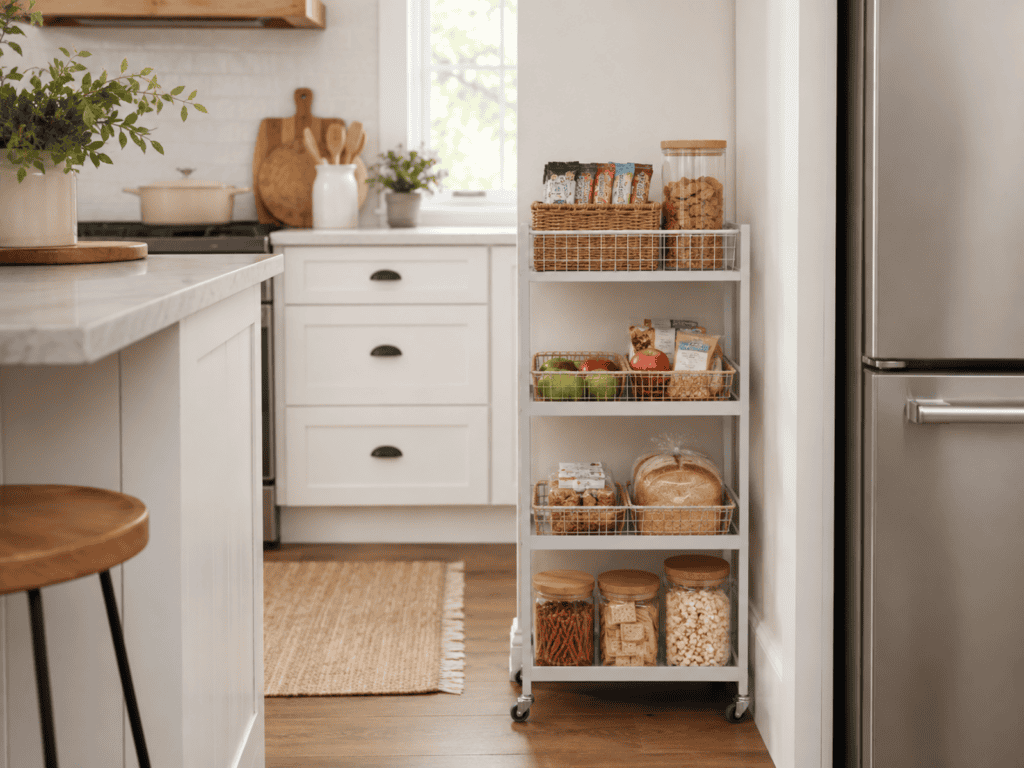
If you truly do not have enough cabinet or pantry space, a slim rolling cart can help. Use it for one clear purpose, such as:
- Coffee supplies
- Snacks
- Baking items
- Lunch-packing supplies
- Produce
- Pantry overflow
- Cleaning supplies
A rolling cart works especially well in narrow spaces beside the fridge, near a dining area, or against an empty wall.
Just be careful not to turn the cart into a clutter station. Give it a job and stick to it.
Keep Pantry Items Easy to See
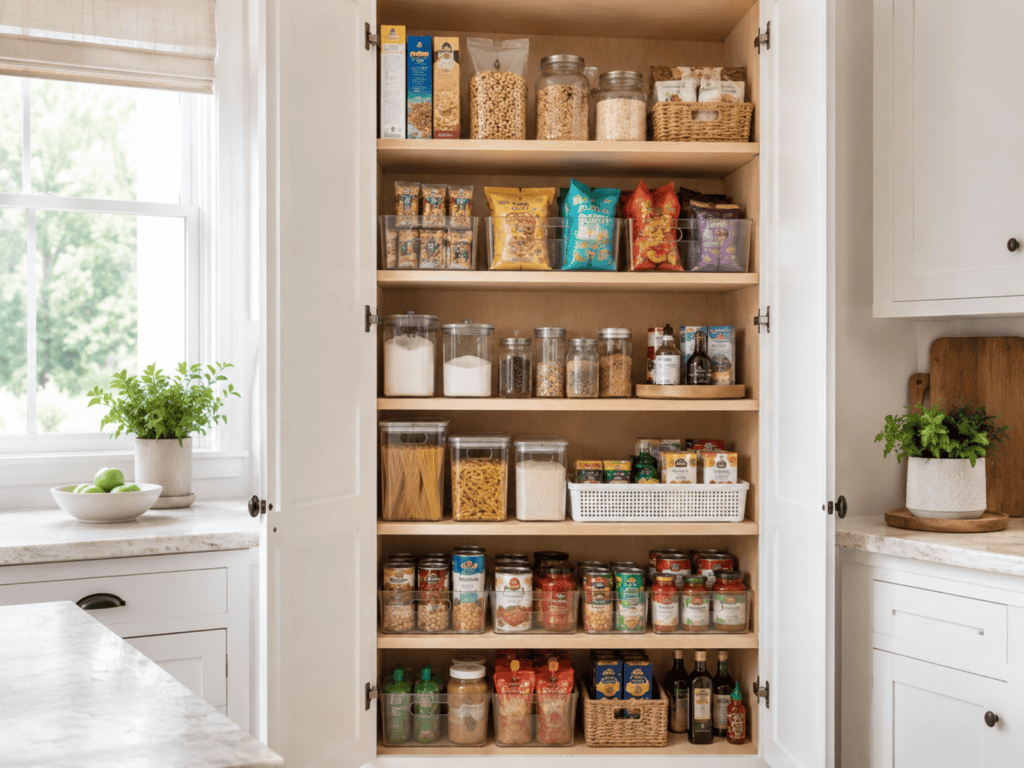
Whether you have a full pantry, one cabinet, or a few shelves, food storage needs to be easy to see. Small kitchens do not have room for forgotten food.
Group similar items together, such as:
- Breakfast foods
- Snacks
- Baking supplies
- Pasta and rice
- Canned goods
- Spices
- Lunch items
Use bins only when they help you see and access things more easily. Do not buy a lot of containers just to make the shelves look pretty.
The goal is to know what you have so you stop overbuying. For more help with food storage, these pantry organization ideas can help you make the most of shelves, bins, and small pantry spaces.
Make the Fridge Part of Your Organization System
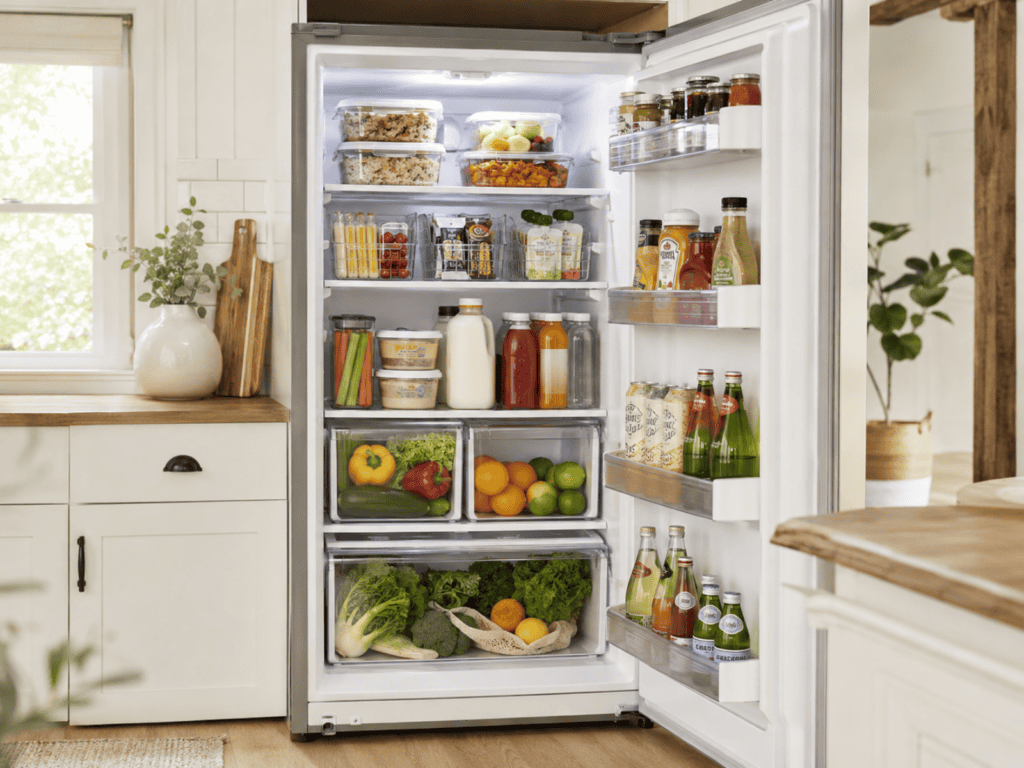
The fridge matters in a small kitchen because it is part of your storage space. If the fridge is packed and messy, the whole kitchen feels harder to manage.
Once a week, do a quick fridge reset. Toss expired food, wipe up spills, and move older items to the front.
Create simple zones for:
- Leftovers
- Lunch items
- Produce
- Condiments
- Drinks
- Snacks
- Meal prep
Clear fridge bins can help, but they are not required. The most important thing is that food is visible and easy to grab.
Do Not Buy Organizers First
It is tempting to buy bins, baskets, carts, and organizers right away. But the best small kitchen organization starts with decluttering.
Buy organizers only after you know what you are keeping and where it needs to go. Otherwise, you may end up organizing things you do not even need.
A few helpful products may include:
- Shelf risers
- Lazy Susans
- Drawer dividers
- Over-cabinet organizers
- Slim rolling carts
- Small clear bins
- Lid organizers
- Spice risers
The goal is not to buy more storage.
The goal is to make the space you already have work better.
Create a 5-Minute Counter Reset
A small kitchen needs quick resets because clutter shows immediately. A 5-minute counter reset can keep the kitchen from feeling out of control.
Set a timer and do only these things:
- Put away food
- Move dirty dishes to the sink or dishwasher
- Throw away trash
- Return random items to their homes
- Wipe the main counter area
This does not have to be perfect. It just gives the kitchen a fresh start.
If you only have time to do one thing, clear one counter. That small win can make the whole kitchen feel better.
Do a Nightly Sink Reset
A clean sink makes a small kitchen feel much calmer.
Before bed, try to clear the sink as much as possible. Load the dishwasher, wash the last few dishes, wipe around the sink, and set out a fresh towel if needed.
You do not need a perfect kitchen every night. But waking up to a mostly clear sink can make mornings feel less stressful.
Check the Fridge and Pantry Weekly
Small kitchens do not have room for forgotten food. Once a week, do a quick fridge and pantry check.
Toss expired food, move older items to the front, and make a note of what needs to be used soon. This helps prevent overbuying and keeps food storage from becoming crowded.
It also makes meal planning easier because you can see what you already have.
Small Kitchen Organization Checklist
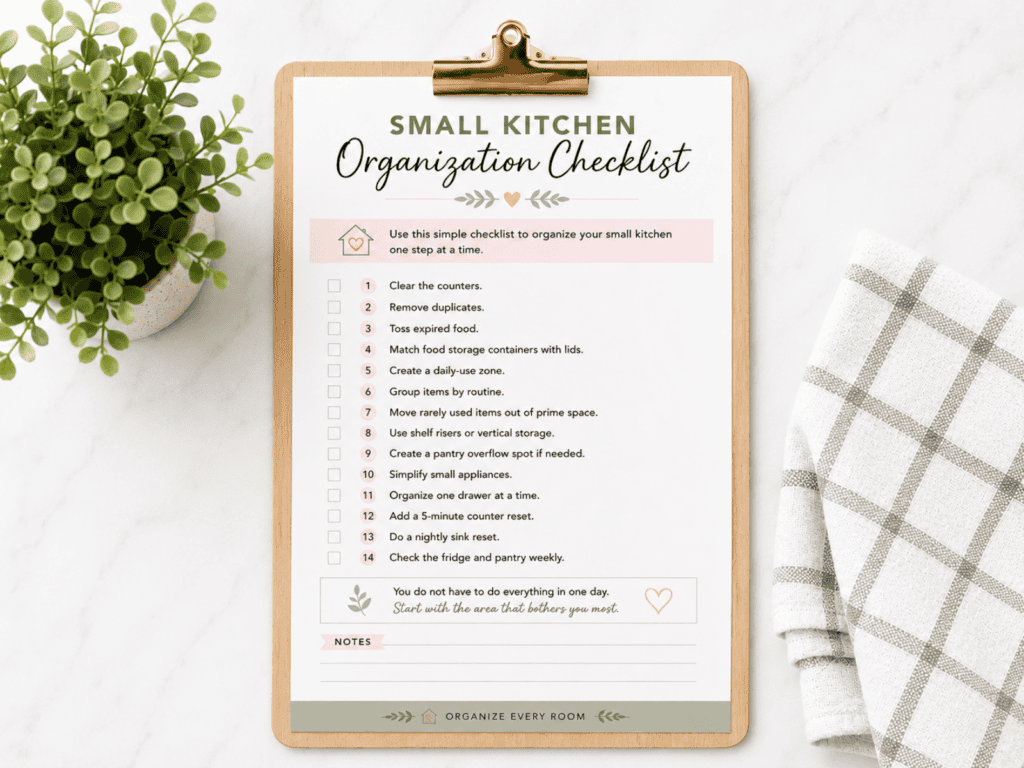
Print this simple checklist to organize your small kitchen one step at a time:
- Clear the counters.
- Remove duplicates.
- Toss expired food.
- Match food storage containers with lids.
- Create a daily-use zone.
- Group items by routine.
- Move rarely used items out of prime space.
- Use shelf risers or vertical storage.
- Create a pantry overflow spot if needed.
- Simplify small appliances.
- Organize one drawer at a time.
- Add a 5-minute counter reset.
- Do a nightly sink reset.
- Check the fridge and pantry weekly.
You do not have to do everything in one day. Start with the area that bothers you most.
Final Thoughts on Small Kitchen Organization
A small kitchen will probably never feel huge, but it can feel easier to use.
When you clear the counters, remove duplicates, create simple zones, and keep daily-use items close together, your kitchen starts to function better.
You spend less time searching for things, moving piles around, and feeling frustrated by the lack of space.
Small kitchen organization is not about perfection. It is about making your kitchen support your real life. Start with one counter, one drawer, or one cabinet. Even a small change can make a tiny kitchen feel calmer.