
15 Kitchen Drawer Organization Ideas for Easier Cooking

You pull open a kitchen drawer, and the potato masher catches. You push it down, move a whisk, and finally find the spatula you wanted. Then everything shifts again when you close the drawer.
That is the part worth fixing. These kitchen drawer organization ideas will help you arrange utensils, containers, towels, and cookware so you can take something out and put it back without rearranging everything around it.
Start by removing what does not belong, grouping the things you use together, and measuring the drawer before choosing organizers. You may only need one divider or a container you already own.
Before You Organize: Empty One Drawer and Check the Fit
Choose the drawer that interrupts your routine most often. Empty it onto a clear section of counter or a tray, wipe out the crumbs, and let the interior dry. Working on one drawer keeps the kitchen usable while you sort.
Separate everyday tools, occasional items, and things that belong elsewhere. Keep the duplicates you actually use; two spatulas may be useful if one is usually in the dishwasher. Set aside the uncomfortable, damaged, or unwanted extras. My kitchen decluttering list can help if you get stuck deciding.
Then measure the space inside the drawer:
- Width: measure between the inside walls, where the organizer will sit.
- Front-to-back depth: measure the usable interior, rather than the outside drawer box.
- Height and clearance: check both the organizer and the tallest item in it. Handles, jar tops, and upright lids still need to pass under the cabinet frame.
Check product measurements carefully, too. An organizer’s outside dimensions tell you whether it fits the drawer; its inside compartments tell you whether it fits your tools. An expandable tray also has a minimum size, which may already be too wide.
15 Kitchen Drawer Organization Ideas to Try
1. Give the Easiest Drawer to the Things You Use Most
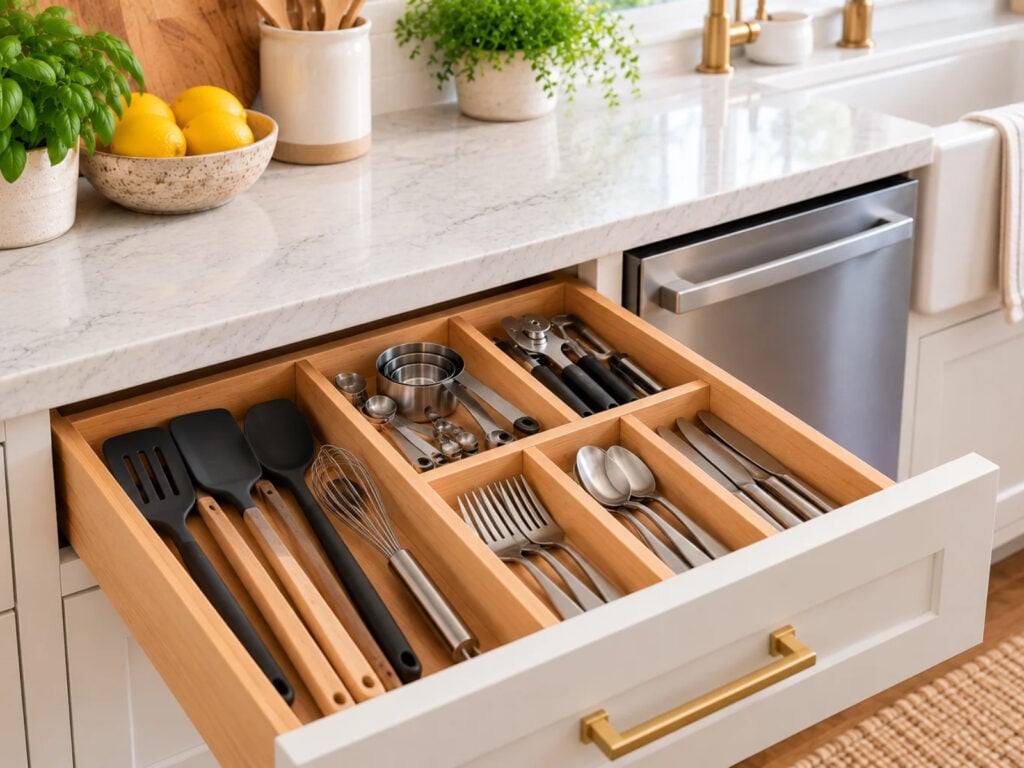
A convenient drawer should earn its location. Near the prep counter, that might mean the peeler, measuring spoons, and can opener. Near the dishwasher, it might mean everyday flatware.
Walk through making one familiar meal and unloading the dishwasher. Notice where you reach, turn, or carry a handful of tools across the room. Moving a category to a different drawer may help more than adding another organizer.
2. Fit the Flatware Tray to Your Actual Set
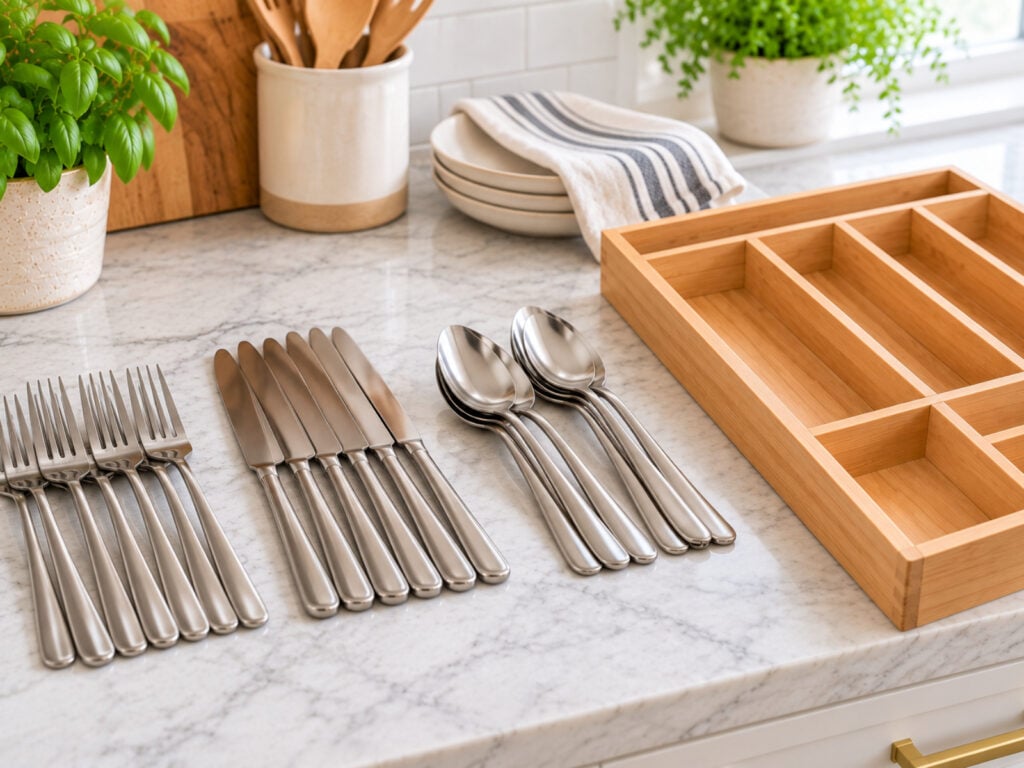
Lay out your forks, knives, and spoons before choosing a tray. Check the longest handle and the width of a stack of spoons. Oversized compartments waste space, while tight ones make putting things away difficult.
A few separate trays can work better than a single insert in an unusually shaped drawer. Give serving utensils their own section if they fit; otherwise, move them beside the cooking tools rather than piling them over the flatware.
3. Give Long Utensils Room to Lie Flat
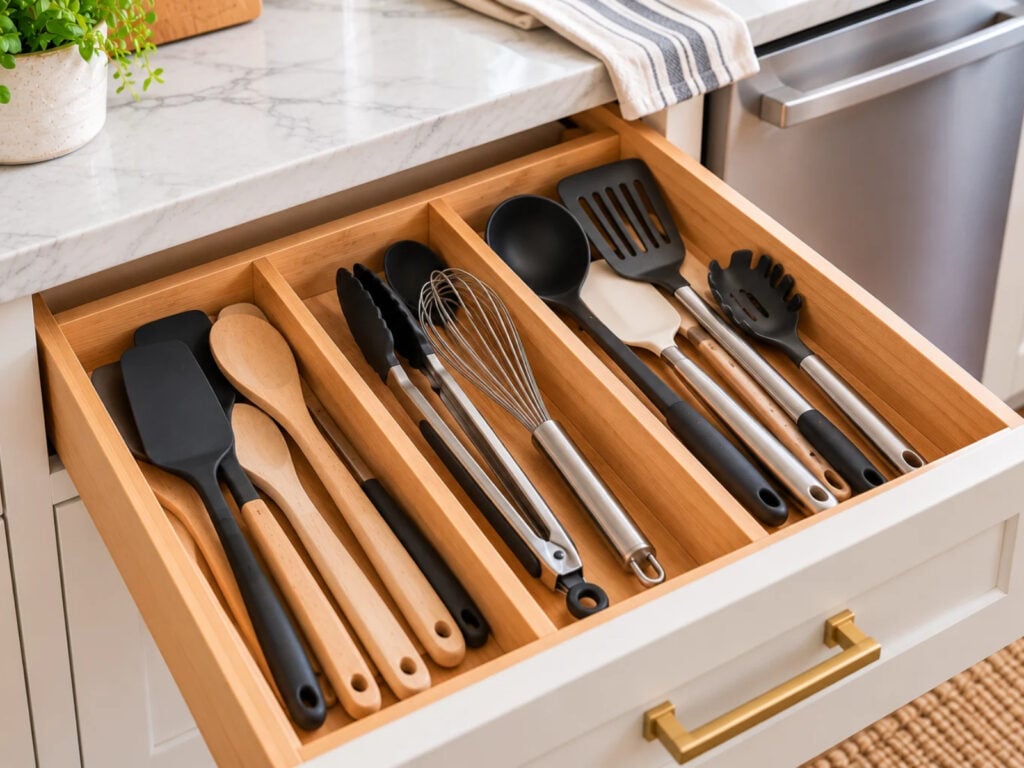
Spatulas, wooden spoons, whisks, and tongs rarely fit neatly into the small compartments of a cutlery tray. Try one or two long sections, with the handles pointing toward the front so they are easy to grasp.
Lay bulky utensils in place before adding dividers. Alternate the direction of two wide utensil heads if that helps them sit beside each other. A ladle that still catches when you close the drawer needs a deeper spot, even if its handle fits perfectly.
4. Separate Tiny Tools From Bulky Ones
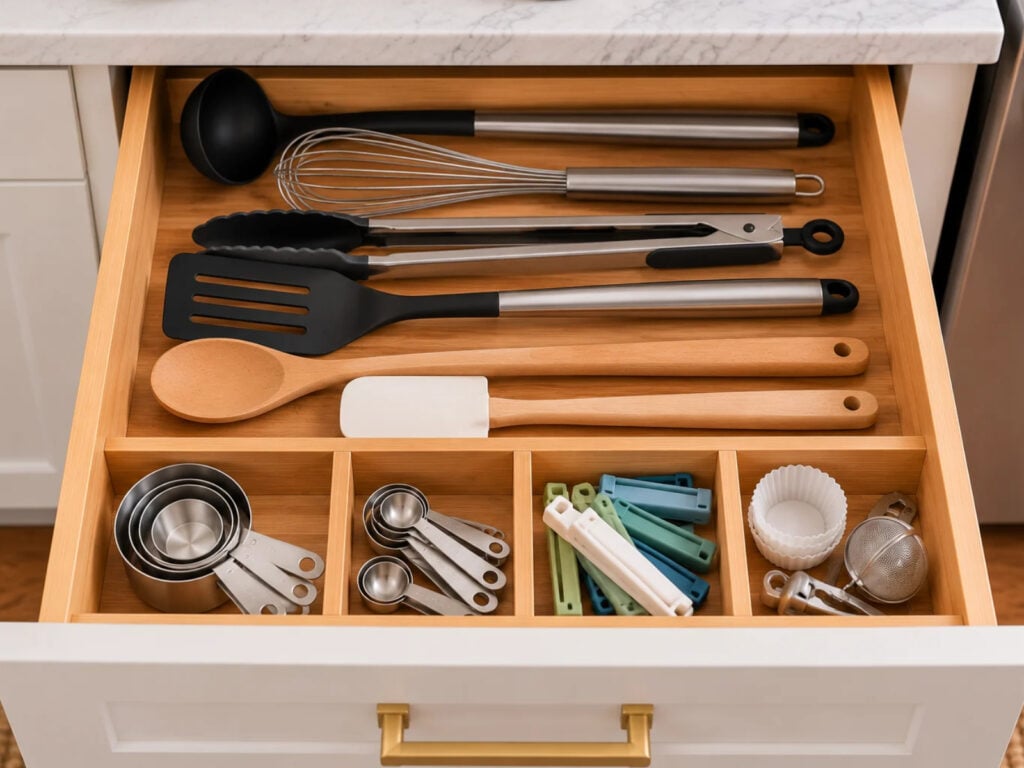
Measuring spoons and bag clips disappear beneath a whisk or rolling pin. Give small items a shallow container at the front of the drawer, and leave a larger open section for the awkward pieces.
Avoid dividing everything into tiny categories. A single compartment for the measuring spoons you use together may be easier to maintain than a separate slot for every size.
5. Organize a Narrow Drawer From Front to Back
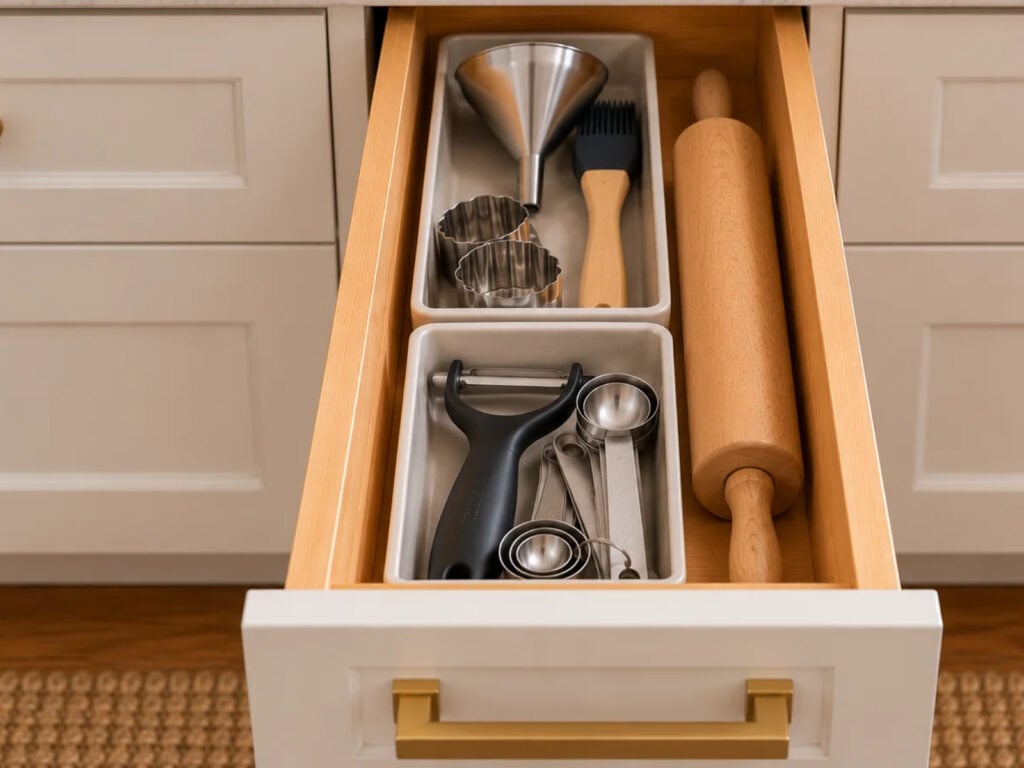
If a standard tray is too wide, try a slim tray running the length of the drawer or two small containers placed one behind the other. Keep the items you reach for most in front.
For example, a narrow prep drawer could hold a peeler and measuring spoons in front, with a small funnel and pastry brush behind. If you cannot see or reach the back section comfortably, reserve it for occasional tools.
6. Keep Shallow Drawers in One Layer
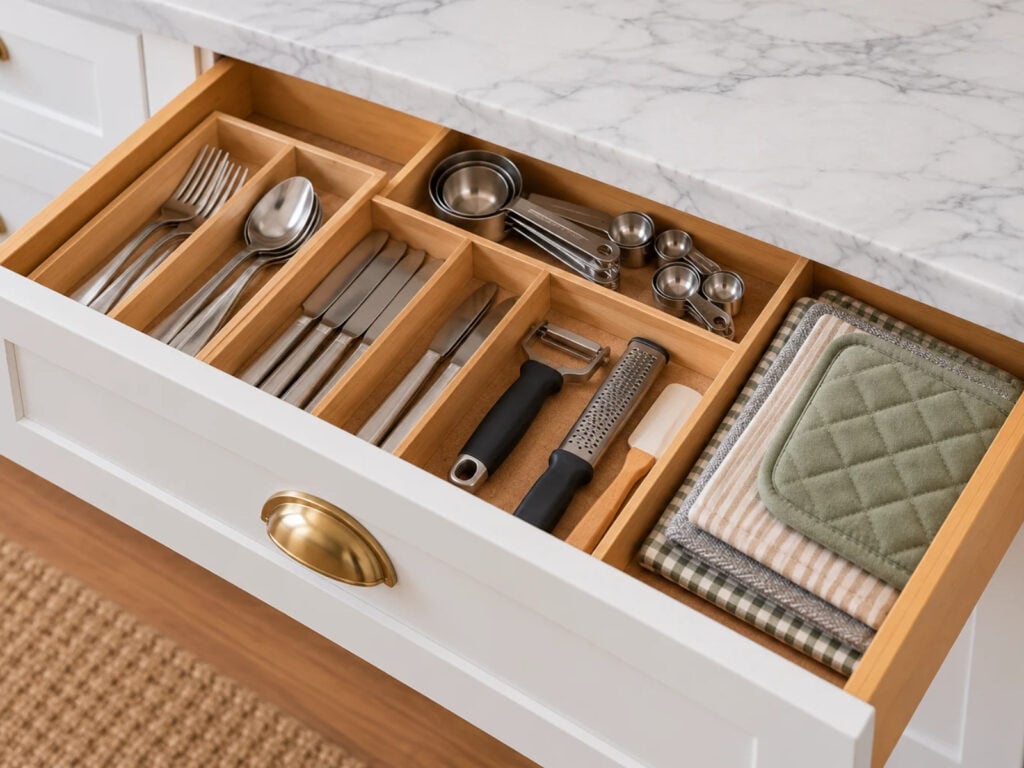
Shallow drawers work well for flatware, measuring spoons, slim tools, and folded potholders. They become frustrating when utensils overlap and lift each other into the drawer opening.
Test the height with everything in place. A thick organizer base or extra liner reduces the room above your tools. If a low tray still raises them too much, a divider without a base may be a better fit.
7. Make Small Organizers Stay Where You Put Them
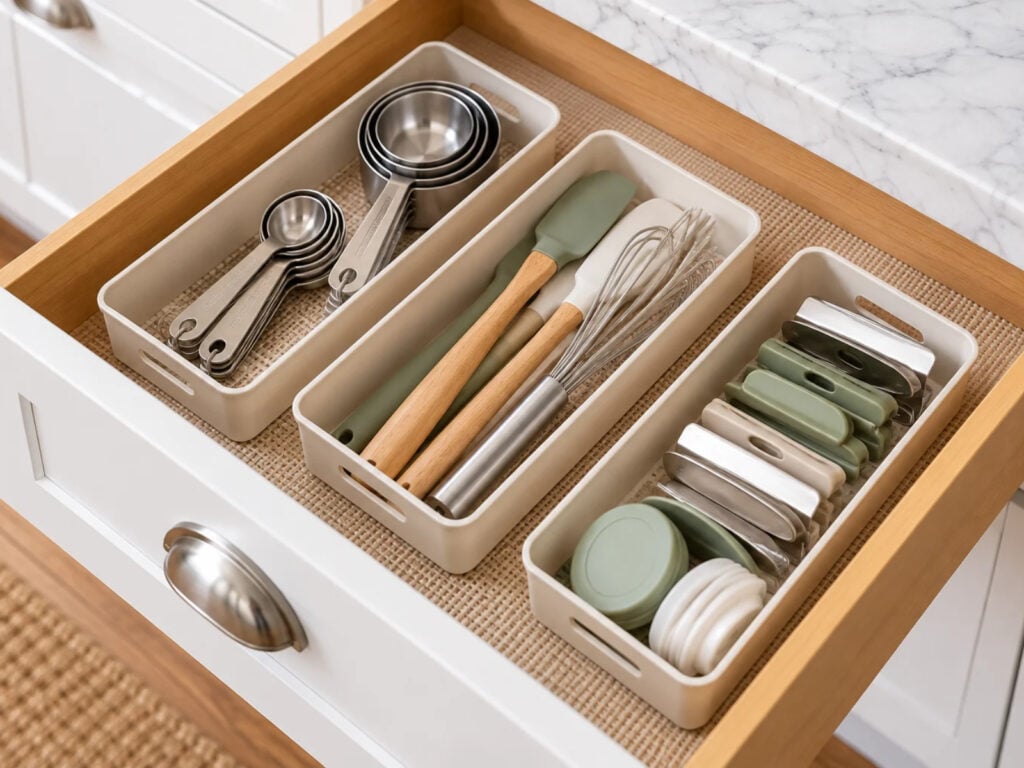
If the containers slide backward every time you open the drawer, try a piece of nonadhesive nonslip liner that is suitable for the drawer’s finish. Wash and dry the drawer and organizer bases first.
You can also rearrange the trays so they support one another without being forced tightly against the walls. Open and close the drawer several times. If the arrangement moves, adjust it before filling every compartment.
8. Try Containers You Already Own
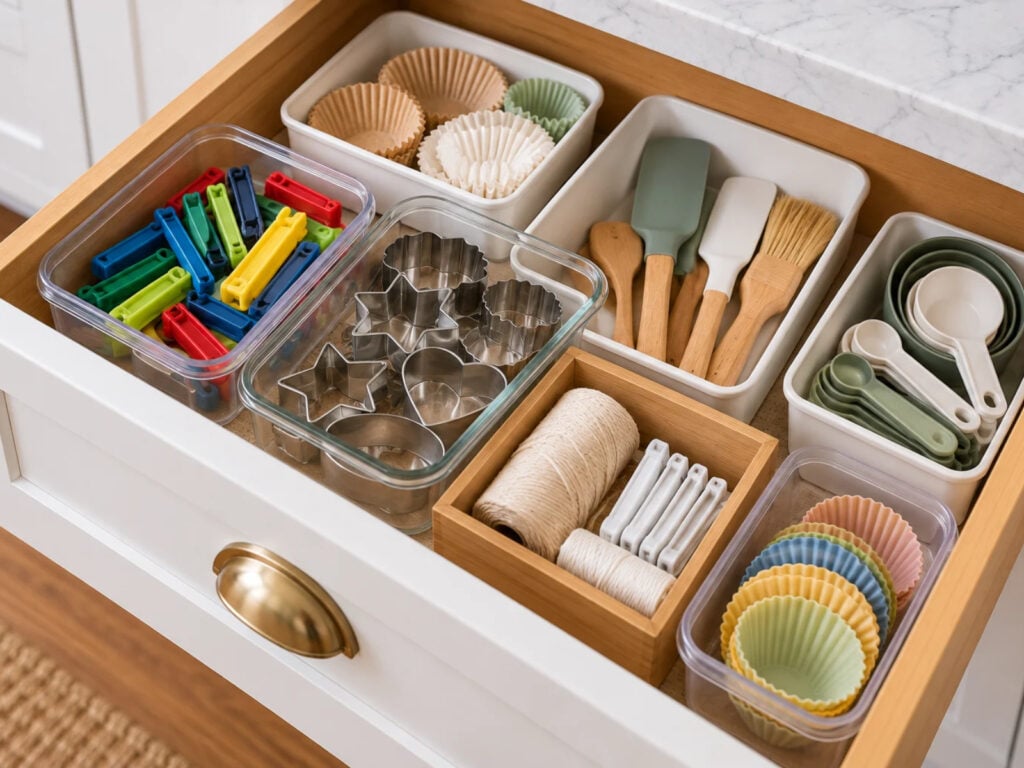
An unused food container can hold bag clips. A shallow box can keep dry baking tools together while you test a layout. Mismatched containers are fine if you can see and reach what is inside.
Choose clean containers without sharp edges, and use washable ones where crumbs or spills are likely. If a cardboard box proves useful, replace it only when you know the size and purpose you need.
9. Match Food Containers and Give Lids a Separate Slot
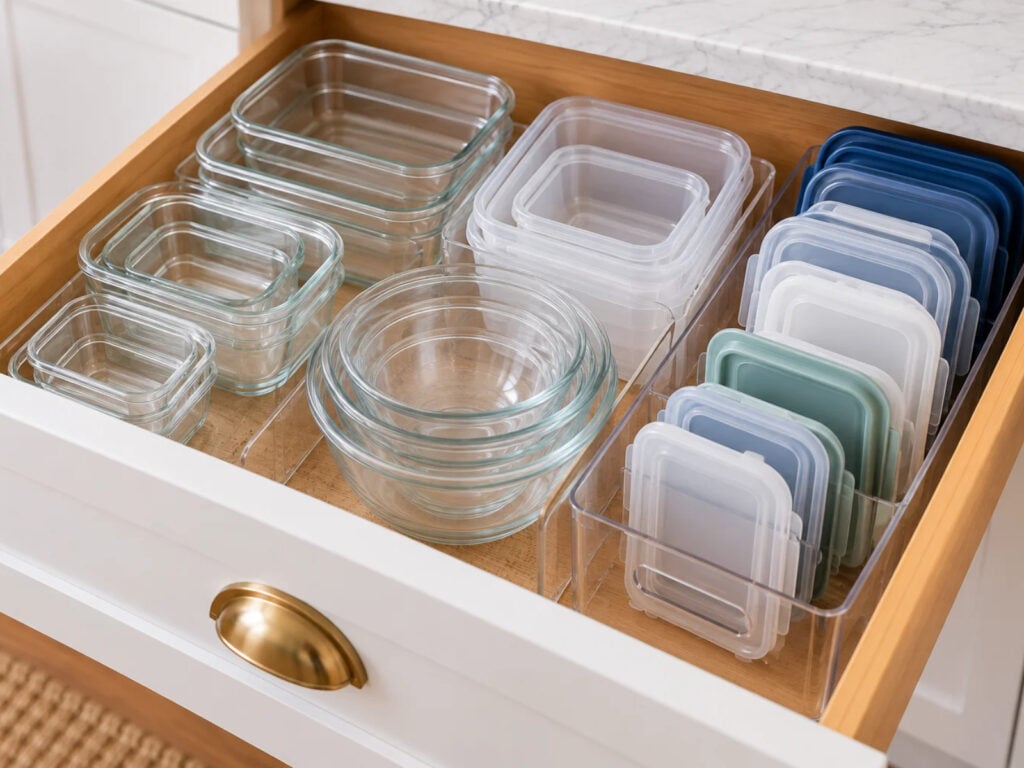
Match each food container to a lid before putting either back. Nest compatible containers in small groups and stand the lids beside them in a narrow bin or a section made with a divider.
Check upright lids against the drawer’s closing clearance. If they are too tall, store them flat in a shallow tray instead. Keep stacks short enough that getting the container you use most does not involve lifting out several others.
10. Fold Kitchen Towels to the Drawer’s Height
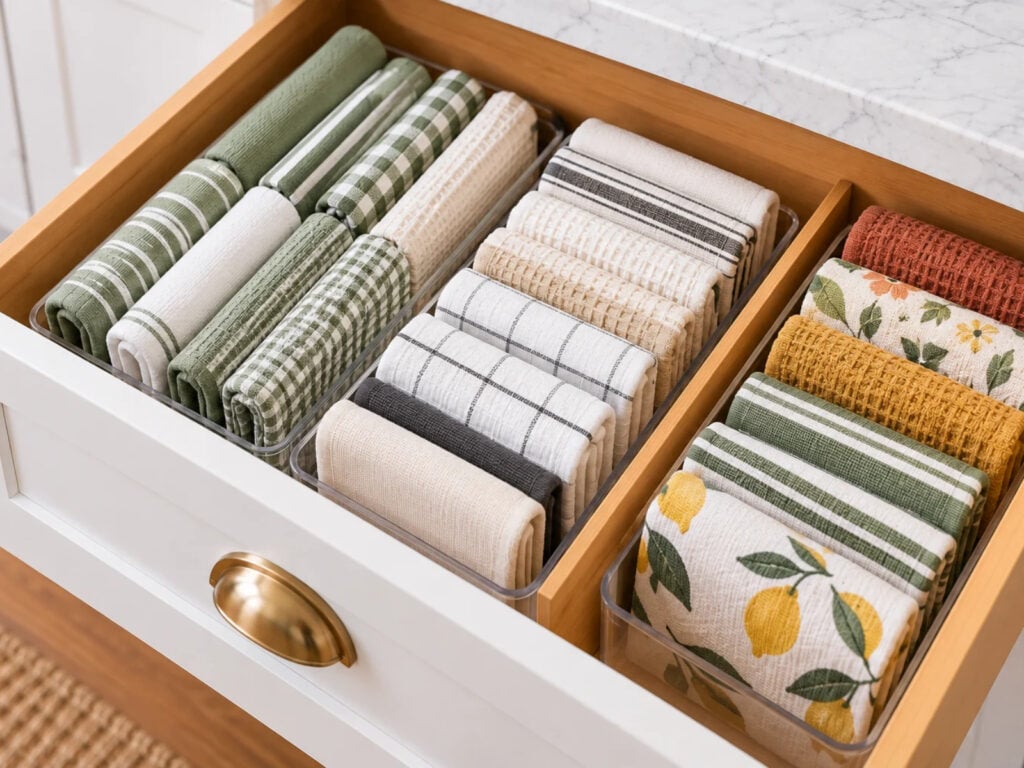
Fold one towel, stand it on its folded edge, and test whether the drawer closes. Adjust the fold before doing the rest. In a deeper drawer, a row of upright towels lets you take one without disturbing a whole stack.
In a shallow drawer, short flat stacks may be easier. Keep dishcloths in a small neighboring section, and leave enough space to put clean towels away after laundry day. Only put them away once they are dry.
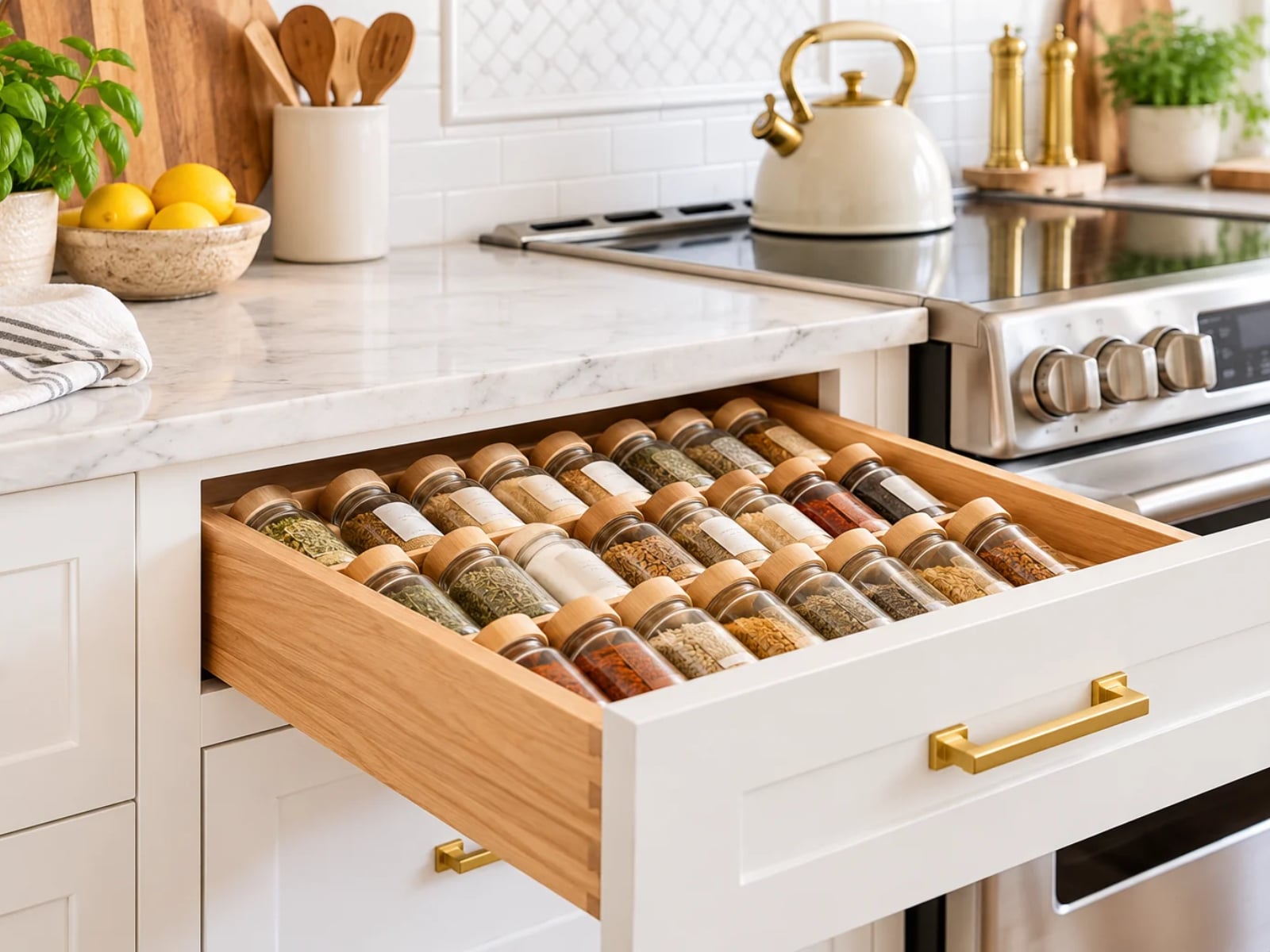
11. Make Spice Labels Visible From Above
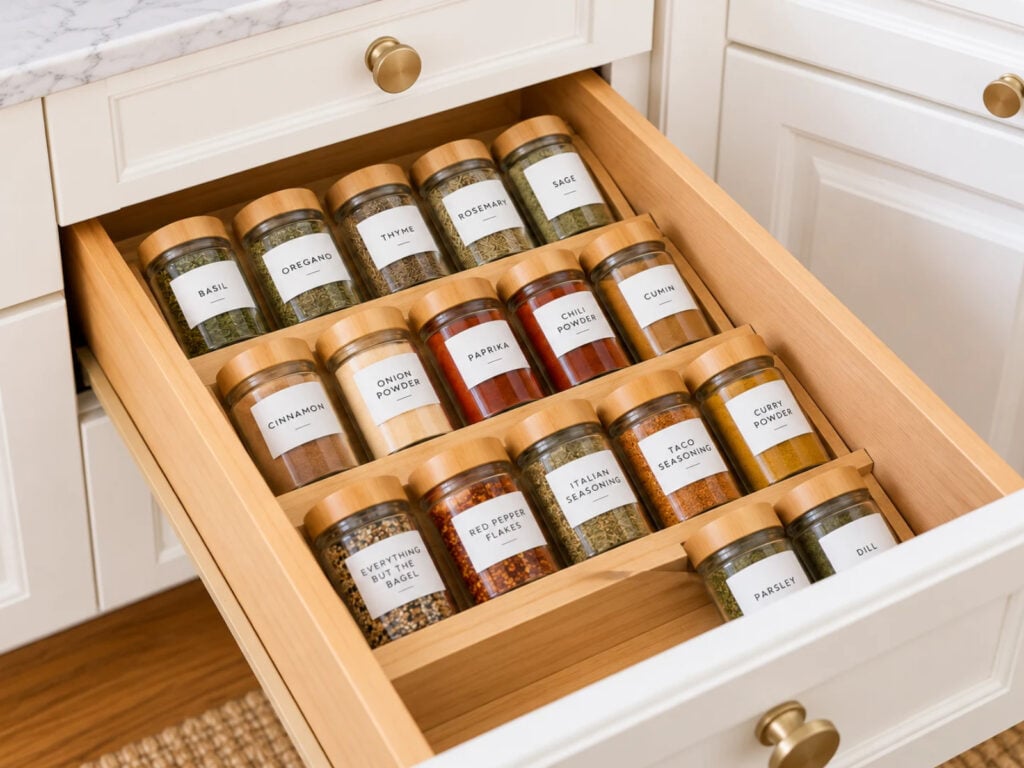
For jars lying on a drawer insert, turn the labels upward. For jars standing in a deeper drawer, add readable names to the lids. You should be able to identify a jar without picking up several others.
Try the arrangement with your existing jars before buying a matching set. Check that every lid clears the opening, and choose a drawer away from heat and steam. Put the seasonings you use regularly where they are easiest to reach.
12. Check the Roll Before Buying a Wrap Organizer
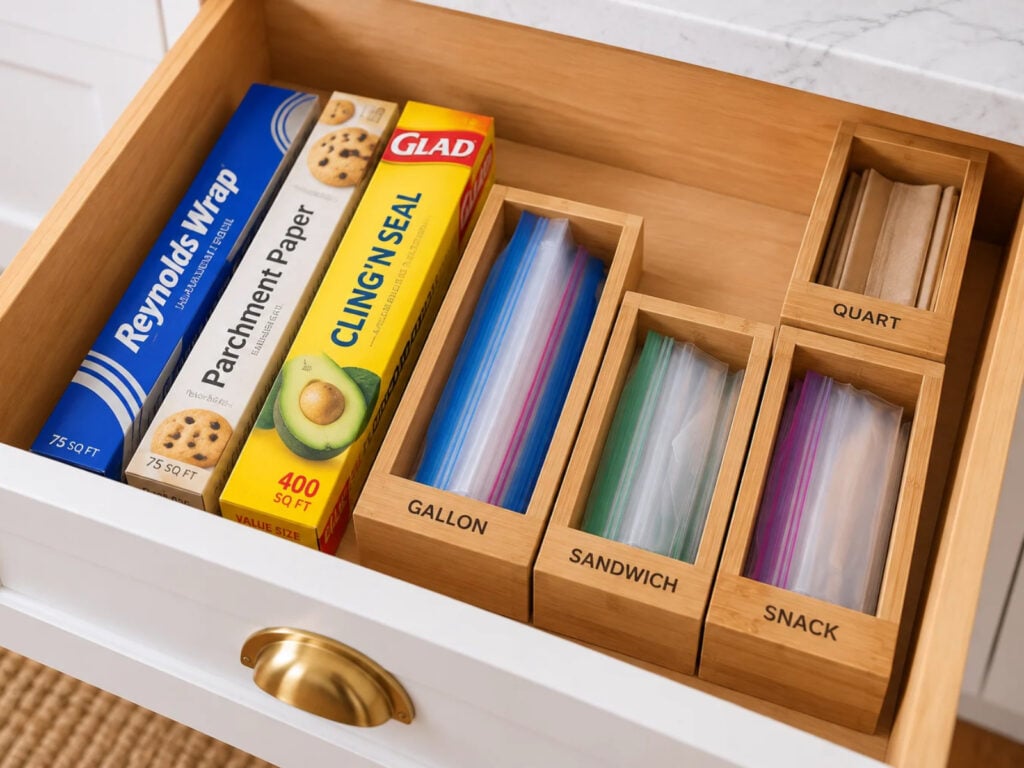
Foil, parchment, and food-storage bags can stay in their original boxes if those boxes fit and work well. A divider may be all you need to stop them from sliding over one another.
If you want a dispenser, check the roll’s width and diameter against the stated capacity. Also check whether you can use its cutter comfortably inside the drawer. A dispenser that fits but has to be lifted out every time may not simplify the job.
13. Protect Knife Blades and Leave Room for the Handles
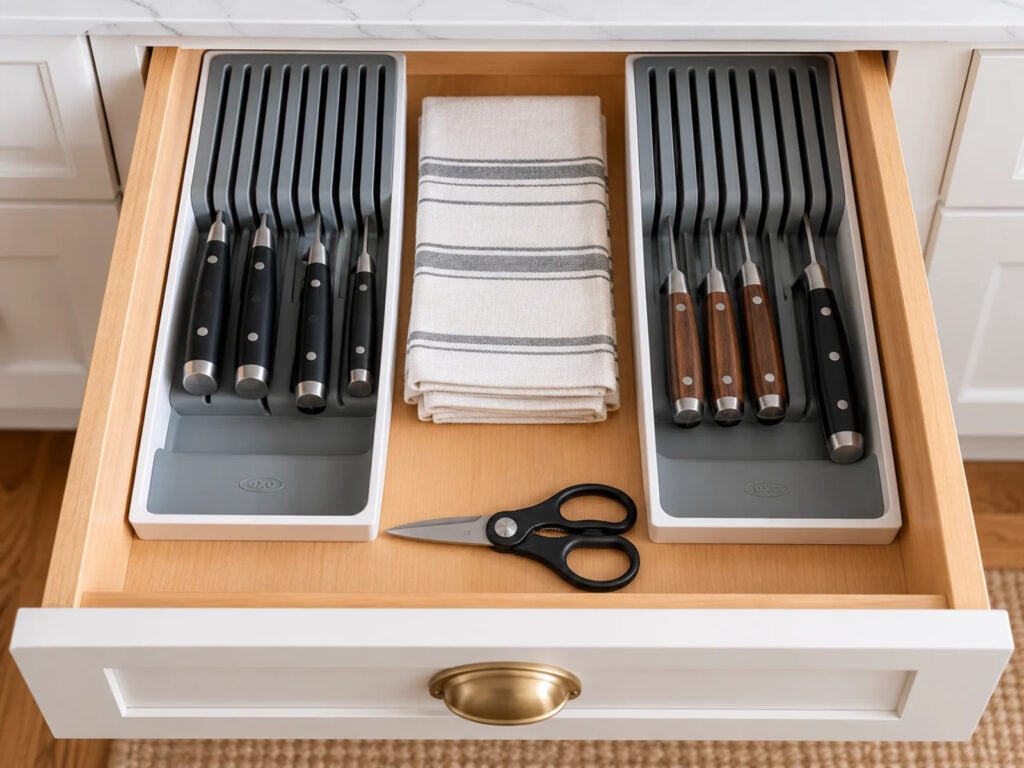
Use a purpose-made in-drawer knife holder or correctly fitted blade guards instead of leaving sharp blades loose among other tools. Check the holder against your longest knife and the size of the handles.
The whole arrangement needs room to close without catching. Keep other tools out of the knife section so you are not reaching through them to find something, and keep knives secured where children cannot access them.
14. Arrange Deep Drawers Around What You Can Lift Easily
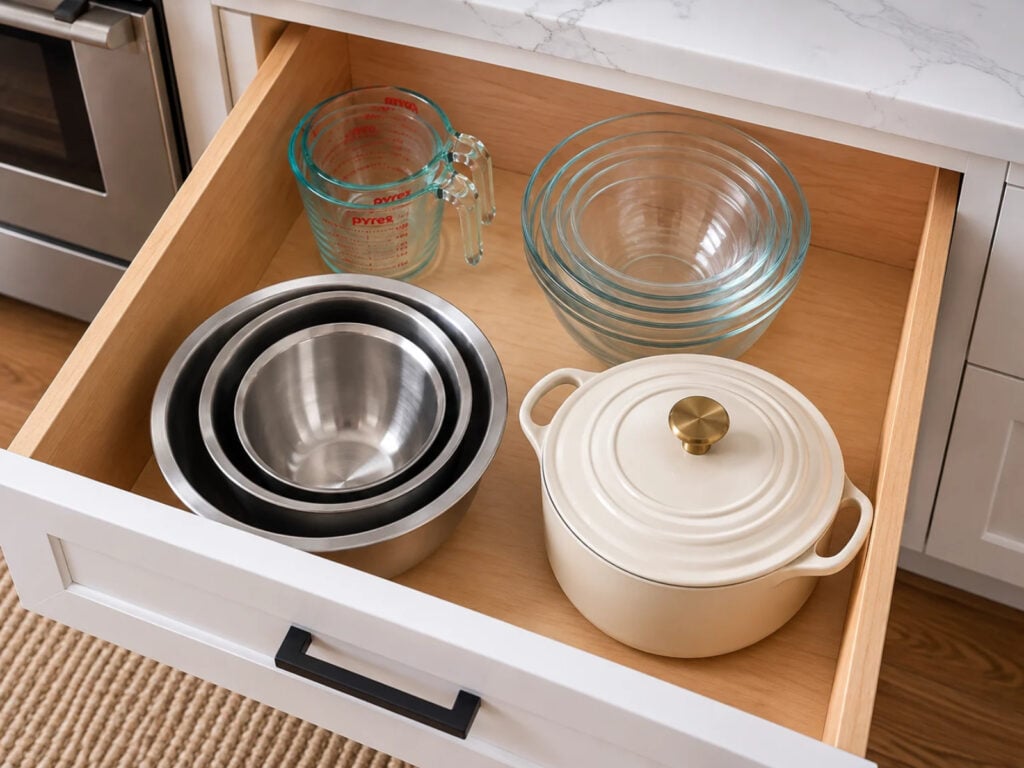
A deep drawer can hold cookware, mixing bowls, or dishes, but filling it to the top can make it hard to use. Check the drawer manufacturer’s load limit before loading it with heavy pieces.
Keep the pan or bowl you use most accessible. If you nest cookware, follow its care instructions and use suitable pan protectors where needed. Store lids beside the pans when there is room, or put a lid on its matching pot if the drawer has enough clearance.
If heavy dishes would be easier to reach on a shelf, my kitchen cabinet organization ideas cover ways to make those spaces more accessible.
15. Give the Catch-All Drawer a Short List of Jobs
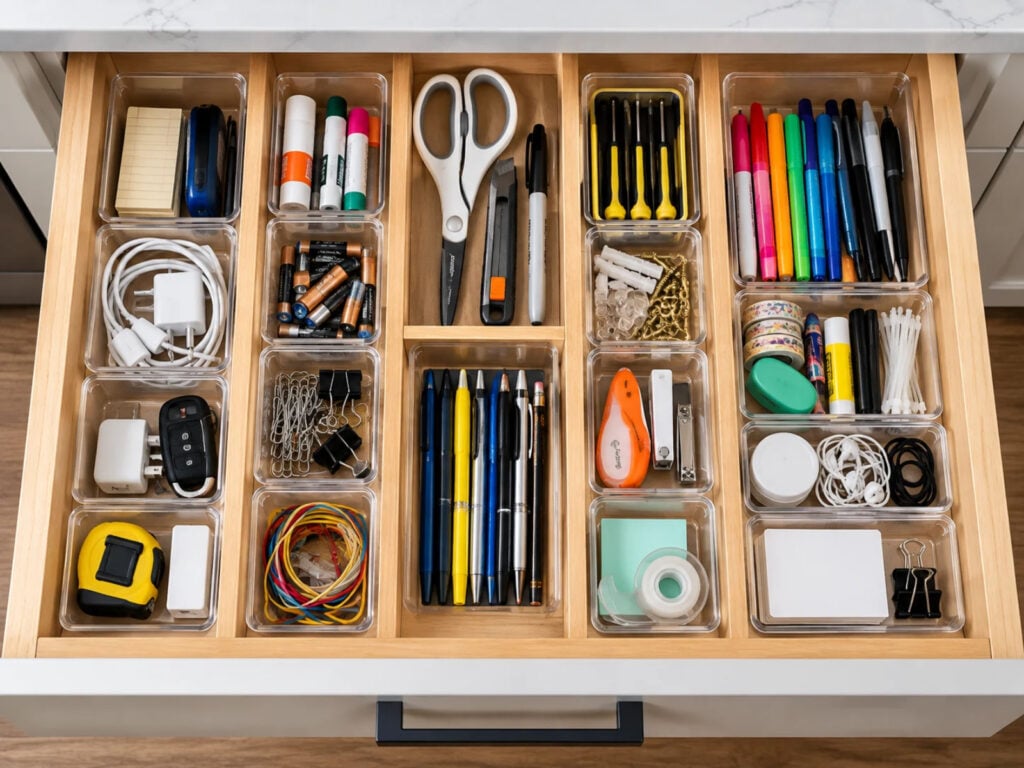
A household drawer can be useful. It might hold a pen, scissors, tape, and bag clips. The problem starts when anything without an obvious home gets pushed into it.
Choose the categories you want to keep there and give each a small section. Move paperwork and unrelated items to their proper places. When a compartment fills, sort it before adding a second layer.
Three Kitchen Drawer Layouts You Can Adapt
These are starting arrangements, not standard drawer sizes or shopping lists. Use your measurements and lay out the actual items before buying anything.
| Drawer type | Try this arrangement | Check before you commit |
|---|---|---|
| Wide and shallow | Flatware trays on one side; an open lane for longer serving utensils on the other. | Utensil heads stay below the opening, and you can lift out each stack comfortably. |
| Narrow prep drawer | A small tray for frequently used tools in front; occasional tools in a second tray behind. | You can see and reach the rear tray without emptying the front one. |
| Deep container drawer | Short stacks of nested containers on one side; matching lids in a divided section beside them. | The tallest lid clears the frame, and the most-used container is easy to remove. |
If You Only Have Two or Three Kitchen Drawers
Give those drawers to the things you reach for throughout the day. Flatware might share one drawer with a small section for prep tools. A second drawer could hold cooking utensils, with towels in a basket on a nearby shelf.
Occasional baking tools can share a bin in a cabinet. You do not need a separate drawer for every category. For more ways to decide what belongs where, see my guide to organizing a small kitchen.
Test the Drawer During an Ordinary Week
After organizing, use the drawer through cooking, cleanup, and putting clean items away. That last step matters: a drawer can look spacious while half its contents are in the dishwasher.
If something keeps landing in the wrong place, look at the reason. The compartment may be too tight, the tool may belong closer to where you use it, or several people may be interpreting the layout differently. A small label can help with shared categories.
Change the part that causes trouble. There is no need to start over because one section needs more room.
Start With the Drawer You Open Every Day
Choose one drawer, remove what does not belong, and give your most-used items an easy place to land. Close it, open it again, and take out the thing you normally have to dig for. That is a useful first improvement.
If you would like help continuing with small, manageable tasks, my free 14-Day Declutter Challenge gives you one task each day.