
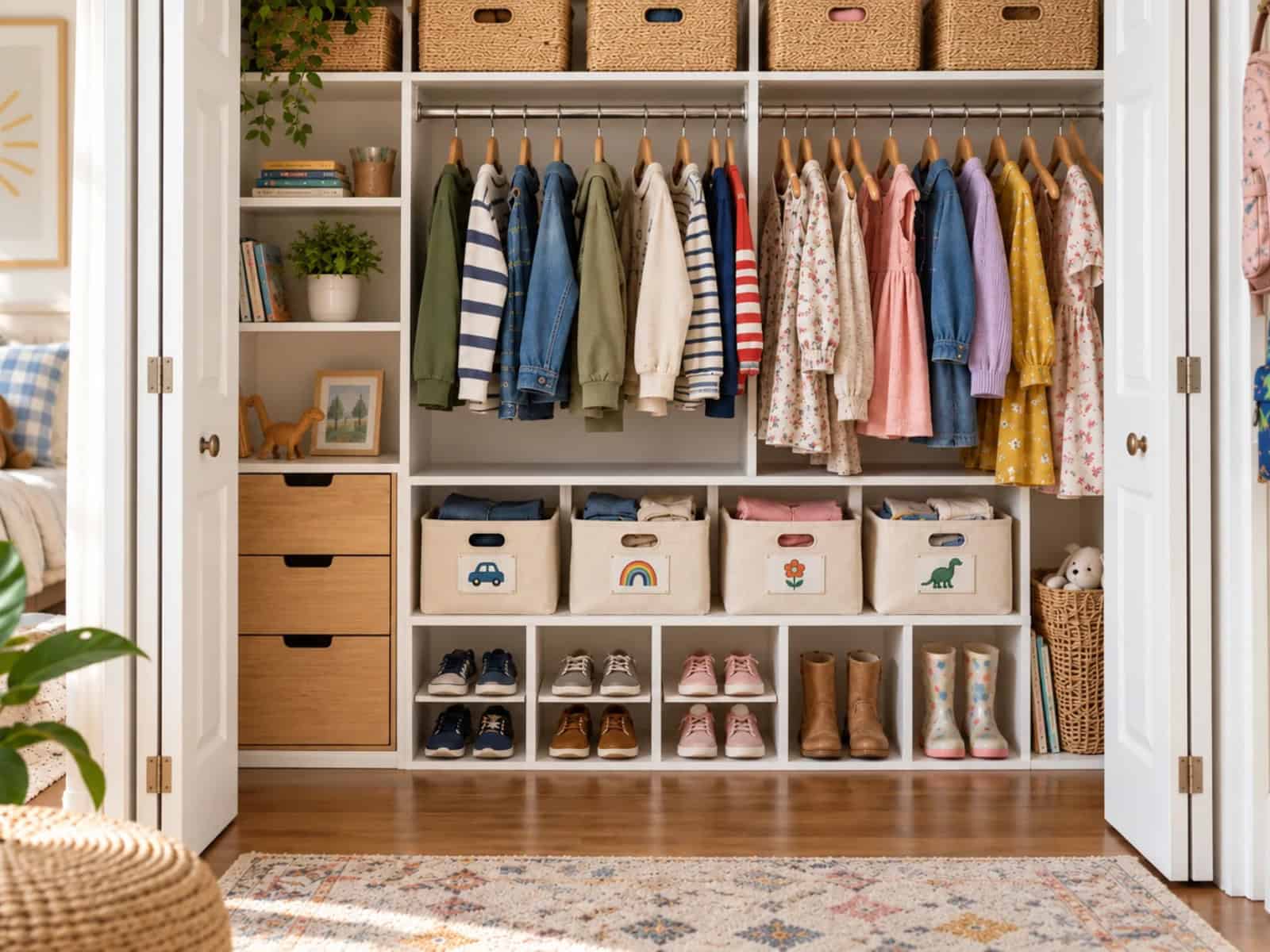
22 Kids’ Closet Organization Ideas for Easier Mornings

The most useful kids’ closet organization ideas make clothes easy to find and just as easy to put away. Start with clothes that fit now, keep everyday items within reach, and choose storage your child can actually use. A low basket may do more for your mornings than a closet full of matching hangers.
You do not need a custom closet or all 22 ideas. Look for the part that causes trouble: a rod that is too high, drawers packed too tightly, or shoes with nowhere to go. Fix that first, using what you already have whenever possible.
Start With the Clothes Your Child Uses
1. Remove Clothes That Do Not Belong in the Everyday Closet
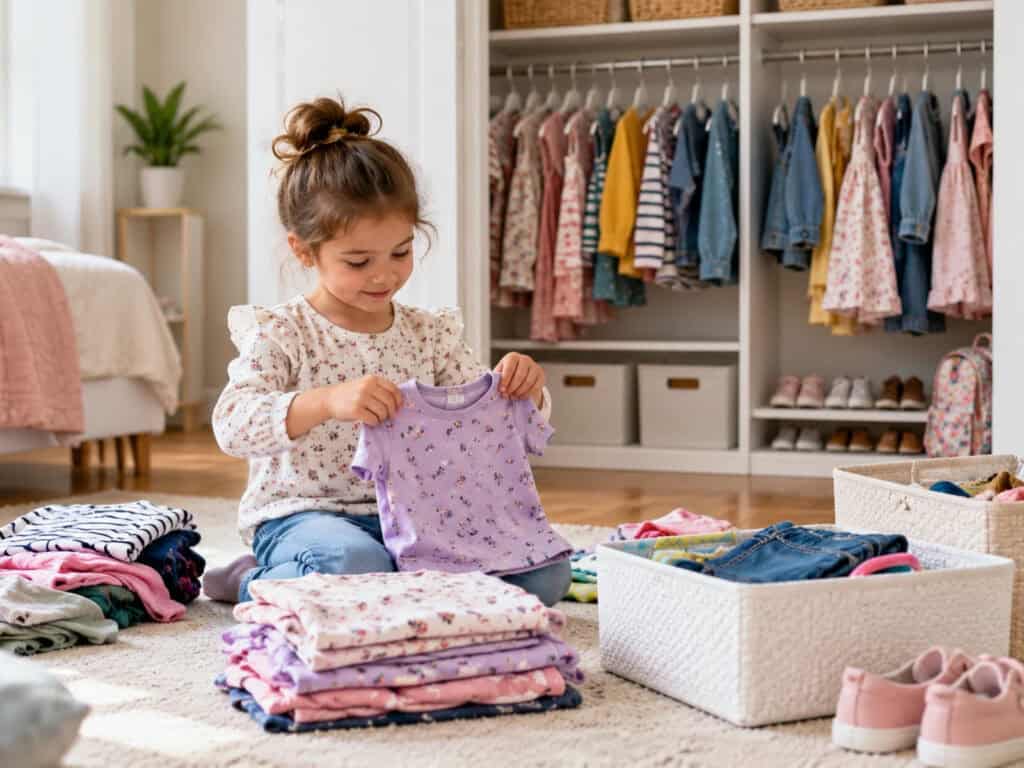
Before buying organizers, sort one category at a time. Start with shirts, pajamas, or shoes rather than emptying everything onto the floor.
Separate clothes into what fits and gets worn now, what you are saving for later, and what is ready to pass along. Include your child in decisions about uncomfortable or unwanted clothes when possible.
Keep future sizes and keepsakes out of the everyday section. Once you know what needs to fit, you can choose storage without buying bins for clothes that no longer belong here.
2. Put Everyday Clothes Within Reach
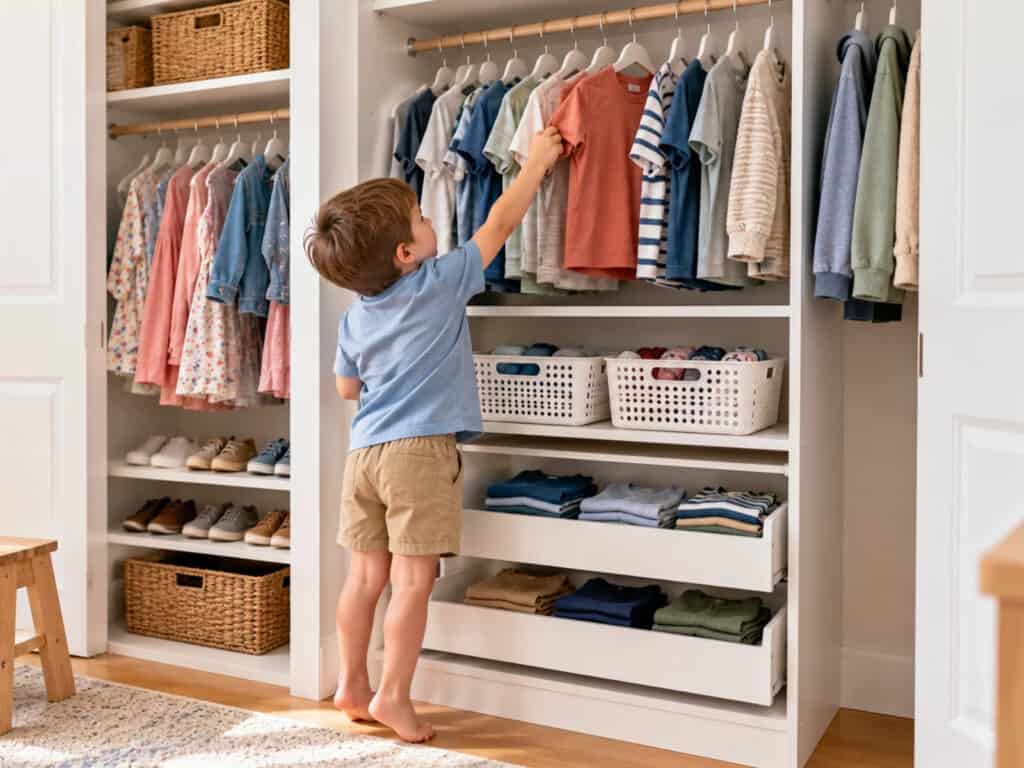
Ask your child to get a shirt, find socks, and put both away. Watch where the setup gets difficult. Can they reach the hanger? Pull out the basket? See inside the drawer?
Put frequently used clothes in that comfortable reach range. Reserve higher storage for lightweight items an adult retrieves, not everyday clothes that invite climbing.
Use your child’s actual reach and abilities rather than a standard height. Recheck the arrangement as those needs change.
3. Hang Some Clothes and Use Bins for Others
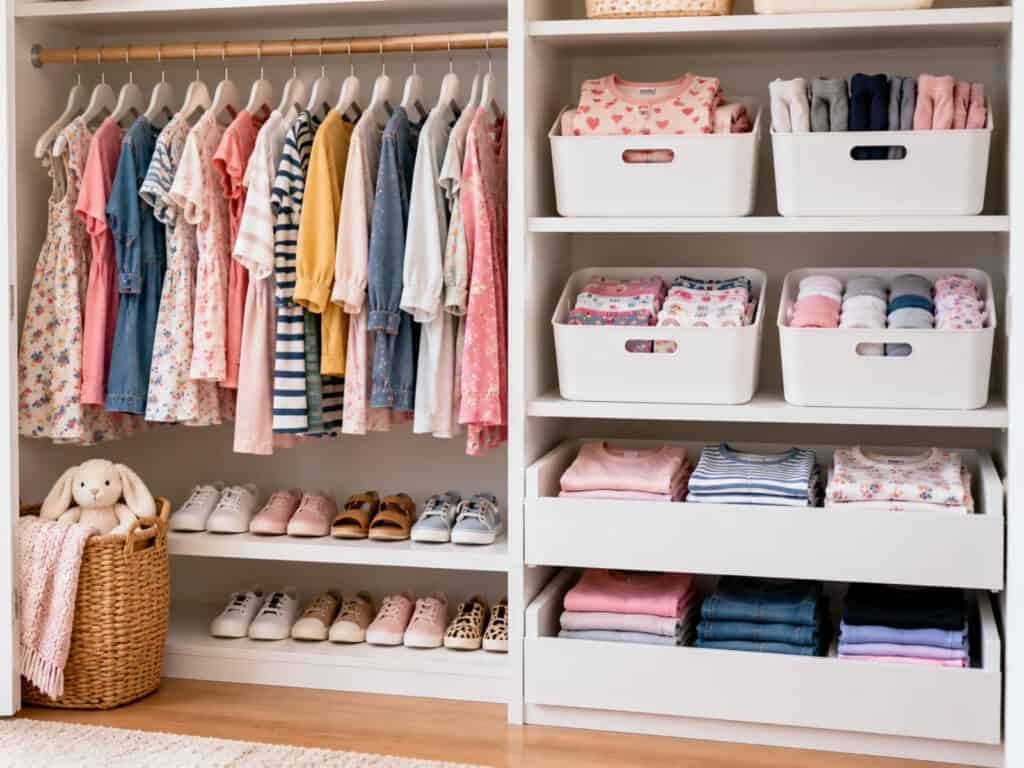
Hang clothes that wrinkle easily or are easier to recognize on a hanger, such as dresses, button-down shirts, and school uniforms. Use drawers or open bins for pajamas, leggings, underwear, and other everyday basics.
If hanging every T-shirt means clean clothes never get put away, try a labeled bin instead. Folding is optional for items where wrinkles do not matter.
Keep categories broad enough to use: “pajamas” is usually more practical than separate containers for pajama tops and bottoms.
Make Everyday Storage Easier to Use
4. Add a Second Rod Where Short Clothes Fit
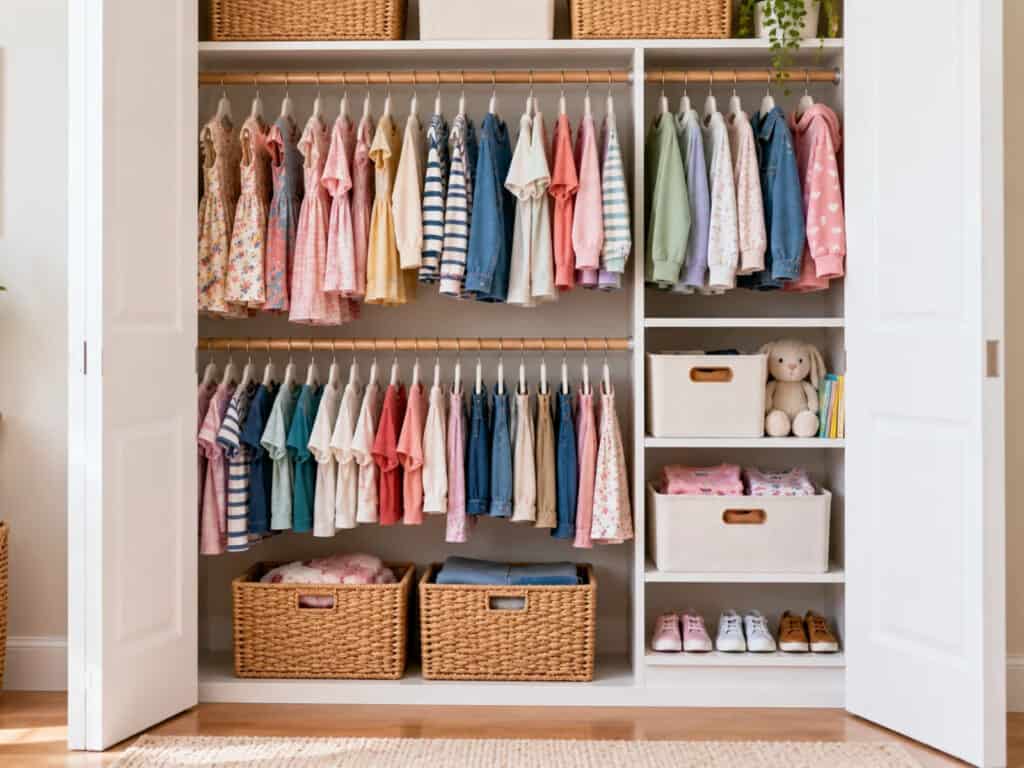
Short shirts and folded-over pants may leave unused space below a single rod. A second rod can use that space, with everyday clothes on the lower level and adult-managed items above.
Measure the actual clothes on their hangers before changing the layout. Leave enough clearance so they do not rest on another row of clothing or the floor. Keep a full-height section for dresses and longer coats.
For more ways to use height without crowding the room, see these vertical storage ideas.
5. Adjust Shelves to Fit What You Store
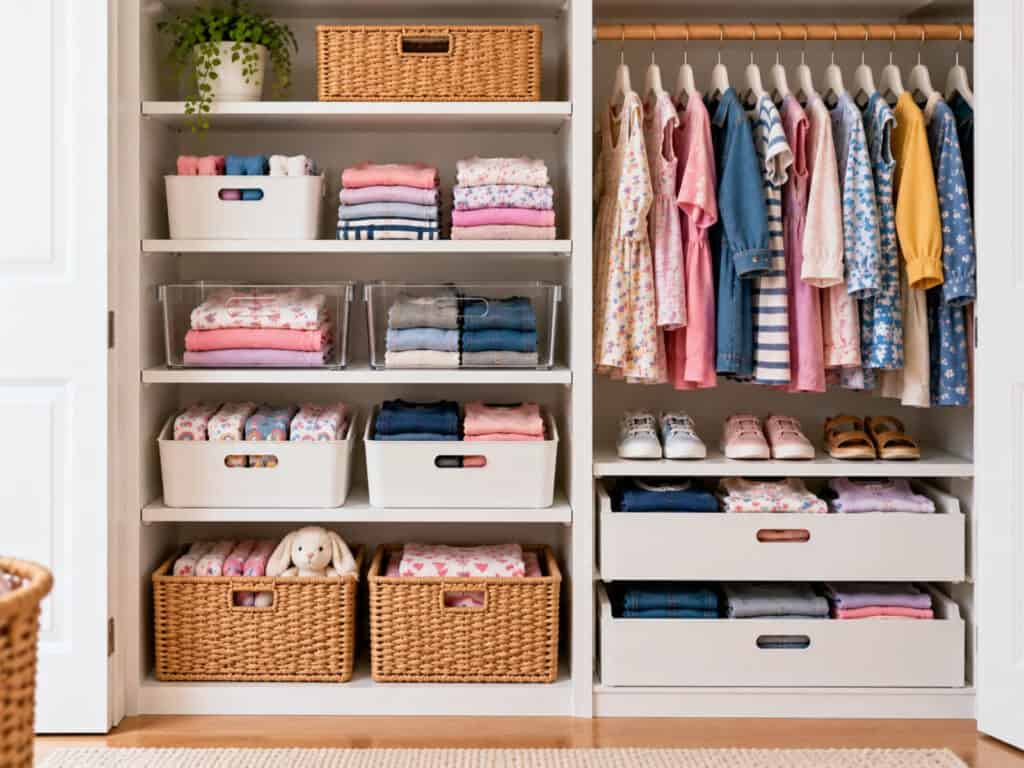
Arrange adjustable shelves around the containers and clothes you actually have. A tall empty gap above a shallow basket may be space you can put to better use.
Keep folded stacks short enough that removing one item does not pull down the rest. On deep shelves, use a pull-out bin rather than putting a second, hidden row behind the first.
Before adding shelves, check whether the existing spacing can be changed. Follow the system’s installation instructions and weight limits.
6. Add Low Hooks for the Things That Land on the Floor
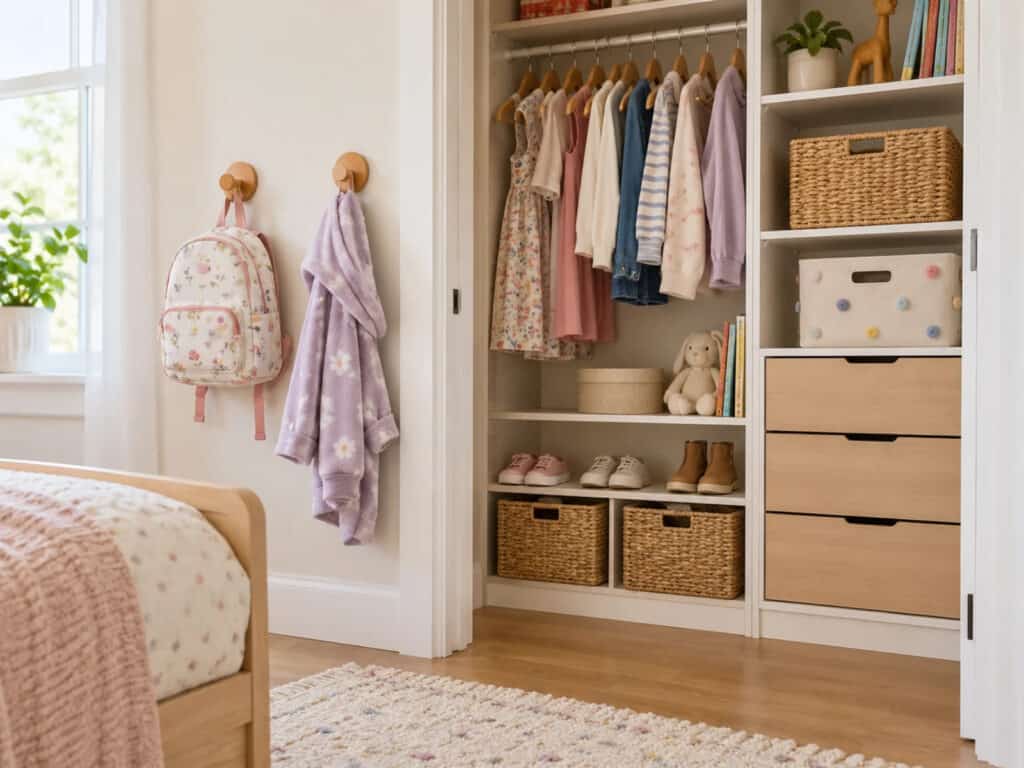
A reachable hook works well for a sweatshirt, backpack, or robe that otherwise ends up in a pile. Choose an open spot where the item will not block drawers or catch in the closet door.
Give each hook a clear job. One for a backpack and one for a wearable-again sweatshirt are easier to maintain than a row holding everything.
Install hooks for the surface and expected load. Keep long straps and cords away from young children.
7. Divide Drawers Without Overcomplicating Them
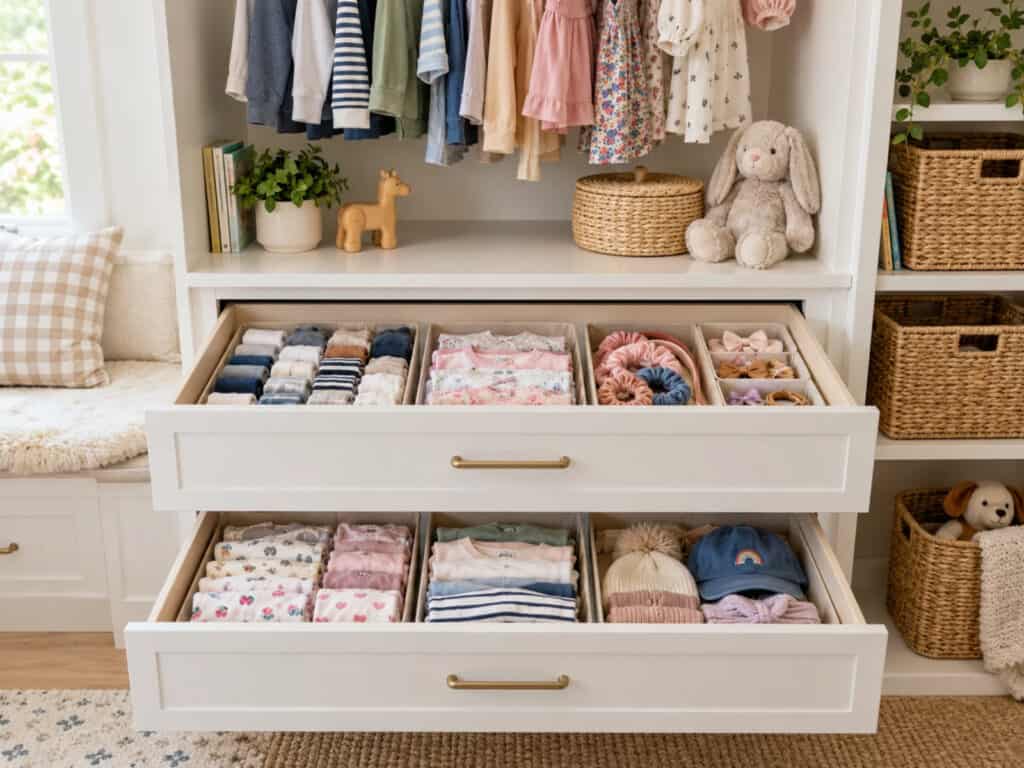
Use simple dividers to keep socks, underwear, and small accessories from mixing together. Existing shallow boxes can work if they fit and have no sharp edges.
Leave enough room to take things out and return them without squeezing. If a drawer needs careful rearranging every time laundry comes back, remove extras or use fewer categories.
For an older child who prefers folded clothes, arrange T-shirts upright so the choices are visible. Skip precise folding if it makes the drawer harder to maintain.
8. Give Shoes a Low, Obvious Home
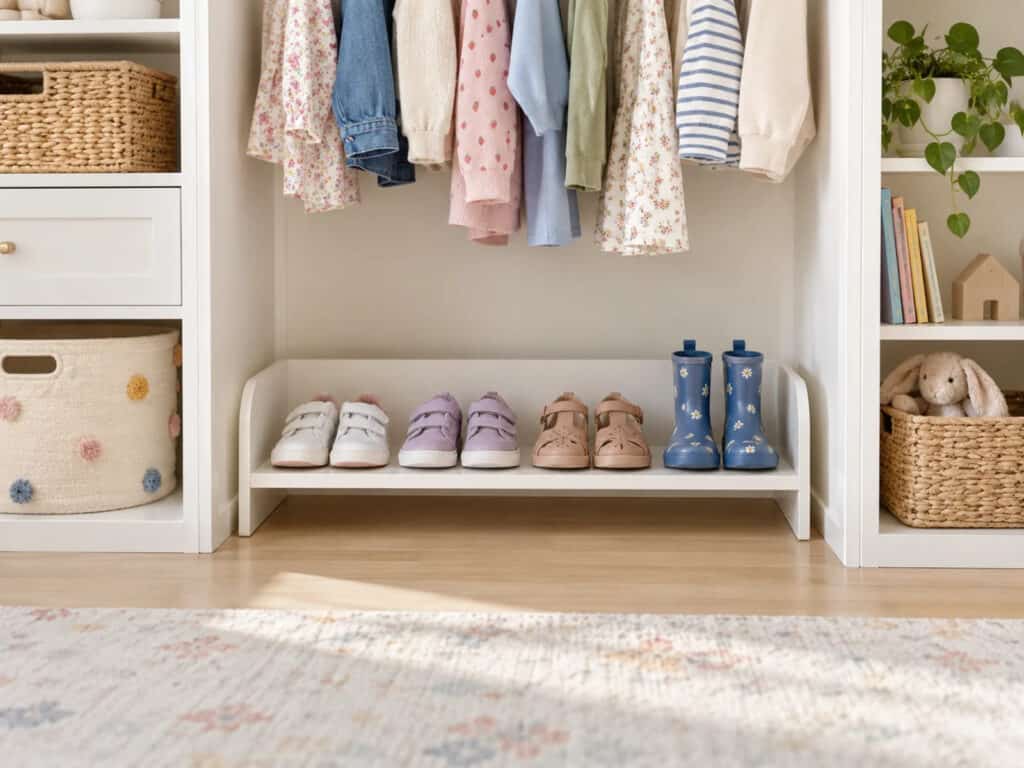
Choose a low shelf, tray, or open bin for the shoes your child regularly wears. Place pairs side by side where possible; deep baskets can turn into a search for the matching shoe.
Keep outgrown shoes out of this area. Save occasional-use pairs elsewhere if the daily shelf is crowded.
If shoes usually come off by the front door, keep everyday pairs there instead. The closet only needs to hold the shoes that make sense in this room.
9. Label the Places Where Clothes Go
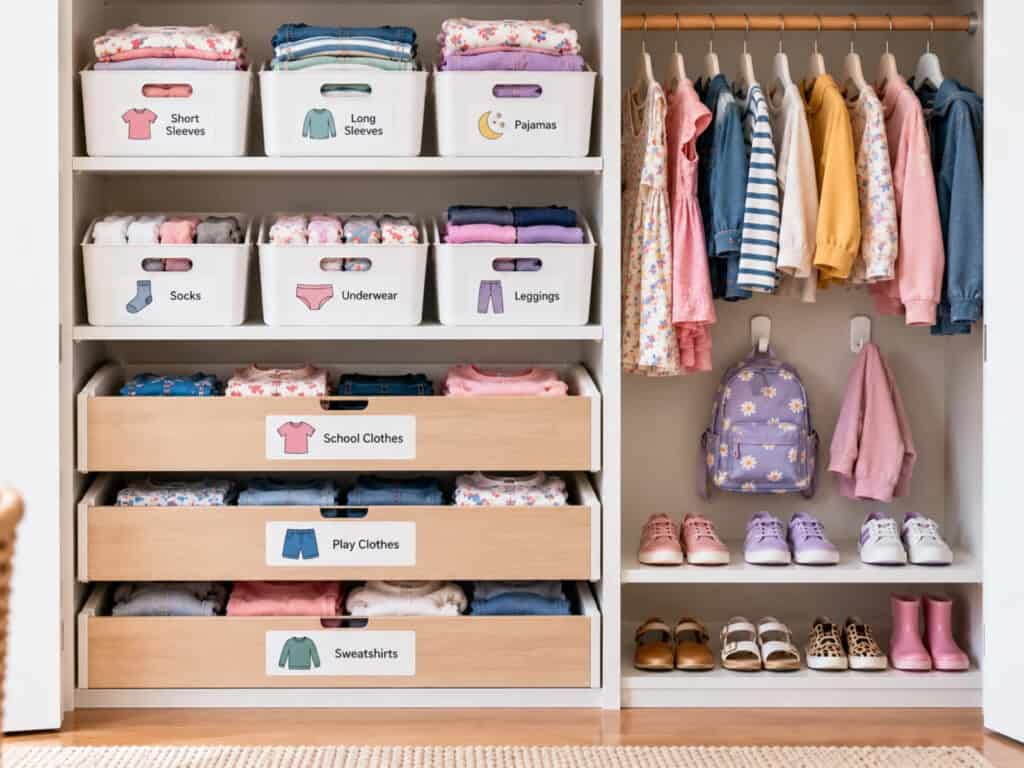
Label bins, drawer fronts, or shelf edges with familiar words: socks, pajamas, school clothes. Add a simple picture for a child who does not read yet or finds visual labels helpful.
Place labels where they can be seen without pulling everything out. Temporary labels are useful while you test the arrangement.
Let your child choose a label color or decorate a bin if they want to. Personal touches can fit the system without adding extra objects to already busy shelves.
10. Make the Laundry Basket Easy to Reach
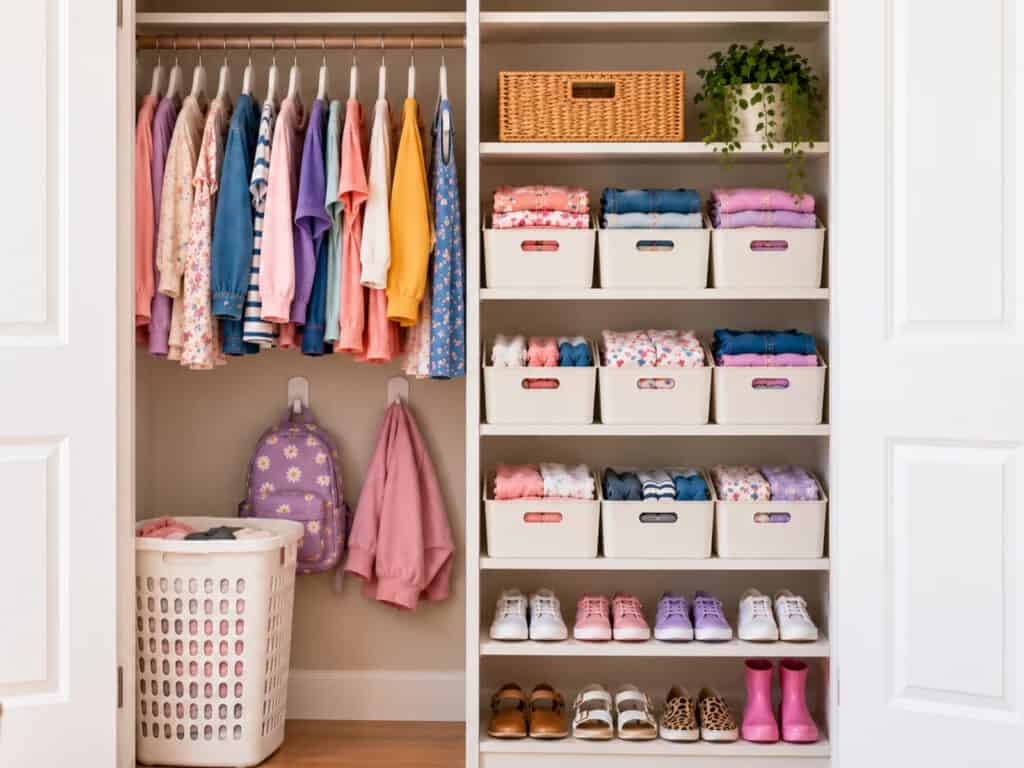
Put an open hamper where clothes usually come off, whether that is inside the closet or beside it. Avoid a spot behind hanging clothes or a lid that makes putting laundry away awkward.
Check that the basket fits without blocking the door or covering the shoe area. Choose something the person carrying the laundry can comfortably move.
Keep it separate from storage for clean clothes so there is no guessing about what needs washing.
Use a Small Closet Without Filling Every Inch
11. Use the Door Only If It Still Opens Freely
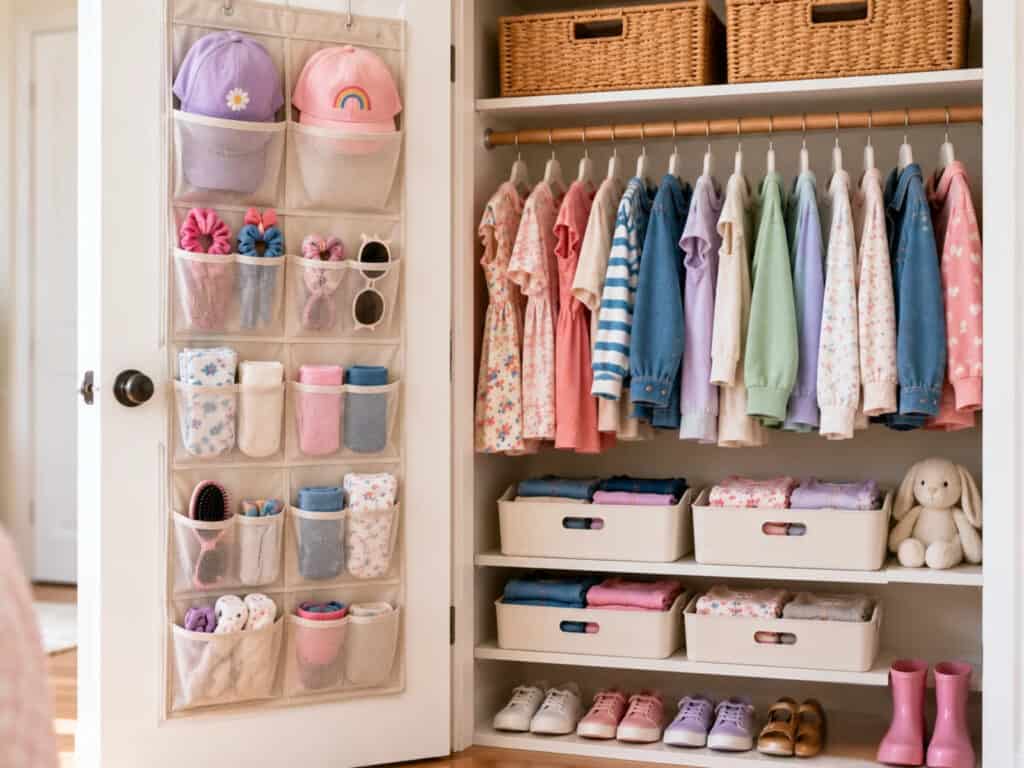
A pocket organizer can hold lightweight accessories, hats, or small clothing items. Use the pockets your child can comfortably reach for things they need themselves.
Measure the space between the closed door and the shelves or hanging clothes before adding anything. Test the door with the organizer filled, not just empty.
This works best on a suitable hinged door. Skip it if the organizer interferes with sliding or folding doors, pulls loose, or makes the closet harder to open.
12. Repurpose a Bookcase as Simple Shelving
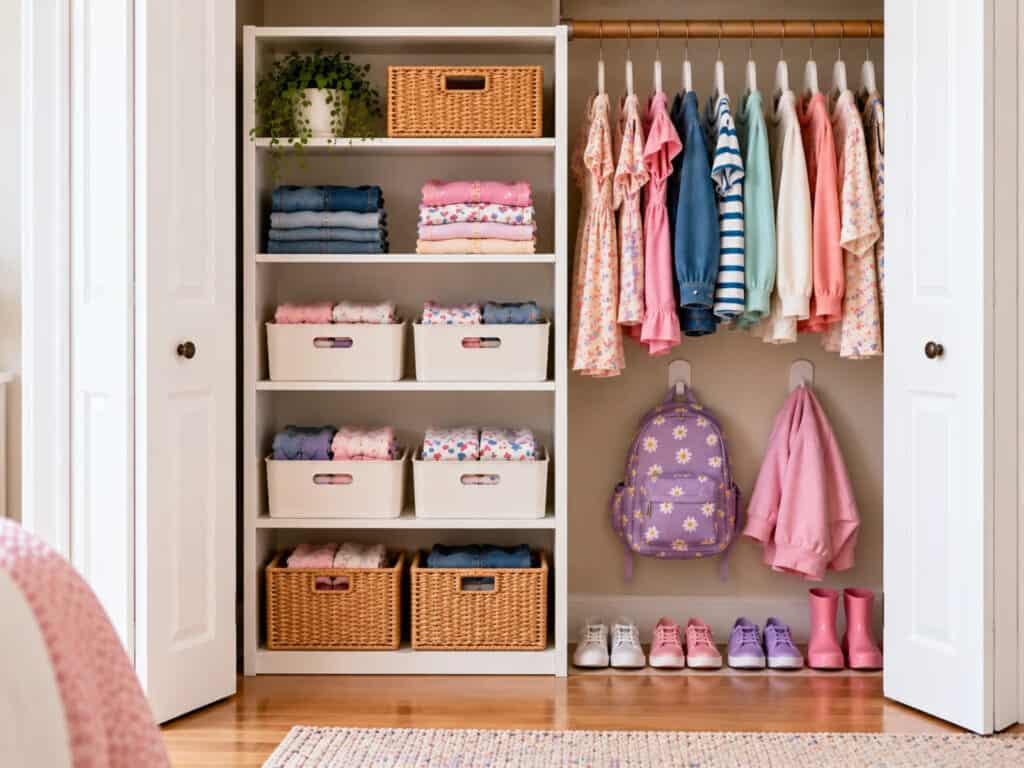
A bookcase you already own may hold folded clothes and baskets without a complete closet renovation. Check its depth, the door clearance, and whether the lowest shelves are usable before moving it in.
Keep its structural parts intact and use it as shelving rather than removing pieces to improvise a wardrobe.
Anchor bookcases and dressers to the wall following the manufacturer’s instructions. Keep heavier bins on lower shelves. CPSC’s Anchor It guidance also recommends keeping tempting objects off furniture tops so children are not encouraged to climb.
13. Give Awkward Corners a Specific Job
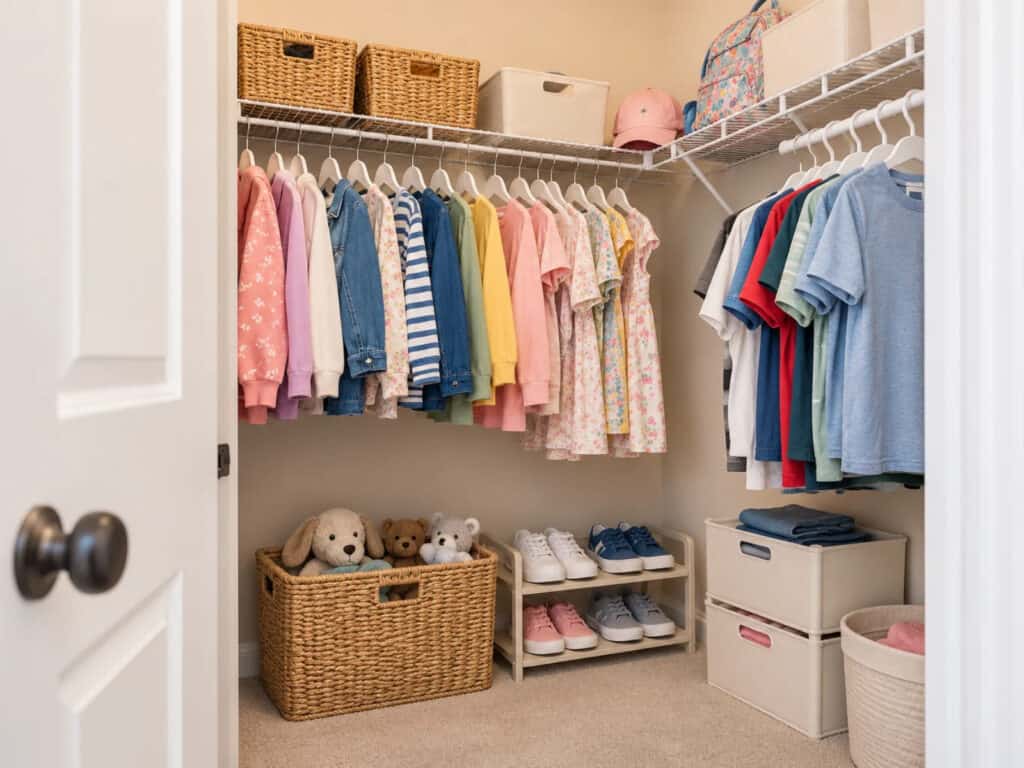
Before installing corner shelves, see what will actually fit without being hidden behind hanging clothes. A narrow side wall might hold a hook; a reachable corner might fit a small shoe basket.
Test the spot with an item you already own. Can you get it out without moving three other things?
Leave an awkward corner empty if using it would block access. A little open space is useful when it lets the rest of the closet work.
14. Try Hanging Shelves When You Need More Folded Storage
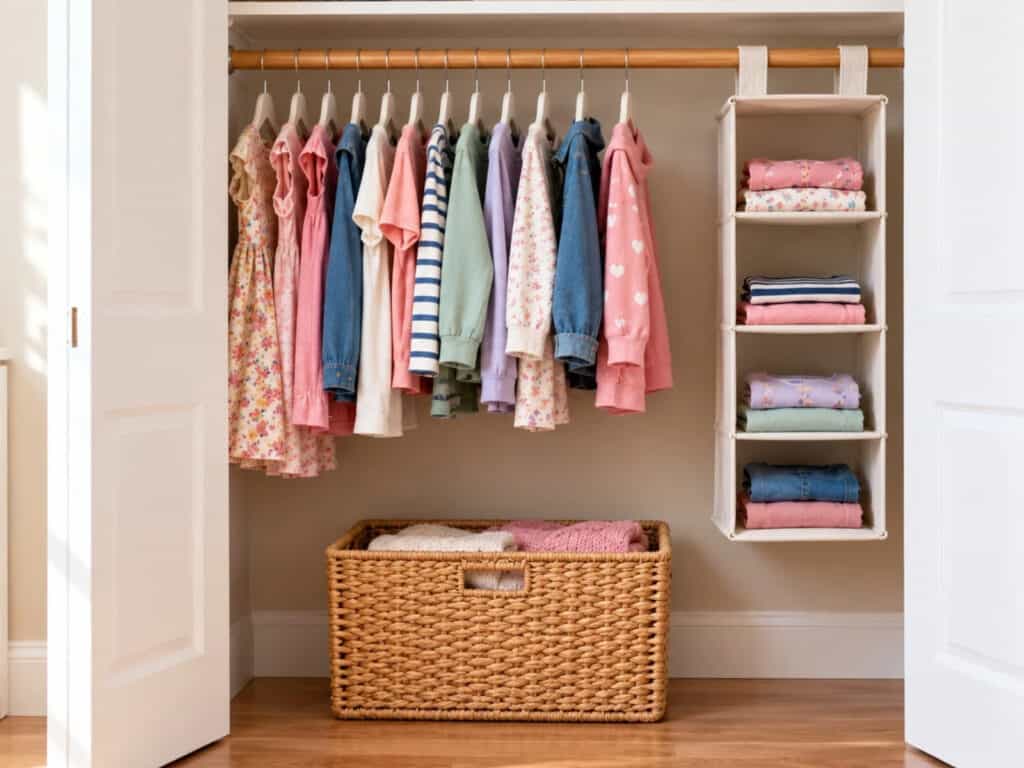
A hanging fabric organizer can add space for lightweight folded clothes when the closet has a rod but few shelves. Measure its width and drop so it does not crowd hangers or cover the floor storage.
Check the organizer’s weight limit and that the rod can support the added load. Keep the lower compartments for items your child uses.
Try this only if folded storage is what is missing. Another organizer will not help if the main problem is too many clothes.
Adapt the Closet for Sharing and Growing
15. Give Each Child a Clear Section in a Shared Closet
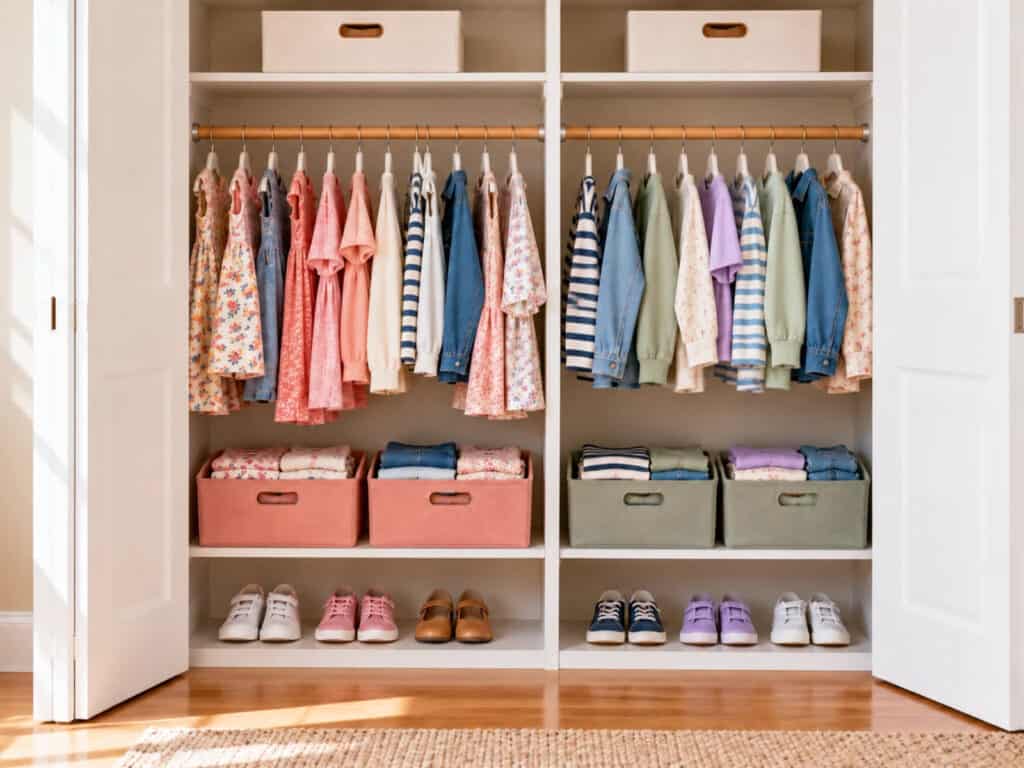
Divide hanging space, shelves, and drawers into recognizable sections. Names, pictures, or different bin colors can show whose things belong where without requiring matching storage.
Make sure each child has reachable daily storage. Giving one child the entire upper rod may look evenly divided but leave them unable to use it.
Adjust the space to the clothes and each child’s needs rather than insisting on identical sections. An older child may need longer hanging space, while a younger child uses more low bins.
16. Keep Baby Clothes in Current-Size Groups
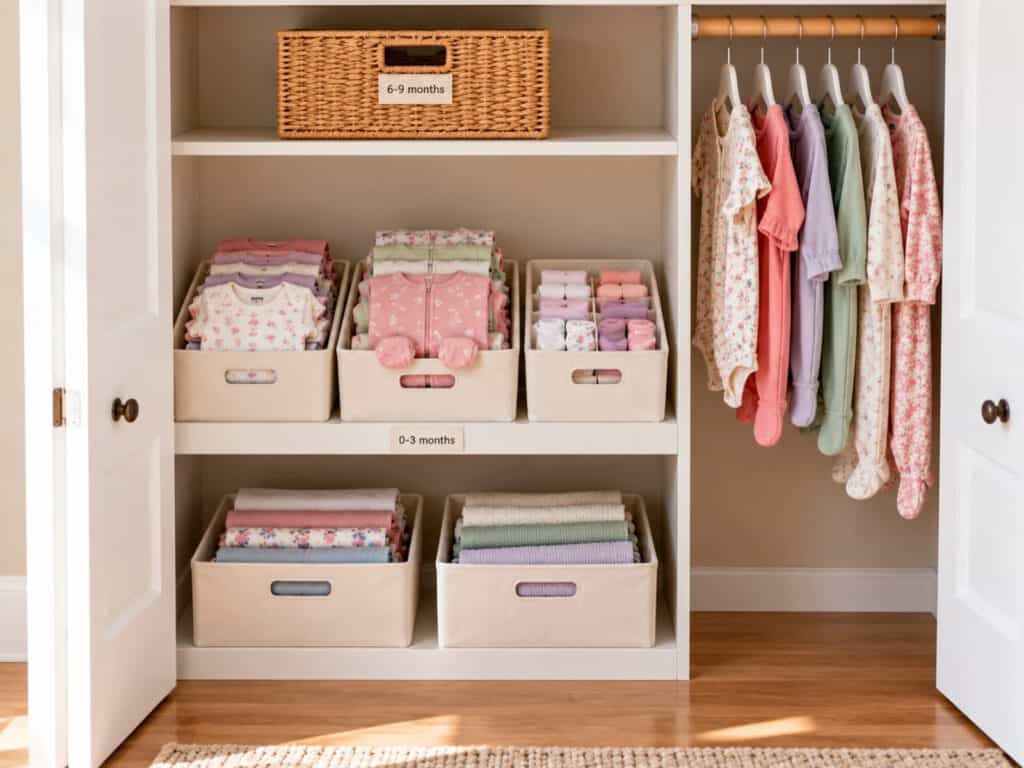
In a nursery closet, arrange everyday clothes where the caregiver can easily find them. Use small drawer sections or bins for bodysuits, sleepers, and socks.
Keep the current size together. Store larger sizes separately with a clear size label, checking actual fit when it is time to bring them out. Clothing labels do not always translate into the same fit across brands.
As your child begins choosing clothes, move a small everyday selection into reachable storage rather than rebuilding the entire closet at once.
17. Keep a Small Spot for Outgrown Clothes
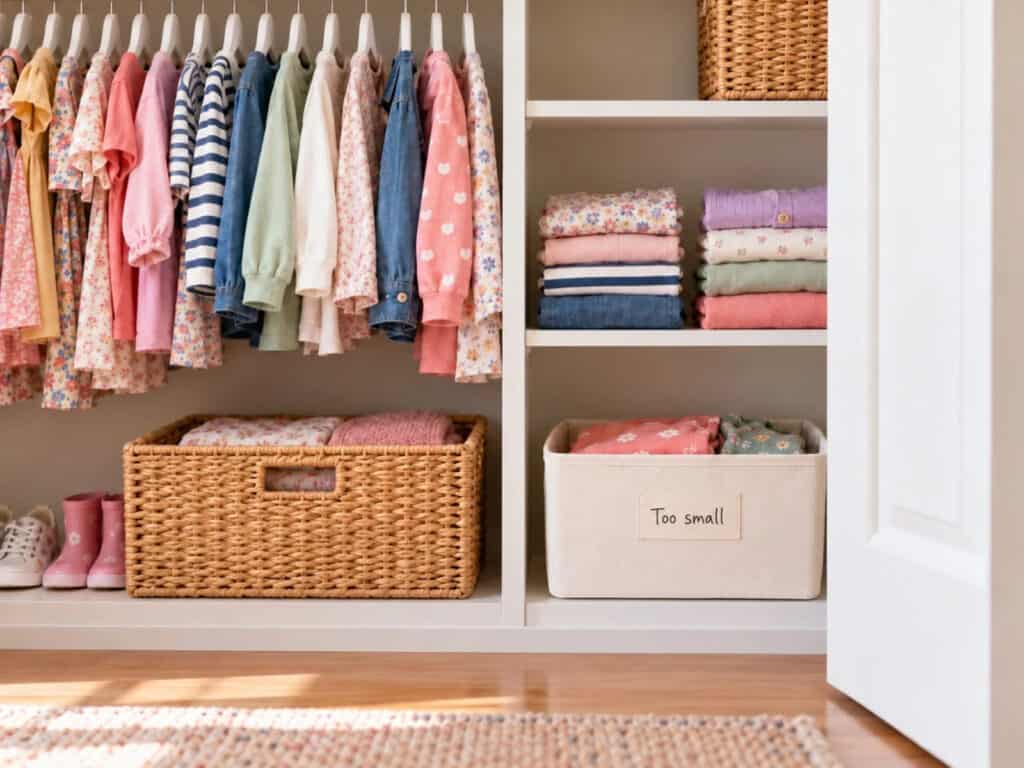
Give clothes that stop fitting a temporary home outside the daily selection. A labeled “too small” container lets you remove an item when you notice the problem instead of putting it back with clean laundry.
When the container is full, decide what to save, pass along, or donate. Label saved hand-me-downs by size before moving them to longer-term storage.
For items you are ready to release, check these places to donate clothes and other belongings.
18. Move Off-Season Clothes Out of the Best Storage Space
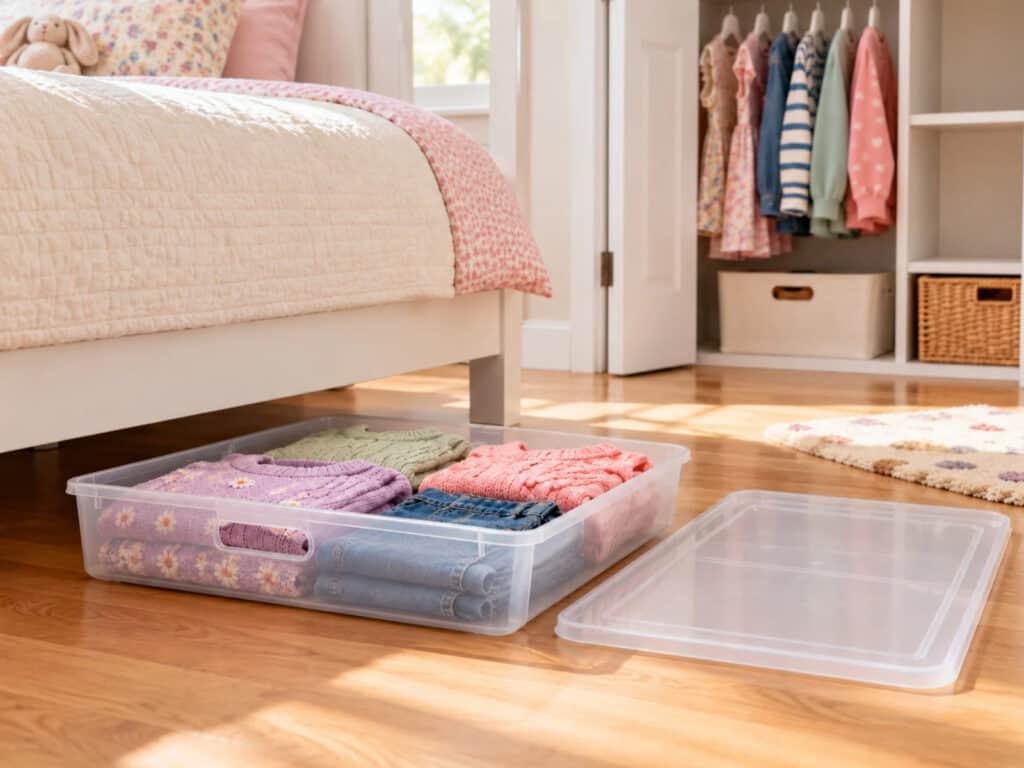
Keep frequently worn clothes in the easiest-to-use drawers and hanging sections. Move bulky seasonal items elsewhere when they are not needed, leaving a useful extra layer accessible for changing weather.
Clean and fully dry clothes before storing them. Label containers by contents and size so you can check them before buying replacements.
An under-bed bin can work if it fits and pulls out easily. Measure the clearance, and do not fill it so heavily that moving it becomes another obstacle.
Make the Closet Easier to Keep Up
19. Reserve One Spot for the Next Outfit
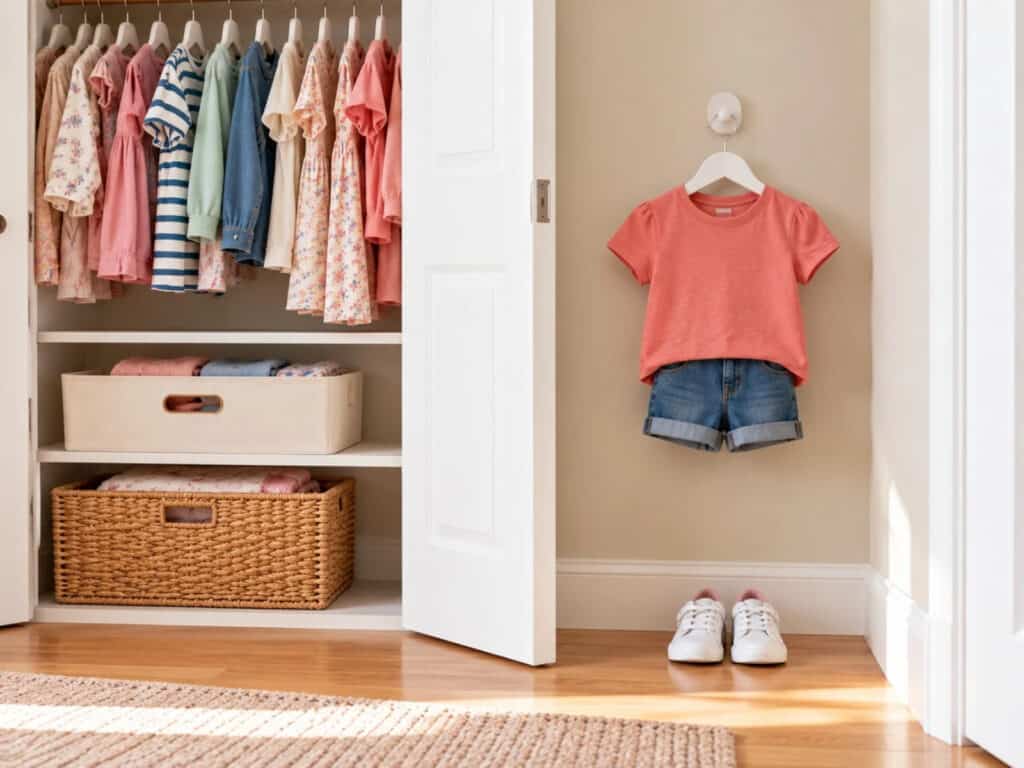
Use a hook, hanger, or small basket for clothes that have already been chosen. This might be tomorrow’s school outfit or an older child’s clean sports uniform.
Keep the spot small and specific so it does not become another place to pile laundry. Return unused pieces to their regular homes.
If you want a fuller system for outfits, laundry, and wardrobe rotation, this guide to organizing kids’ clothes covers those routines beyond the closet layout.
20. Leave Room to Open Drawers and Get Dressed
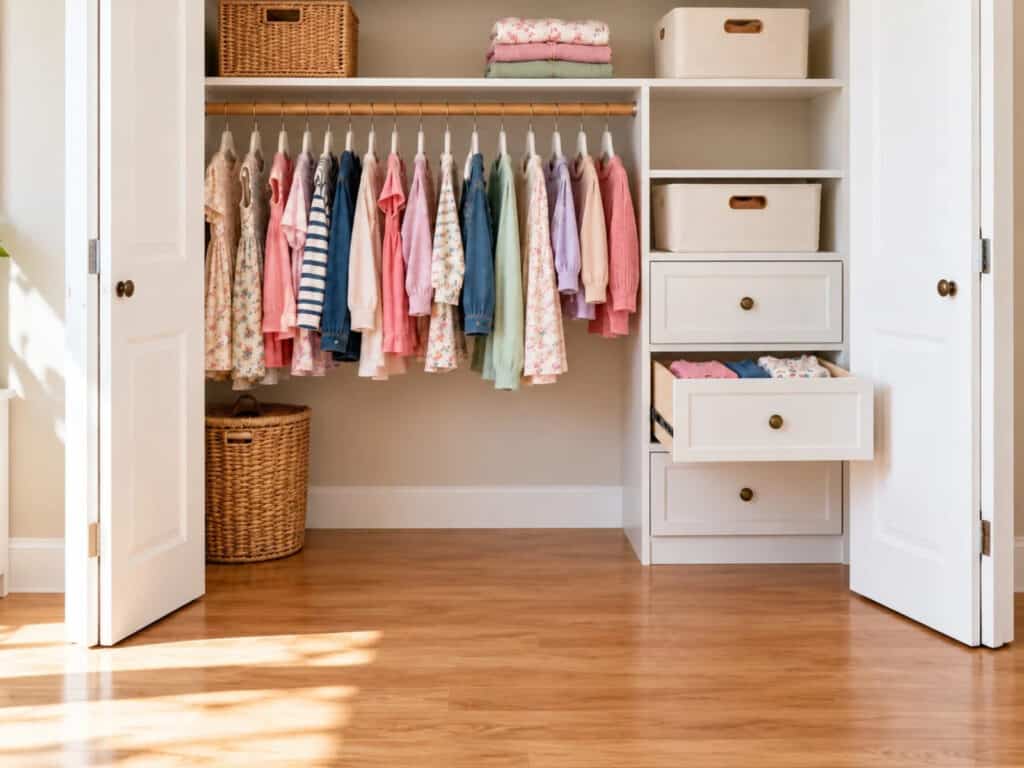
Open the closet door, pull out the hamper, and check each drawer one at a time. Anything blocking those movements needs a different home.
Keep the floor in front of the closet clear rather than squeezing in a bench or extra bins. There is no need to create a dressing room inside a small reach-in closet.
If school papers and artwork have taken over clothing shelves, give them their own system with these ideas for organizing kids’ school papers.
21. Make Sure Clothes Are Easy to See
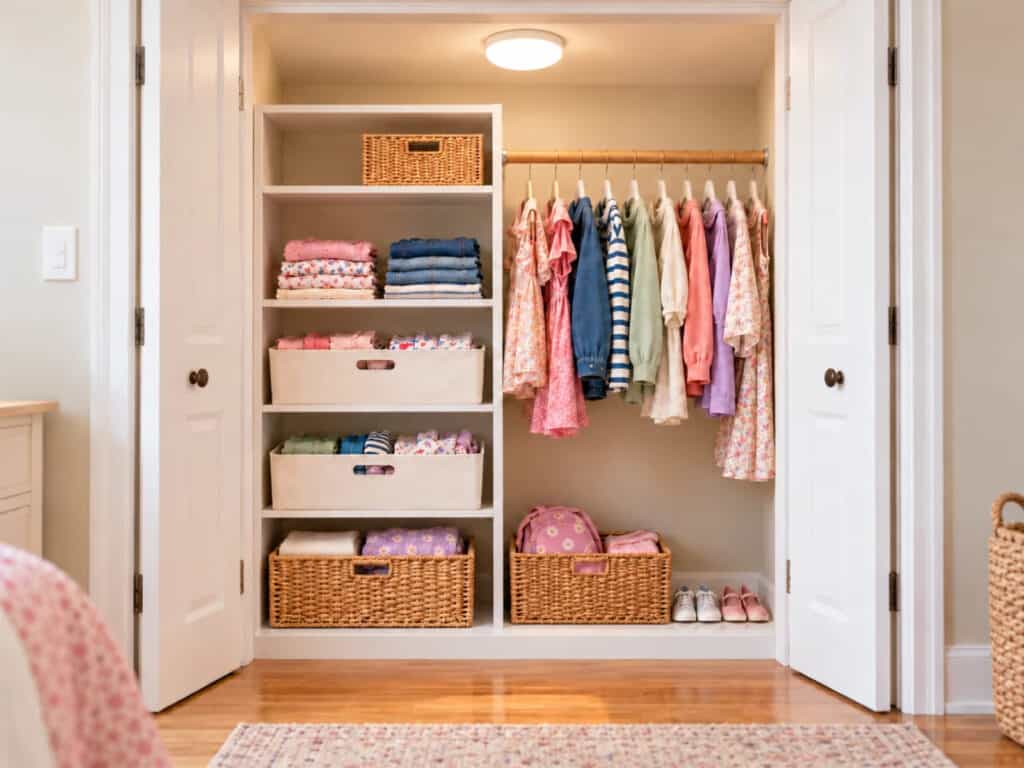
Check the closet in the light you actually use when getting dressed. Dark shelves or a shadowed bottom drawer can make an otherwise useful setup frustrating.
First, move any storage that blocks the existing light. If more lighting is needed, choose a fixture designed for closet use and follow its installation and clearance instructions. Have a qualified professional handle electrical work when needed.
Avoid loose lamps and dangling cords around stored clothes. Keep light controls accessible without asking children to climb.
22. Reset the Part That Keeps Getting Messy
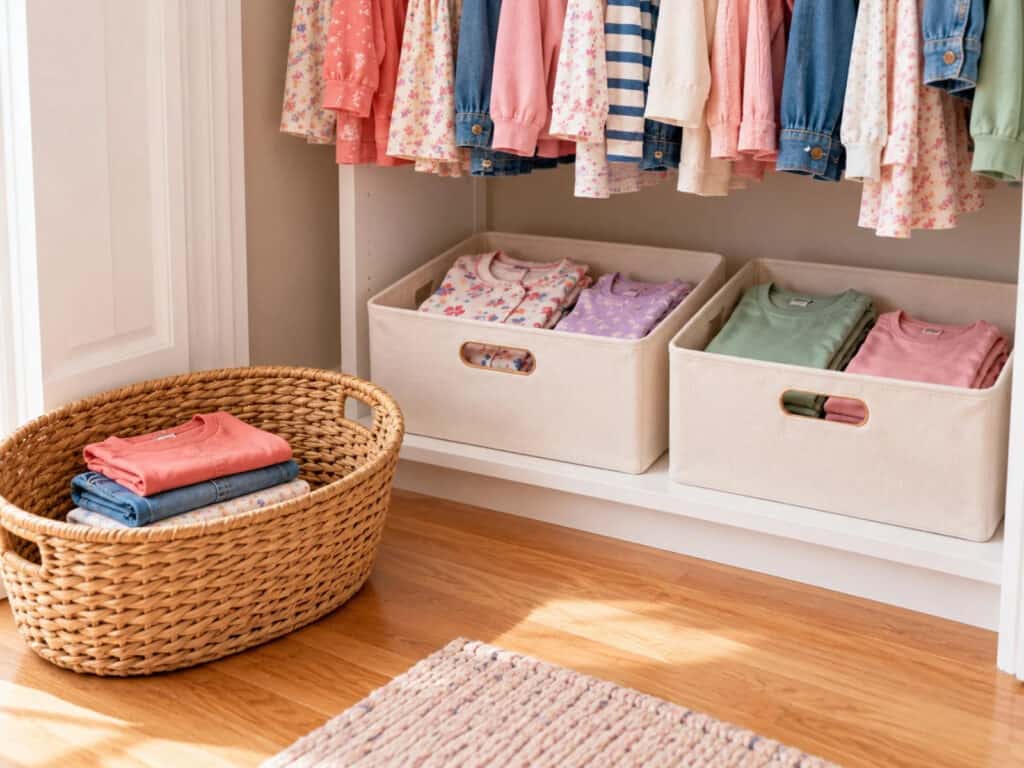
Use a familiar moment, such as putting away clean laundry, to return stray items and remove clothes that no longer fit. You do not need to reorganize the entire closet on a fixed schedule.
Notice what keeps landing in the wrong place. A bin may be too full, a hook too high, or a category too specific. Change that part of the setup before adding more storage.
Start with one useful improvement: clear a drawer, lower everyday clothes, or give shoes a home. A closet is easier to maintain when putting things away takes less effort.