
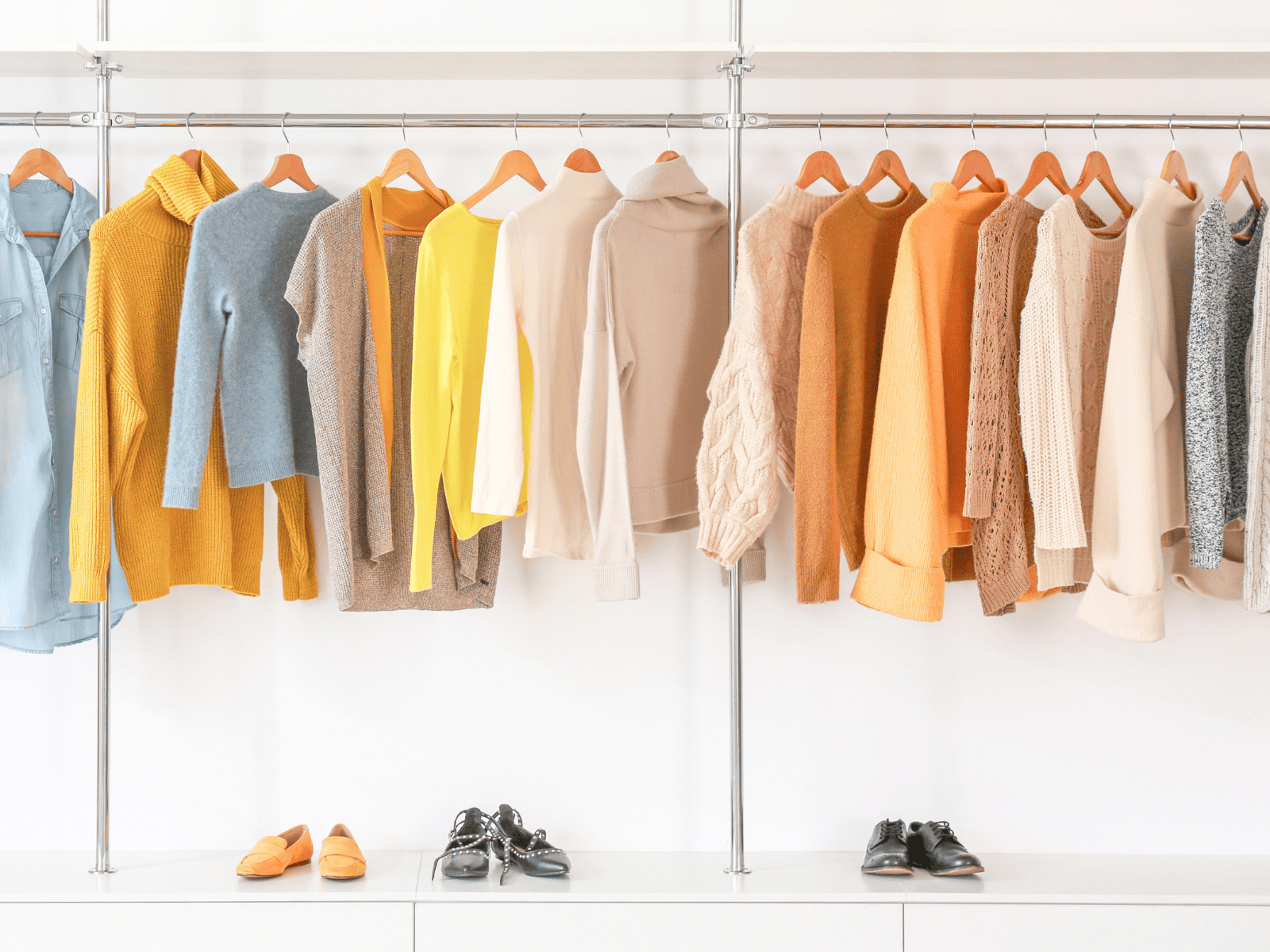
8 Genius Ways to Declutter Clothes Without Regret

Standing in front of a closet packed with clothes yet feeling like you have “nothing to wear” is a frustrating daily experience for many of us. The traditional advice of “just get rid of what you don’t wear” often leads to regret because it overlooks our emotional attachment to clothes and fails to provide a practical system for making decisions.
In this article, I’ll share eight genius strategies for confidently decluttering your wardrobe and creating a closet full of clothes you’ll wear and love without the guilt or second-guessing that usually comes with letting go.

1. The Pre-Declutter Mindset Reset
Before pulling clothes out of your closet, let’s address the most important part of decluttering: your mindset. Many of us have complex emotional ties to our clothes. That dress might remind you of a special event, or those jeans might represent a size you once were. Understanding these attachments is the first step to making clear decisions.
If letting go already feels heavy before you even begin, motivation—not organization—is often the real obstacle. I explain this more in my post on motivation to declutter, which can help you shift your mindset before you start.
Take a moment to assess your real lifestyle:
- Are you still holding onto business suits now that you work remotely?
- Do you have drawers full of gym clothes but prefer walking in your neighborhood?
Your wardrobe should reflect your actual daily life, not an imagined one.
To set yourself up for success, write down three specific goals for your wardrobe. For example:
- Get dressed in under 5 minutes each morning
- Have enough outfits for a week of work-from-home days
- Keep only clothes that fit your current body
Create your action plan by scheduling two hours this weekend to start the process. Remember, you don’t have to tackle everything at once. Break your decluttering into smaller sessions, focusing on one category at a time: start with tops, then move on to pants, and so on. This approach prevents being overwhelmed and helps you make better decisions about what to keep.
You might also like: The Truth About Why Decluttering Is Hard: What No One Tells You
2. The Time-Block Method
Decluttering your entire wardrobe in one go can be overwhelming and lead to poor decisions. Instead, break the task into focused 30-minute blocks. Set a timer on your phone and tackle one specific clothing category at a time, like t-shirts or jeans.
To keep your momentum going, create an energizing playlist or queue up your favorite podcast. Music can make the process more enjoyable and help you stay focused. I recommend upbeat songs that motivate you without being distracting.
Follow this systematic order for best results:
- Start with tops (they’re usually easiest to sort)
- Move on to the bottoms
- Then, dresses and outerwear
- Finish with accessories and shoes
Take a 10-minute break between each 30-minute session. Decision fatigue is real; you’ll make better choices when fresh and focused. Step away from your closet completely during breaks – grab some water, stretch, or get some fresh air.

3. The Memory-Saving Solution
Your smartphone can be a powerful ally when it comes to sentimental clothes you’re struggling to part with. Before donating items like:
- That special concert T-shirt
- Your grandmother’s scarf
- Your wedding dress
- Formal wear you’ll never wear again
- Inherited clothing from loved ones
Take detailed photos to preserve the memories. Create a dedicated “Wardrobe Memories” album on your phone where you can revisit these meaningful pieces anytime.
This simple digital solution helps you honor the emotional connection to special clothing items without taking up valuable closet space. It’s perfect for items you rarely (if ever) wear but feel guilty about letting go.
Remember, the goal isn’t to document your entire wardrobe—it’s to make parting with meaningful pieces less daunting.
4. The Three-Stage Filter System
Start with the easiest decisions to build momentum.
Stage 1
Pull out obvious items:
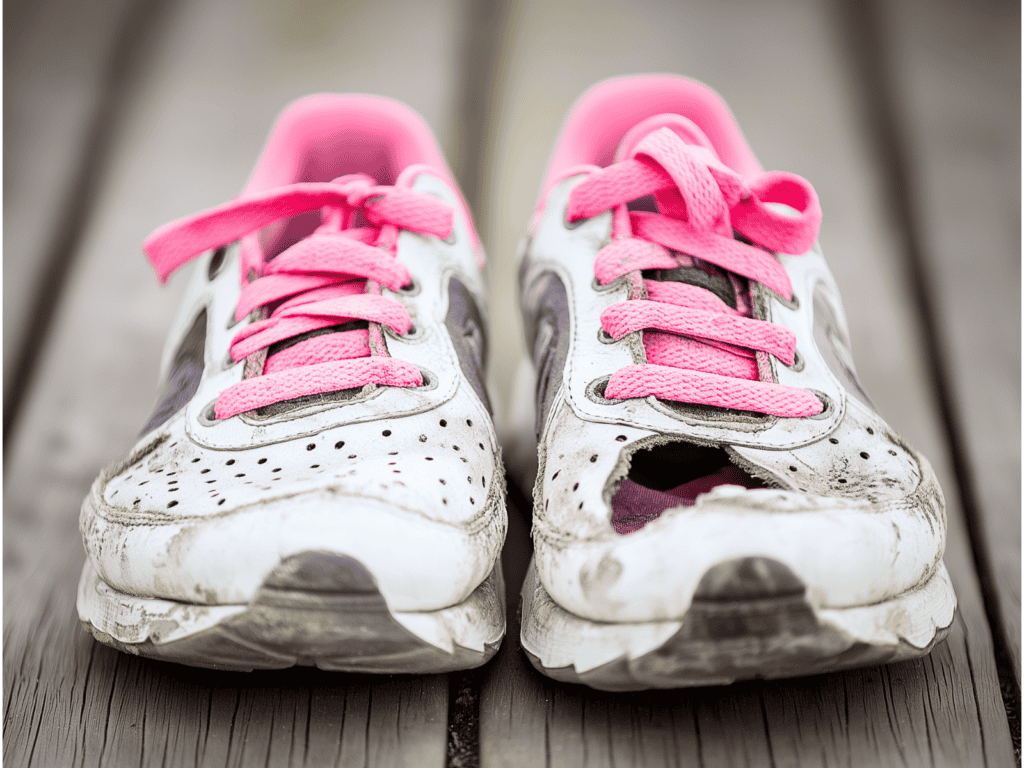
- clothes with holes or stains
- things that don’t fit
- pieces still with tags after months in your closet.
These are your quick wins – items that can be disposed of immediately without hesitation.
Stage 2
Look at your weekly routine.
- Do you work from home but have a closet full of office wear?
- Are you holding onto party dresses when you prefer casual gatherings?
Remove anything that doesn’t match your current lifestyle. Be honest with yourself – if your life changes, you can always buy new clothes that fit that future need.
Stage 3
Assess what remains. Try each piece on and ask two simple questions:
- “Do I feel good wearing this?”
- “When was the last time I chose to wear it?”
Keep only items that you both enjoy wearing and reach for regularly.
Each stage builds upon the last, making decisions progressively easier. By Stage 3, you’ll have developed confidence in your choices and a clearer vision of your ideal wardrobe.
5. The Capsule Wardrobe Trial
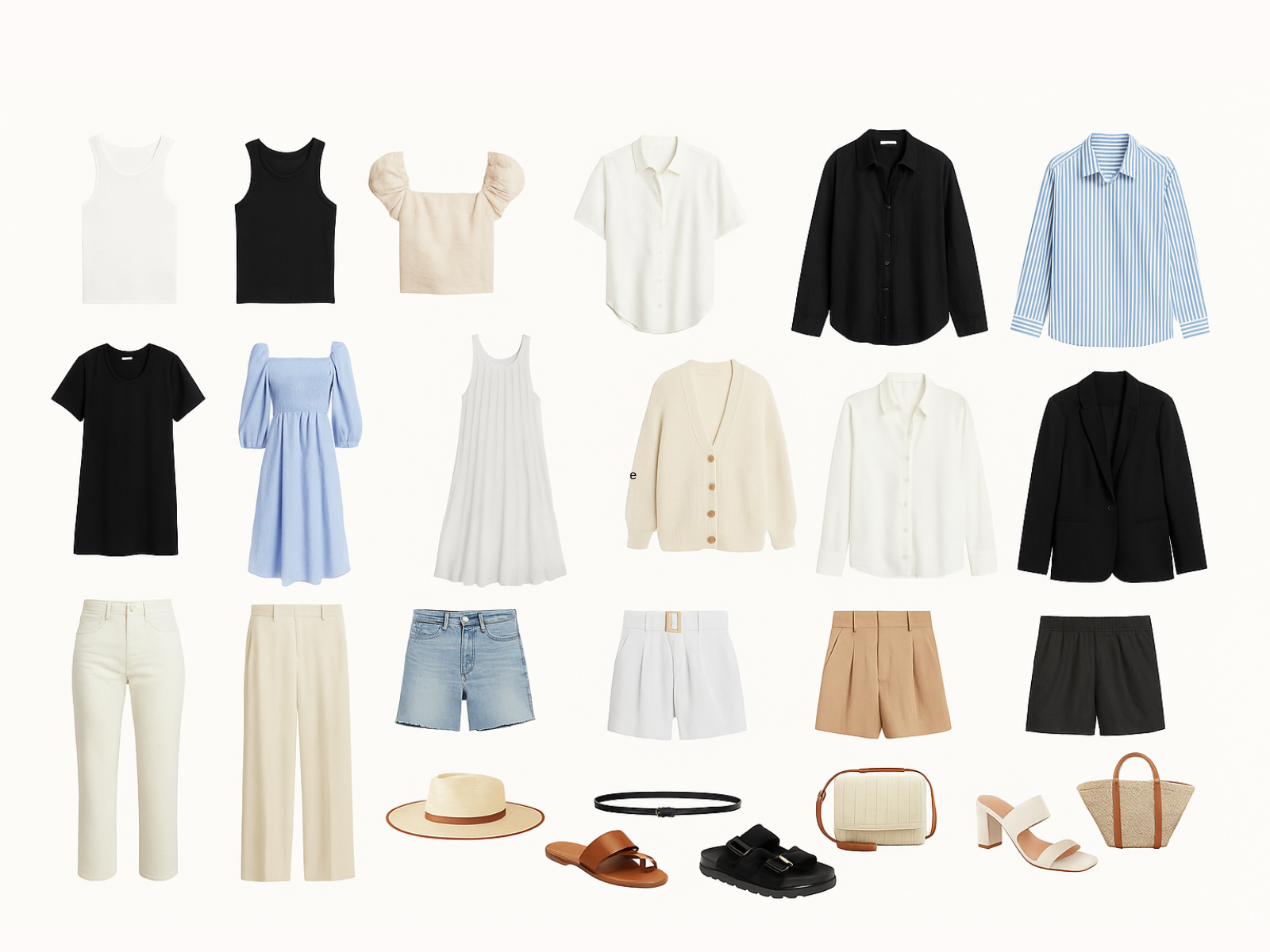
Select 10 favorite pieces from your current wardrobe:
- 4-5 tops
- 2-3 bottoms
- 2-3 layers (sweaters or jackets)
For the next two weeks:
- Move these items to one section of your closet
- Wear only these pieces
- Mix and match them for different outfits
- Don’t remove anything else from your wardrobe yet
Notice during your trial:
- How much faster can you get dressed
- Which pieces you reach for the most
- What items you miss
- What combinations work best
After two weeks, use what you’ve learned to declutter with confidence. If you didn’t miss or need an item during your trial, you won’t miss it when it’s gone.

6. The Guilt-Free Exit Strategy
Stop feeling guilty about clothes you never wear. Here’s what to do with different types of items:
For valuable pieces:
- List designer items on resale sites
- Try local consignment shops
- Host a clothing swap with friends
- Save special occasion dresses for prom donation programs
For everyday items, choose meaningful donations:
- Business attire to job-seeker organizations
- Warm coats to winter clothing drives
- Casual wear to local shelters
- Professional clothes to women’s support programs
For worn-out items:
- Cut old T-shirts into cleaning rags
- Take damaged clothes to textile recycling
- Check if your local animal shelter needs fabric items
- Bring worn shoes to stores with recycling programs
Remember: Keeping clothes you don’t wear helps no one. By donating or selling, you’re giving your items a second life with someone who will use and appreciate them.

7. The Maintenance Method
Keep your decluttered closet organized with these simple habits:
Seasonal Rotation:
- Store off-season clothes in bins under your bed or on high shelves
- When switching seasons, only bring back items you’re excited to wear
- Use this transition time to assess what you missed
Follow the one-in-one-out rule:
- For every new item you buy, remove one similar item
- No exceptions – even for sale items
- Keep a donation bag in your closet for easy removal
Do a quick monthly check:
- Notice what you haven’t worn
- Remove anything that’s become damaged
- Adjust hangers so worn items are obvious
Build better shopping habits:
- Make a list before you shop
- Only buy items that match 3 things you already own
- Wait 24 hours before buying non-essential items
- Avoid impulse purchases during sales
These small habits will prevent clutter from creeping back into your wardrobe.
8. The Future-Proofing Framework
Build a wardrobe that adapts to your changing life with these strategies:
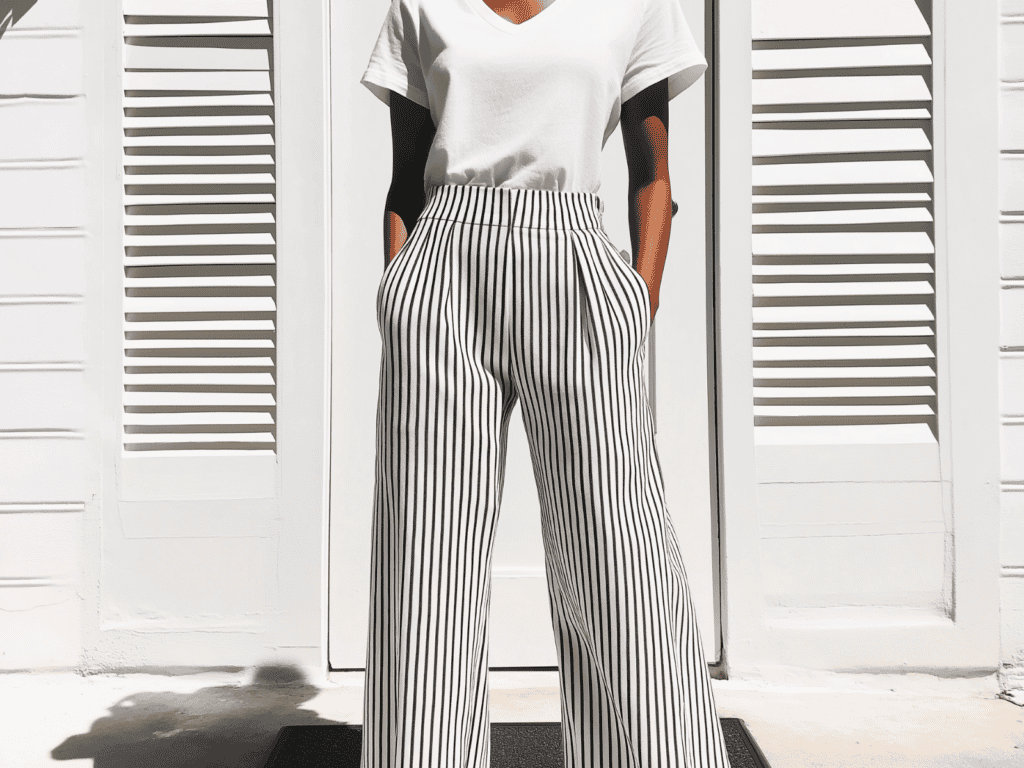
Choose versatile basics:
- Pick neutral colors that work together
- Select classic styles that won’t go out of fashion
- Focus on quality pieces that last longer
- Choose washable fabrics over dry-clean only
Create your style template:
- List your five most-worn outfits
- Note which colors make you feel confident
- Identify the shapes that flatter you best
- Keep these notes on your phone for shopping guidance
Ask these questions before buying:
- Will this work with my current clothes?
- Does it fit my lifestyle and body today?
- Would I buy this if it weren’t on sale?
- Can I think of three places to wear it?
Want more helpful questions to avoid impulse buys? Check out our full list of 13 Questions to Ask Before Any Purchase.
Remember: A smaller, well-chosen wardrobe is more valuable than a closet full of clothes you rarely wear. Focus on quality over quantity, and only keep what makes you feel your best.
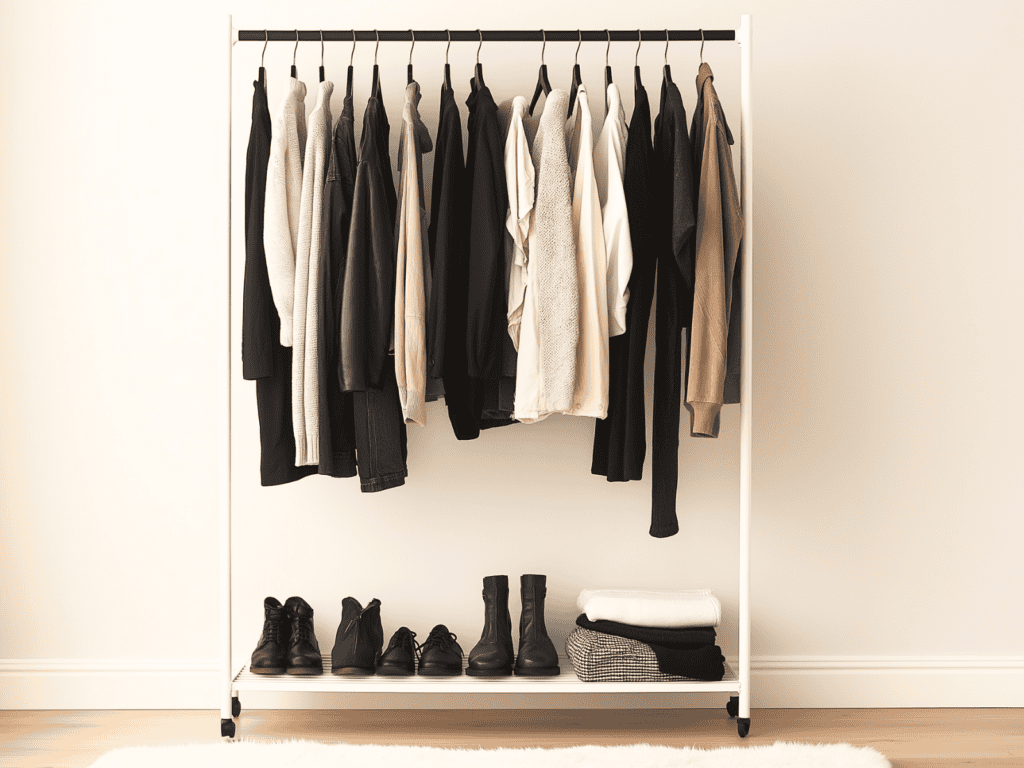
Ready to Transform Your Wardrobe? Take the Minimalist Closet Challenge!
If you’re ready to implement these decluttering strategies, join our Minimalist Closet Challenge. This challenge will help you create a wardrobe that serves you well without stress or overwhelm.
What you’ll learn:
- How to build a versatile capsule wardrobe
- Which pieces work best for your lifestyle
- Ways to mix and match your favorite items
- Tips for maintaining a clutter-free closet
The challenge includes:
- A step-by-step decluttering guide
- A printable checklist to track your progress
- Practical storage solutions
- Strategies for mindful shopping
Ready to declutter your closet and adopt a simpler, more intentional approach to your wardrobe? Join the Minimalist Closet Challenge today and transform your wardrobe one step at a time!