

Where to Sell Unwanted Items: 18 Best Places Online and In Person

Selling things you no longer use can put a little money back in your pocket while clearing space in your home. But there is a point where selling everything becomes its own project.
The trick is not finding somewhere to list an item. It is choosing a selling method that makes sense for what you have.
A sofa probably belongs on a local marketplace. A collectible may be worth shipping to a buyer across the country. A bag of everyday clothing may be easier to take to a resale store than photograph piece by piece.
This guide will help you decide where to sell unwanted items—and when it makes more sense to donate, pass along, or recycle them instead.
A quick note: Selling platforms change their fees, shipping options, and policies regularly. The platform information below was reviewed in August 2026, but check current seller terms before listing.
Where Should You Sell Your Stuff? Start Here
If you do not want to compare 18 different options, use this as your starting point.
| What you’re selling | Start with |
|---|---|
| Furniture and bulky household items | Facebook Marketplace or OfferUp |
| General household items | Facebook Marketplace, eBay, or Mercari |
| Collectibles and specialty items | eBay |
| Brand-name clothing | Poshmark |
| Trendy or vintage clothing | Depop |
| A large amount of everyday clothing | ThredUp |
| Luxury clothing, bags, or jewelry | The RealReal |
| Phones and electronics | Swappa or eBay |
| Textbooks and valuable books | BookScouter |
| Musical instruments and gear | Reverb |
| High-end vintage furniture and decor | Chairish |
| Kids’ clothes, toys, and gear | Once Upon a Child |
| Lots of inexpensive household items | Yard or garage sale |
| An estate or large collection | Local auction or estate-sale company |
You do not need an account on every platform. Start with the one or two that fit what you are actually trying to sell.
First, Decide Whether the Item Is Worth Selling
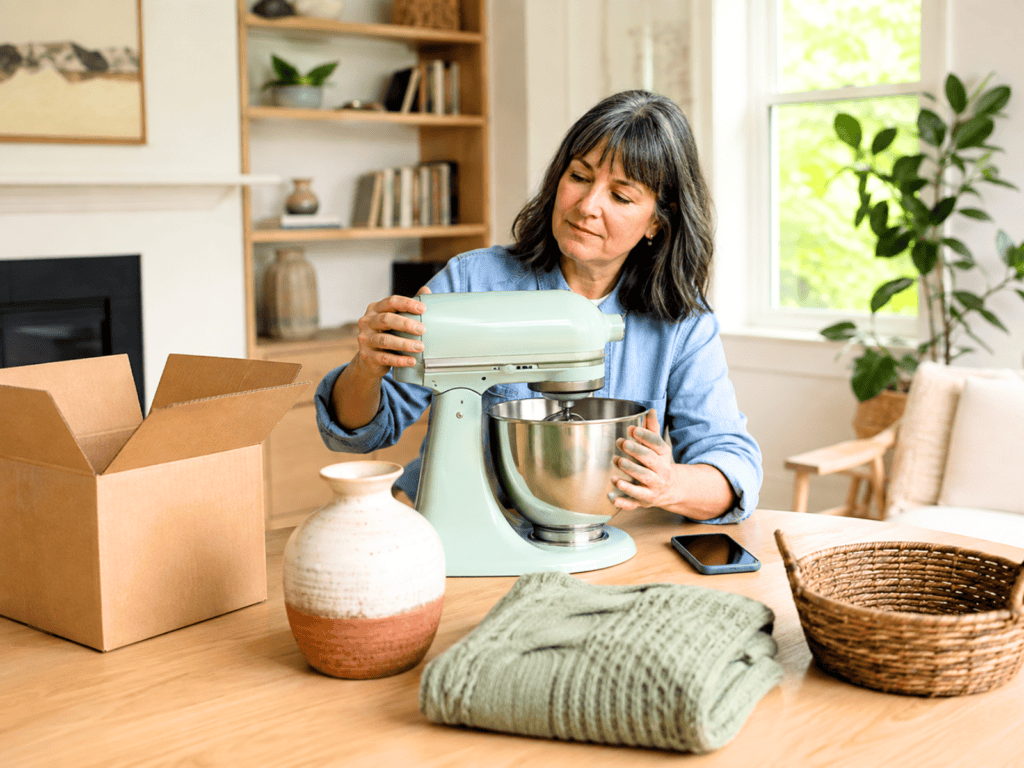
This step can save you hours.
Before photographing an item, ask yourself:
- What could I realistically sell this for?
- How much will fees or shipping reduce that amount?
- How much time will I spend taking photos, answering messages, packing it, or arranging pickup?
- Would I still feel good about the sale after doing all of that?
A $100 item may easily be worth listing.
A $7 item that requires ten messages and a 20-minute meetup probably is not.
For inexpensive things, try bundling similar items. A group of children’s books, five picture frames, or a set of kitchen tools may be easier to sell together than individually.
And remember: the amount you originally paid is not the same as its resale value. Keeping something in your house does not recover the money you spent on it.
Best Places to Sell Furniture and Household Items Locally
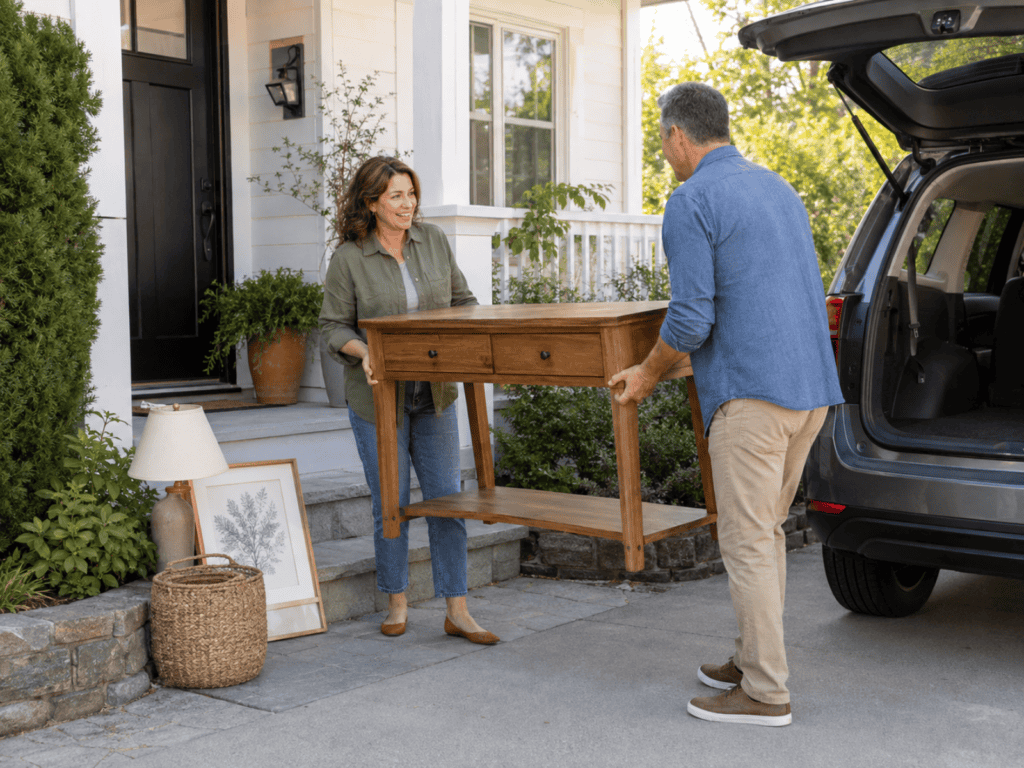
1. Facebook Marketplace
Best for: Furniture, home decor, appliances, exercise equipment, tools, and everyday household items
Facebook Marketplace is a good first stop for things that are too large or expensive to ship.
It also works well when the buyer needs to see an item in person before deciding. Include measurements in the listing so you do not spend your day answering “How big is it?”
For furniture, photograph the whole piece plus any scratches, stains, labels, or other details a buyer would want to see.
2. OfferUp
Best for: Furniture, tools, household goods, and other local pickup items
OfferUp is another option if you want local buyers without relying entirely on Facebook Marketplace.
One important change: OfferUp ended nationwide shipping, so current listings are focused on local transactions.
That makes it particularly useful for things you do not want to pack and ship.
3. Craigslist
Best for: Furniture, appliances, tools, building materials, and bulky items
Craigslist is still useful for straightforward local sales, especially larger things.
The downside is that you handle communication, payment, and the meetup yourself. Keep personal information limited and use extra care when arranging an exchange.
4. Nextdoor
Best for: Household items that may appeal to someone nearby
Nextdoor has a dedicated For Sale & Free area where neighbors can sell or give away personal belongings.
This can work particularly well for things that are useful but not valuable enough to ship—a spare shelf, patio furniture, garden supplies, or a box of household items.
Best Places to Sell General Items Online

5. eBay
Best for: Collectibles, vintage items, electronics, replacement parts, hobby items, and things with a national buyer pool
eBay is worth considering when the right buyer may not live anywhere near you.
Before pricing an item, look at sold listings, not just active listings. An asking price tells you what a seller hopes to receive. A sold price tells you what a buyer actually paid.
eBay charges selling fees that vary by category, so look at your likely net amount before deciding whether something is worth shipping.
For unusual items, model numbers, brand names, dimensions, dates, and detailed photos can make a big difference.
6. Mercari
Best for: Smaller household items, accessories, collectibles, electronics, and other easy-to-ship belongings
Mercari works well for many of the miscellaneous items that come out of drawers, closets, and storage areas.
It is especially useful when an item is easy to photograph, box, and ship.
Mercari currently charges sellers a selling fee, so calculate what you will actually keep rather than pricing from the sale amount alone.
Best Places to Sell Clothes, Shoes, and Accessories
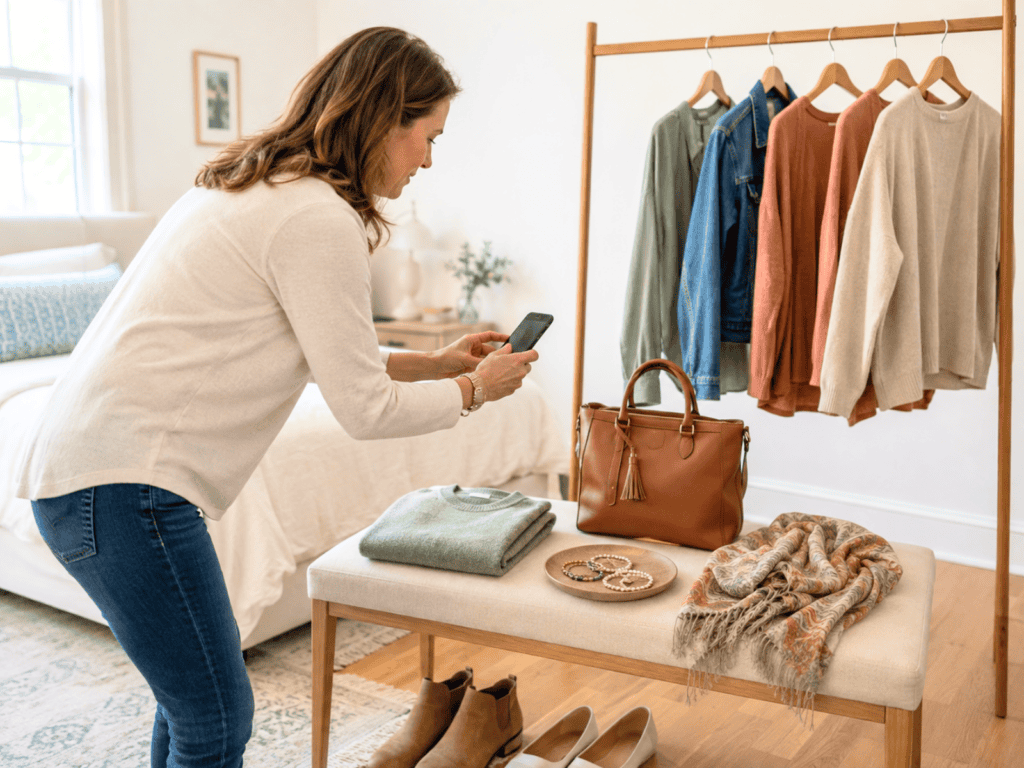
7. Poshmark
Best for: Brand-name clothing, shoes, handbags, and accessories
Poshmark is a natural fit when you have individual clothing pieces that are worth the effort of photographing and listing.
It handles shipping through its platform, which simplifies one part of the process, but seller commissions matter when deciding what is worth listing.
I would not photograph every ordinary T-shirt in the closet. Save individual listings for pieces with enough resale value to justify your time. Declutter any clothes that don’t sell.
8. Depop
Best for: Vintage, trendy, distinctive, and style-driven clothing
Depop tends to make the most sense for clothing that has a particular look rather than basic everyday pieces.
Good photos matter here. Show the entire item, the tag, fabric or texture, and any wear.
US sellers should also check current payment-processing and optional promotional costs before setting their price.
9. ThredUp
Best for: Clearing a larger amount of women’s or children’s clothing with less hands-on work
ThredUp is useful when your priority is convenience rather than squeezing the highest possible price from every piece.
You send clothing in and ThredUp handles much of the pricing and selling process. Its current Clean Out program accepts qualifying women’s and children’s clothing and has its own acceptance and payout rules.
This can be a good option when the alternative is leaving bags of “things I should sell someday” in the bedroom for another year.
10. The RealReal
Best for: Luxury clothing, designer handbags, jewelry, watches, and other high-end pieces
For genuine luxury items, a specialist can make more sense than a general marketplace.
The RealReal uses an authentication and consignment process and handles much of the selling work for accepted items.
Check its current accepted brands and earnings structure before sending anything.
Best Places to Sell Electronics, Books, and Specialty Items

11. Swappa
Best for: Phones, tablets, laptops, and other qualifying electronics
Swappa specializes in used technology and reviews listings before they go live. Current seller fees are relatively straightforward, but payment-processing costs can also apply.
For electronics, remove your accounts, back up anything you need, perform the appropriate factory reset, and photograph identifying details without exposing private information.
12. BookScouter
Best for: Textbooks and books with resale value
Most ordinary used books are not worth individually listing and shipping.
Textbooks, recent academic books, and some specialty titles are different.
BookScouter compares buyback offers from more than 30 vendors, which can save you from checking each buyer separately.
For novels and common paperbacks with little resale value, a used bookstore, Little Free Library, or donation may get them out of your home much faster.
13. Reverb
Best for: Guitars, keyboards, pedals, amplifiers, recording equipment, and other music gear
Reverb is built specifically around musical instruments and equipment.
That focused buyer base can make it easier to sell specialty gear than listing it among thousands of unrelated household items.
Reverb currently charges a selling fee plus payment processing, so include those costs when deciding on your minimum price.
14. Chairish
Best for: High-end vintage furniture, designer decor, art, and distinctive home pieces
Chairish is not where I would list an ordinary used end table.
It makes more sense for pieces with designer, antique, vintage, or higher-end appeal. The marketplace is curated, and commissions can be significant depending on the seller plan.
For a valuable piece, that may still be worthwhile if the specialized audience is a better match.
15. Once Upon a Child
Best for: Gently used children’s clothing, shoes, toys, and baby gear
If you have boxes of children’s items, taking them to a resale store can be considerably easier than making dozens of individual listings.
Once Upon a Child buys qualifying children’s items directly at participating locations. Safety restrictions apply: for example, the company says it does not buy car seats, recalled items, or products that do not meet current government safety standards.
Because stores are independently operated, check your local location before loading the car.
Best Places to Sell Things In Person

16. Local Consignment Shops
Best for: Quality clothing, furniture, decor, jewelry, and specialty items
A good local consignment shop gives you access to buyers without making you photograph, list, message, and ship every item yourself.
The tradeoff is that the shop keeps part of the sale.
Before leaving anything, ask:
- What percentage will I receive?
- How long will you keep the item?
- Who decides when the price is reduced?
- What happens if it does not sell?
- Do I have to pick it back up?
Those questions matter more than choosing the shop with the prettiest displays.
17. Yard or Garage Sales
Best for: Lots of lower-value household items you want gone quickly
A yard sale makes sense when you have quantity.
Instead of trying to earn the maximum possible amount from every mug, book, basket, and garden tool, you can move many things in one morning.
Group similar items together, use simple prices, and be willing to bundle.
The goal is to finish with fewer things than you started with—not carry everything back inside because you refused to take $3 instead of $5.
18. Estate Sales and Local Auctions
Best for: Estates, large collections, antiques, and multiple higher-value items
When you are clearing an entire home or dealing with a valuable collection, selling piece by piece may not be realistic.
An estate-sale company or local auction house can evaluate, market, and sell many items together in exchange for a commission or other fees.
Interview more than one company and ask exactly what they handle, what they charge, and what happens to unsold items.
How to Price Unwanted Items So They Actually Sell
Pricing is where many decluttering sales get stuck.
The original purchase price matters much less than current demand and condition.
Use this process:
- Find the same or a very similar item.
- Look for actual sold prices when possible.
- Compare condition.
- Subtract selling fees and shipping costs.
- Decide your minimum acceptable amount before negotiating.
If a lamp regularly sells used for $30, listing yours for $75 because it originally cost $150 will probably leave you with the same lamp.
You can always start slightly above the amount you hope to receive if negotiation is common on that platform, but stay within the range buyers are actually paying.
How to Sell Your Stuff Faster Without Turning It Into a Second Job
Take useful photos
You do not need a photography studio.
Use daylight, clear away distracting clutter, and photograph:
- the full item
- brand or manufacturer labels
- model numbers when relevant
- measurements or scale
- important details
- every noticeable flaw
An honest photo of a scratch is better than surprising the buyer later.
Put the important information in the listing
Include whatever you would want to know before driving across town or paying for shipping.
- For furniture, give measurements.
- For clothing, give brand and size.
- For electronics, give the exact model and storage capacity.
- For collectibles, include identifying numbers or markings.
Specific listings reduce unnecessary messages.
Bundle inexpensive items
Try:
- five children’s books
- a set of picture frames
- a box of craft supplies
- several pieces of same-size clothing
- a group of kitchen utensils
One $25 transaction is usually easier than five $5 transactions.
Do not cross-post everything
Cross-posting a valuable item can be worthwhile. Cross-posting every $8 household item across four platforms creates more work than most people need.
Choose one strong platform first. Add a second only when the potential sale justifies it.
Give every item an exit date
This may be the most important rule in this entire article. A pile labeled SELL is still clutter if it sits in the guest room for six months.
Decide what will happen if the item does not sell.
For example:
- List it.
- Give it a week.
- Adjust the price once if needed.
- Give it another week.
- Then donate, pass along, recycle, or choose another appropriate exit.
Your exact timeline can be different. What matters is having one.
I had a pressure washer that I paid a lot of money for, and I held onto it far longer than I should have because I hated the idea of wasting what I’d spent.
It never worked right, and eventually it stopped working altogether, but I still struggled to let it go. That experience reminded me that keeping something does not recover the money I spent on it—it just keeps taking up space.
How to Stay Safer When Selling Locally
Local sales can be simple, but do not ignore basic precautions.
- Keep communication on the platform whenever possible.
- Be suspicious of buyers who immediately try to move you to another site or send a payment or “verification” link.
- Do not share unnecessary financial or personal information.
- Meet in a public, well-lit location when practical.
- Use a designated safe-exchange area if your community offers one.
- Confirm payment before handing over the item.
- If a situation feels wrong, cancel the transaction.
OfferUp’s current scam guidance specifically warns about messages that send users to outside links for payment or verification.
For large furniture that must be picked up at your home, consider having another adult present and move the item to a garage, porch, or other accessible area when practical.
What to Do When Something Doesn’t Sell
Not selling does not automatically mean you chose the wrong marketplace.
Try one change at a time:
- Lower the price. Compare it again with similar sold items.
- Improve the listing. Better light, measurements, or a clearer title may help.
- Bundle it. Low-value items often work better as a group.
- Switch the selling method. A piece that gets no interest online may work at a consignment store or yard sale.
Then give yourself permission to stop.
If an item is not valuable enough to justify more of your time, donating or passing it along is not losing. You are choosing your space and time over a sale that may never happen.
If you need ideas for where those items can go next, see my guide to where to donate unwanted items.
The Goal Is More Space, Not a Permanent Resale Business
There is nothing wrong with trying to recover some money from things you no longer need. Just remember why you started.
If the dining room fills with boxes waiting for buyers, the decluttering process has stalled.
Start with the five items in your home that have the best combination of value and demand. List those first.
Bundle the easy things. Donate the things that are not worth your time.
One item leaving your home for a little less money is often more useful than the “perfect” selling price you are still waiting for three months from now.
I