

How to Declutter Shoes Without Regret: 5 Practical Steps

You have a full shoe rack, yet you keep reaching for the same comfortable pair. Maybe you’re holding on to shoes you rarely wear because they were expensive, they match a particular outfit, or you think you might need them someday.
To declutter shoes, start with the pairs you wear regularly. Then look through the rest for shoes that no longer fit, are worn out, or never get chosen over another pair. Keep in mind that seasonal shoes and pairs for special occasions can still be useful, even if you don’t wear them often.
I use one shoe rack in my closet and one in the entryway I share with my husband. Giving my shoes a set amount of space helped me focus on which pairs were worth keeping. Your space may look different, but you can make the same kinds of decisions without rushing the difficult ones.
Step 1: Gather Your Shoes in a Manageable Group
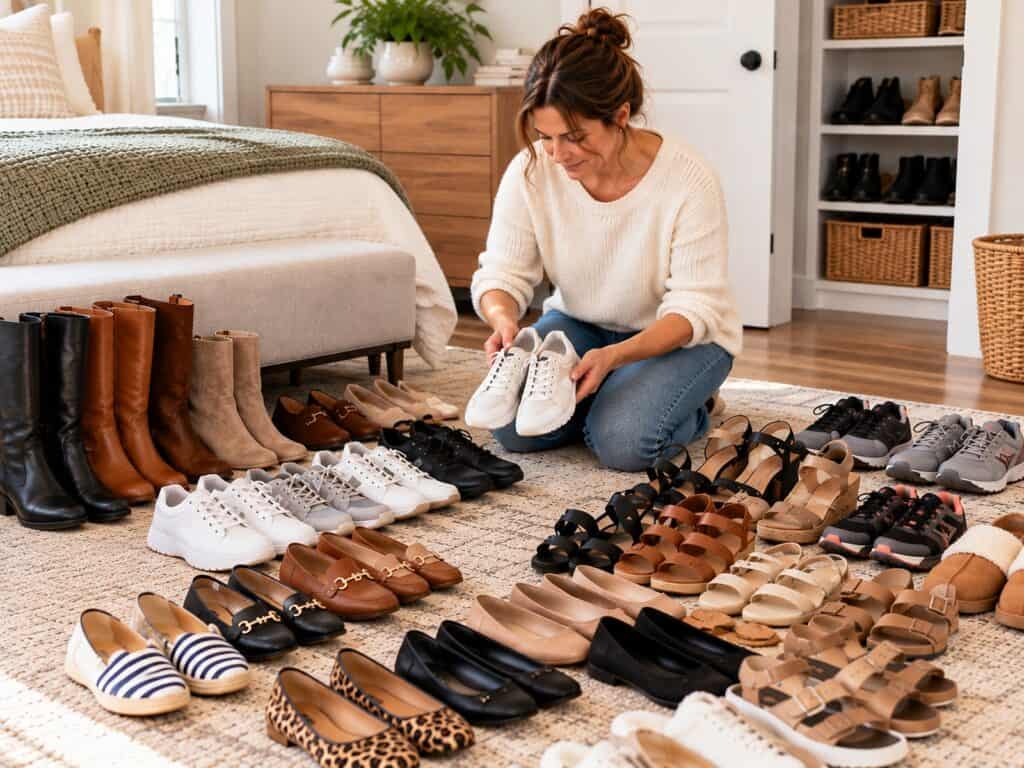
Check the closet, entryway, garage, and under the bed. If you have the time and space, bring your shoes together so you can see what you own. Match the pairs and group similar shoes: everyday pairs, work shoes, boots, sandals, and footwear for specific activities.
If emptying everything would leave you with a bigger job than you can finish, start with one group. Gather just your sneakers or the shoes by the door. Comparing similar pairs is more useful than making an enormous pile you have to step over tonight.
Set aside the pairs you already know you use. If bending or lifting is difficult, sit in a sturdy chair and bring a few pairs within reach, or ask someone to gather them. You can sort your own shoes without making decisions about anyone else’s.
Step 2: Decide Which Shoes Still Work for You
For each remaining pair, ask: “Would I choose these for something I actually do?” Then look at what might keep you from wearing them.
Check fit and condition
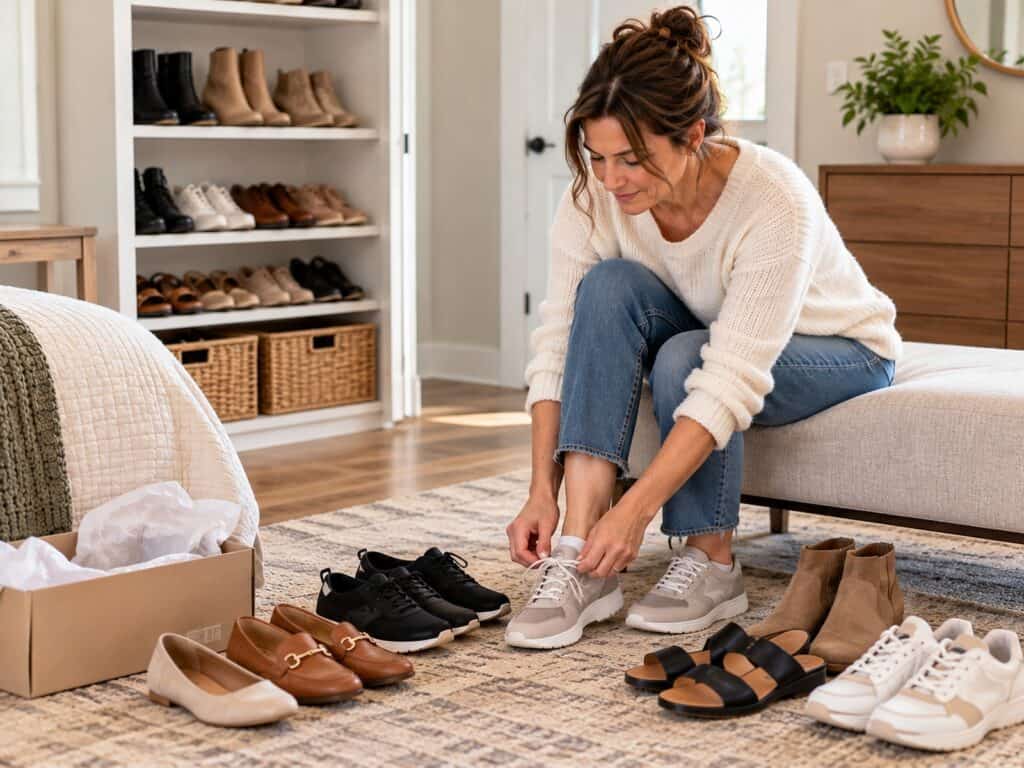
Try on both shoes with the socks you would normally wear. Notice pinching, rubbing, slipping, or whether you immediately want to take them off. You do not need to wear an uncomfortable pair through an outing to prove it deserves to go.
Check the soles, heels, seams, and fastenings, too. A broken zipper on boots you love calls for a repair decision. Shoes with holes or soles coming apart need a different destination from wearable pairs that simply do not fit you. Keep those groups separate as you sort.
Compare shoes that do the same job
Put similar pairs side by side. If you own several casual shoes, which ones do you choose when they are all available? What makes you pass over the others?
Two black pairs might serve different purposes: one for walking and one for dressier occasions. But if both suit the same outfits and you always choose the comfortable pair, the other may be taking up space without adding an option you use.
A spare can also have a purpose, such as a pair you wear while another dries. Keep it for that reason, rather than because every old pair automatically becomes a backup.
Make room for seasonal and occasional needs
“I haven’t worn these lately” is a reason to look closer, not an automatic donation rule. Winter boots, work-required footwear, and shoes for weddings or funerals may go unused for months and still be useful.
Ask what you would wear instead if the need came up. If you have no suitable alternative and replacing the pair would be expensive or difficult, keeping it can make sense. Check that it still fits and is in usable condition.
The distinction is between a real need you can name and a vague possibility that keeps every pair in the closet.
Give expensive and sentimental pairs a separate decision
An expensive pair can feel like a bill you are still trying to justify. Keeping shoes you avoid does not recover the purchase price, but selling a wearable pair may recover some of it. Decide whether the likely return is worth the time involved.
Sentimental shoes deserve a different question: do you want to wear them, or keep them as a reminder? You can choose to keep wedding shoes or another meaningful pair with your keepsakes instead of squeezing them into everyday storage. A photo may be enough for some memories; it does not have to be enough for all of them. My guide to decluttering sentimental items has more help with that decision.
Step 3: Choose a Limit That Fits Your Life and Space
There is no right number of shoes for everyone. Your climate, work, activities, preferences, and storage all matter. If you enjoy shoes and can find, use, and put away the pairs you own, you do not have to reduce them to someone else’s number.
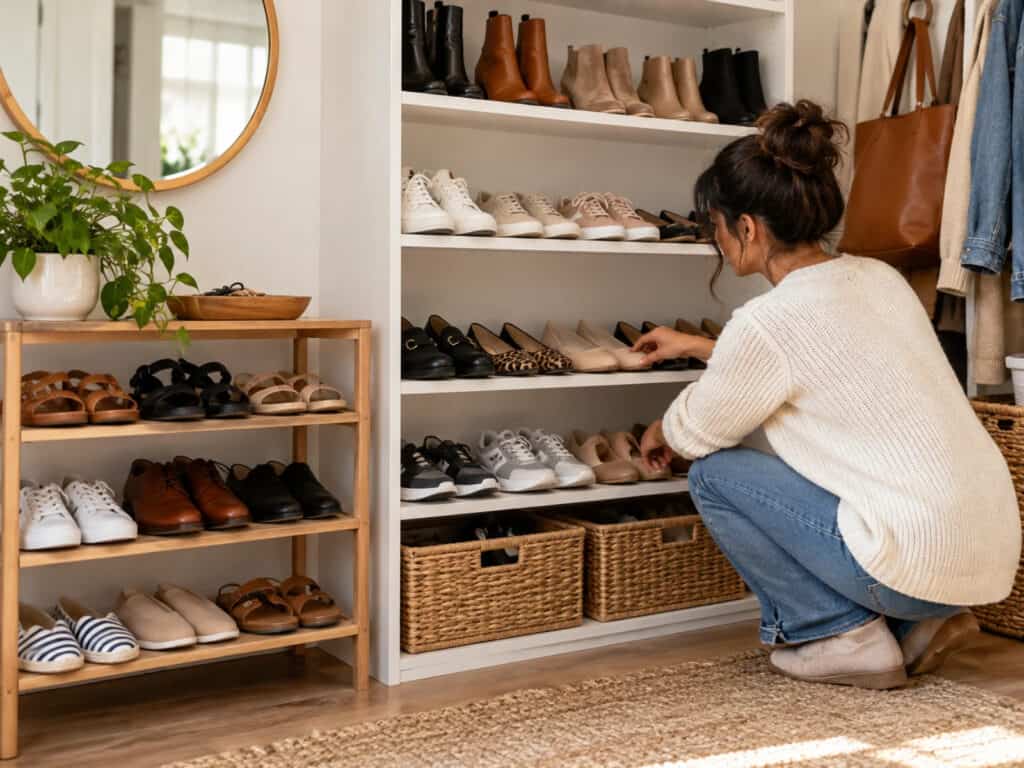
Choose the space you can comfortably use: a rack, shelves, or a combination of everyday and seasonal storage. Put your most useful pairs back first. Leave enough room to take out a pair without disturbing a stack of others. In a shared space, agree on room for each person’s shoes.
This was the useful part of my two-rack limit: it changed the question from what to get rid of to what I wanted to make room for. Start with storage you already have before buying another organizer.
For a few pairs you are unsure about, write down the unresolved question. For example: “Do these loafers work with the trousers I wear now?” Try the combination at home and set a date to decide. A short trial is useful for an everyday pair; a seasonal pair may need review when its season returns. Keep the undecided group small enough that it does not swallow the space you just cleared.
Step 4: Choose the Right Next Step for Shoes You Are Removing
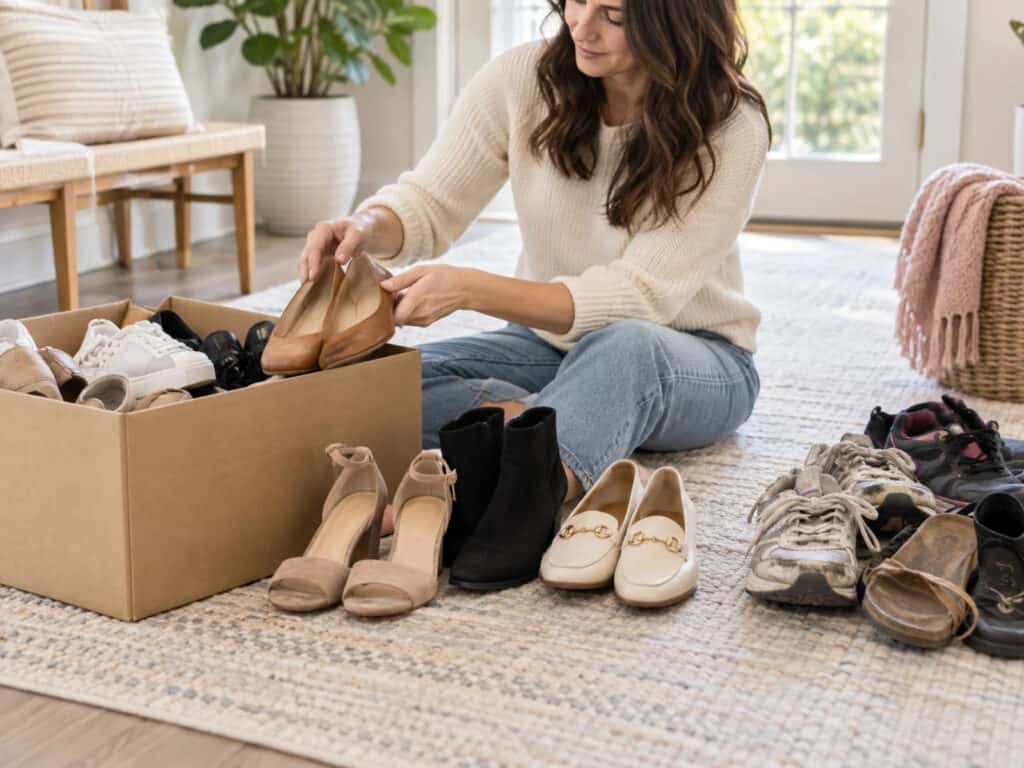
Before you fill one big donation bag, separate shoes by what can realistically happen to them next.
Donate or give away wearable pairs. Check the recipient’s current requirements before making a trip. Soles4Souls, for example, accepts new or lightly used shoes with useful wear remaining; its condition guidance excludes holes and mold. My guide to places to donate unwanted belongings can help you find other options. A friend may also welcome a pair, as long as they can comfortably say no.
Sell selectively. Choose the pairs likely to earn enough to justify photographing, listing, and arranging the sale. Check sold prices for comparable shoes where available, then account for fees and shipping. Set a date to review unsold listings so they do not become a permanent pile. Here are places to sell unwanted items if you need a starting point.
Arrange repairs you actually want to make. If you would wear a pair again after a repair, ask a shoe repair shop whether the work is feasible and what it would cost. Put a date on that next step. If you decide against the repair, choose an appropriate disposal route instead of returning the pair to the back of the closet.
Check recycling options for worn-out shoes. Ask your local waste service or a shoe collection program whether it accepts your type of footwear in its current condition. Donation and recycling are different routes; a charity that takes wearable shoes may not accept damaged ones. Do not put shoes in curbside recycling unless your local service specifically permits it. If no suitable program accepts them, follow local disposal guidance.
Finish by naming the next action: a donation stop on Friday, a listing this weekend, or a call to the repair shop. Use a smaller bag or ask for carrying help if a box of shoes is difficult to lift.
Step 5: Put the Keepers Where You Will Use Them
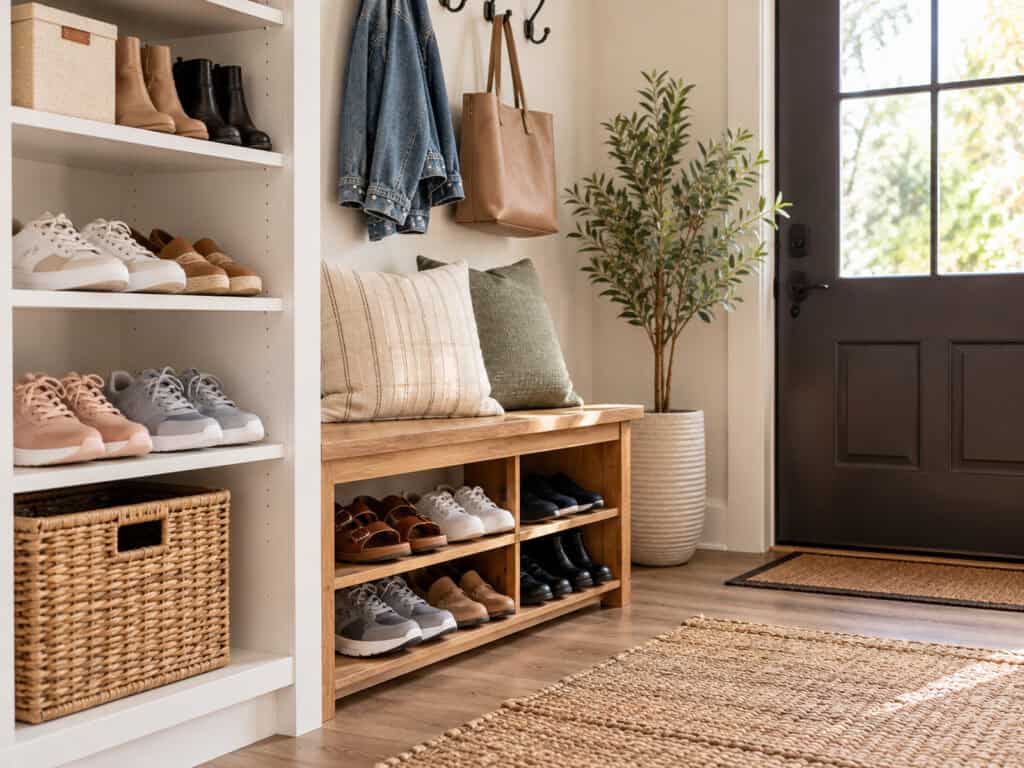
Give the shoes you wear most the easiest spots to reach. Keep quick-grab pairs near the door if that is where you put them on, and store dressier or occasional pairs where you can still see or identify them. Let wet or muddy shoes dry and clean them as needed before putting them away.
If seasonal shoes crowd your everyday space, move them to a labeled box or another shelf you can access when the weather changes. You do not need a new storage system if the one you have works with fewer pairs in it.
When you consider buying shoes, ask what the new pair will add and where it will go. Replacing a worn-out pair gives you a natural opportunity to remove it. Buying another version of shoes you already avoid is a reason to pause. These questions to ask before a purchase can help you think it through.
Start With One Pair Of Shoes
You don’t have to sort your entire shoe collection today. Choose one pair you’re ready to let go of and take a practical step: put wearable shoes in your donation bag, list them for sale, or check recycling options for a worn-out pair. Start with an easy decision and work from there.
If you would like help carrying that progress into the rest of your home, join my free 14-Day Declutter Challenge for one small task each day.