
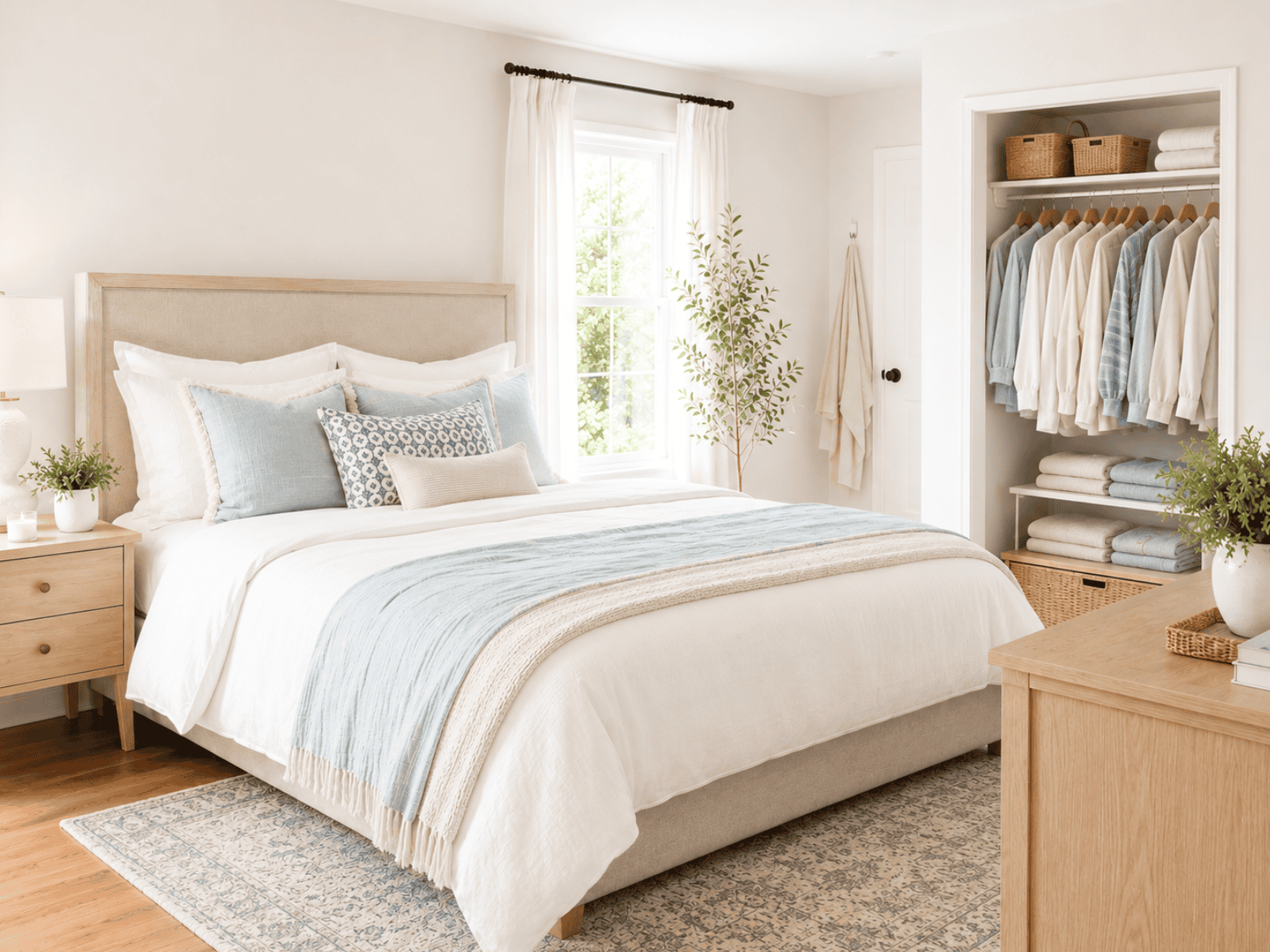
How to Organize a Bedroom in 10 Easy Steps (and Keep It That Way!)

A bedroom can get cluttered faster than almost any other room in the house.
Clothes land on the chair. Shoes collect on the floor. The nightstand becomes a dumping ground. Things that belong somewhere else somehow end up beside the bed.
And because the bedroom is usually hidden from guests, it is often the last room we deal with.
The good news is that learning how to organize a bedroom does not require buying a closet full of organizers or spending your entire weekend cleaning.
The best place to start is simple: remove what does not belong, declutter what you do not use, and give everything you are keeping a practical place to live.
These 10 steps will help you organize your bedroom so it looks better, functions better, and is much easier to keep organized.
The Quickest Way to Organize a Bedroom
If your bedroom feels overwhelming, follow this order:
- Remove anything that belongs in another room.
- Declutter before you organize.
- Give everything you keep a permanent home.
- Organize your closet around what you actually wear.
- Make your dresser easy to use.
- Clear and organize your nightstand.
- Create a place for clothes you plan to wear again.
- Use bedroom storage strategically.
- Clear flat surfaces.
- Finish with a simple daily reset.
The order matters.
Do not start by buying storage.
It is much easier to organize your bedroom after you know what you are actually keeping.
Step 1: Remove Everything That Does Not Belong in the Bedroom
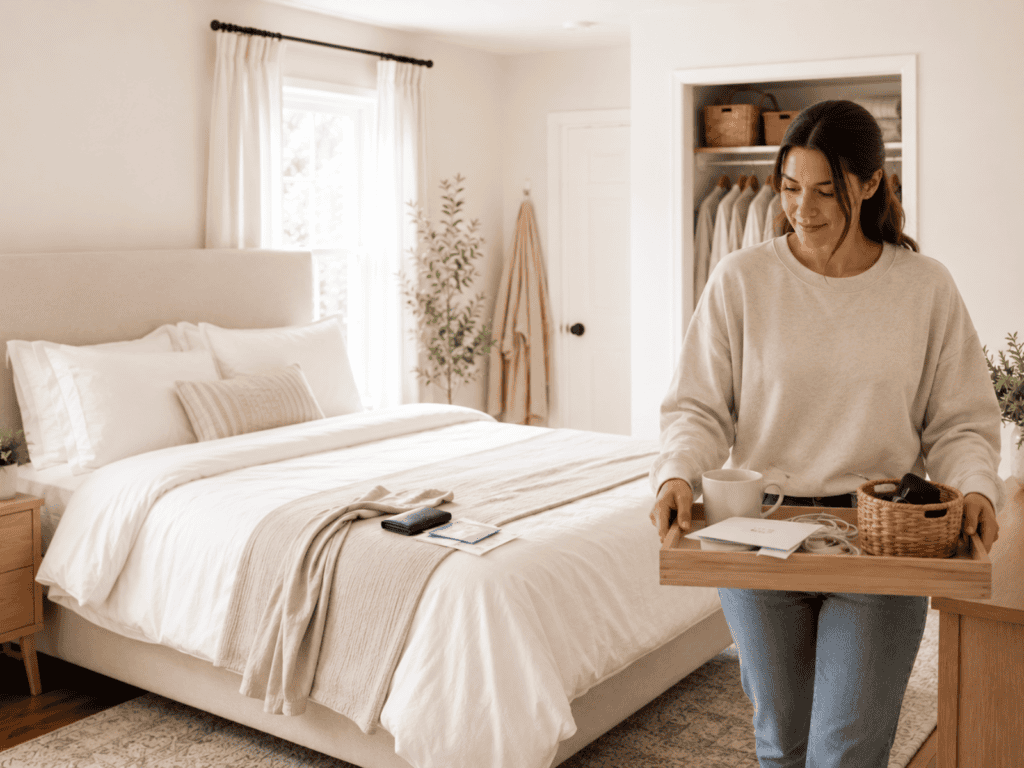
Before you open a drawer or start pulling clothes out of your closet, remove the obvious things that do not belong in your bedroom.
Look for:
- Dishes and glasses
- Paperwork
- Shopping bags
- Returns
- Children’s toys
- Household supplies
- Items that belong in the kitchen, bathroom, office, or living room
You do not need to organize those things right now. Simply return them to the rooms where they belong.
This gives you more room to work and immediately makes the bedroom feel less cluttered.
Do not turn this into a whole-house project
This is where people sometimes get sidetracked.
You carry a book into the living room, notice the coffee table is messy, and suddenly you are organizing another room.
Don’t.
Put the book where it belongs and go back to the bedroom. The goal right now is to organize one room.
Step 2: Declutter Before You Organize
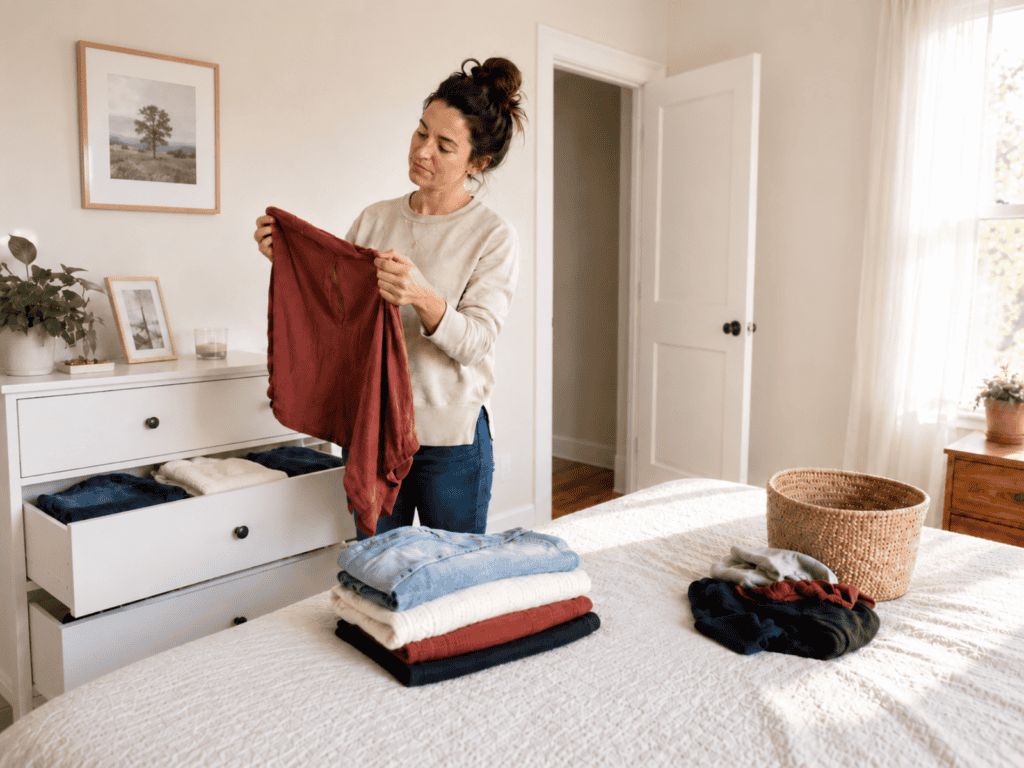
Once everything that belongs somewhere else is out of the room, start looking at what remains.
This is the part that makes the biggest difference. You can organize an overstuffed bedroom beautifully and still have an overstuffed bedroom.
Before worrying about storage, ask yourself whether everything deserves space in the room at all. Start with the easier decisions.
Look for:
- Clothes you never wear
- Shoes that hurt your feet
- Broken items
- Empty packaging
- Expired products
- Books you know you will not read
- Decor you no longer like
- Duplicates you do not need
- Items you keep moving out of the way
When you are unsure about something, ask:
Do I actually use this?
Does this fit my life now?
Would I make room for this again today?
Those questions are often more useful than trying to follow a strict rule about how long you have owned something.
Step 3: Give Everything You’re Keeping a Home
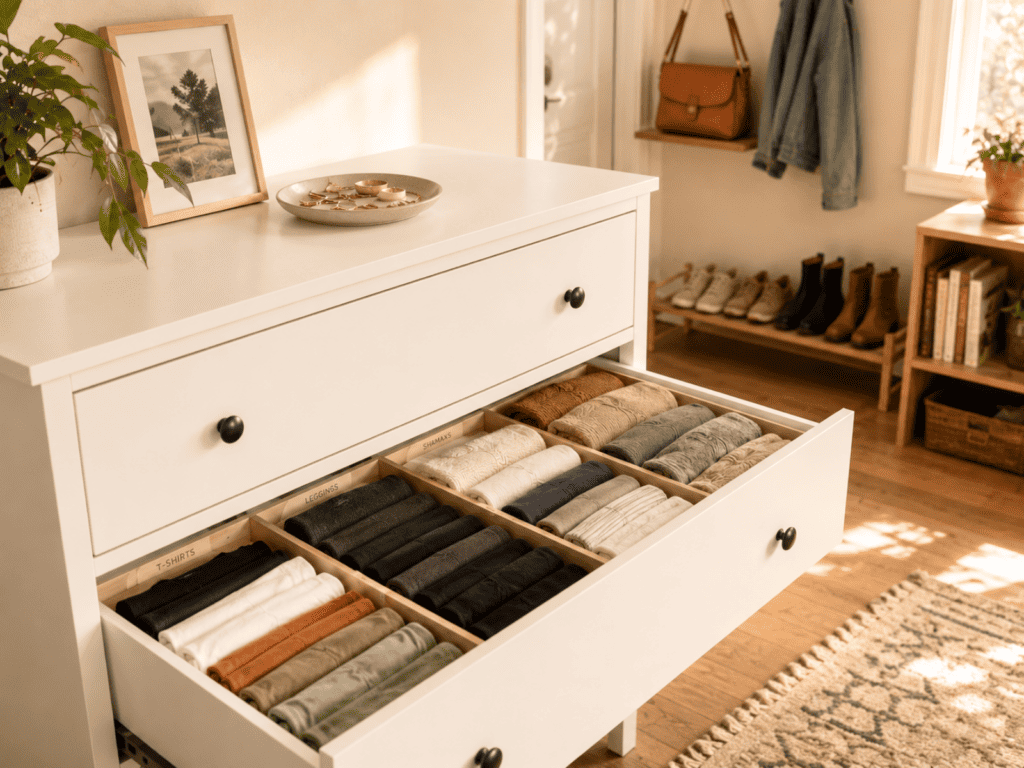
One of the biggest reasons clutter keeps returning is simple: The item does not have a real place to go.
If you are keeping something, decide exactly where it belongs.
For example:
- Books → bookshelf or designated shelf
- Dirty clothes → hamper
- Jewelry → jewelry box, tray, or drawer
- Chargers → nightstand drawer
- Shoes → closet or shoe rack
- Extra bedding → linen closet or designated storage area
- Handbags → hooks, shelf, or closet
- Everyday accessories → one designated drawer or tray
The more specific you can be, the easier your bedroom will be to maintain. “Somewhere in the bedroom” is not a home. “Top dresser drawer” is.
Pay attention to where you naturally use things
You do not have to organize your bedroom according to someone else’s system. Put things where they make sense for your routine.
If you charge your phone beside the bed, keep the charger there. If you always put on jewelry while standing at your dresser, store jewelry there.
A good organizing system should make your daily life easier.
Step 4: Organize Your Closet Around What You Actually Wear
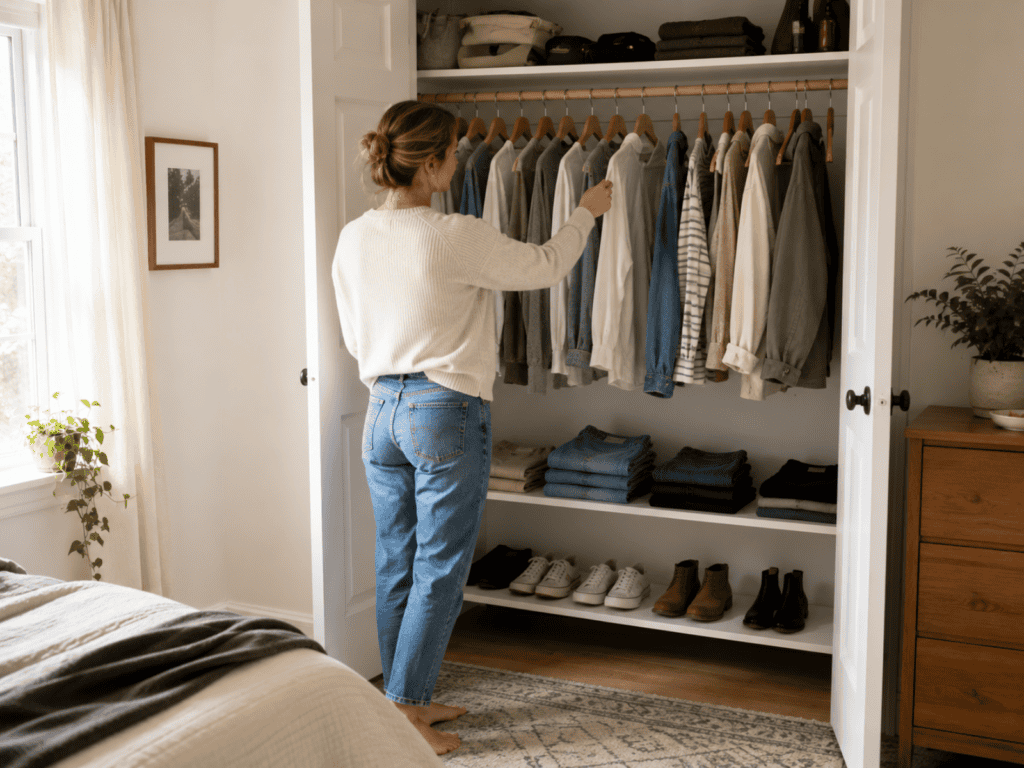
Closets often become one of the most frustrating areas in a bedroom because they are trying to hold too much.
Start by removing clothing you already know you do not wear. Then organize the clothing you are keeping.
Hang the right items
Hanging usually works well for:
- Dresses
- Blouses
- Jackets
- Dress pants
- Suits
- Clothing that wrinkles easily
Fold items such as:
- T-shirts
- Sweaters
- Jeans
- Workout clothes
- Pajamas
There is no perfect method. Use the system that lets you see your clothing and put it away easily.
Group similar items together
Keep similar clothing in the same area.
For example:
- Shirts together.
- Pants together.
- Dresses together.
- Jackets together.
This makes it easier to see what you own and find what you need.
Keep your most-used clothes easy to reach
Clothing you wear frequently should be in the most accessible part of the closet. Seasonal clothing and rarely used formalwear can go higher, lower, or farther back.
Consider whether your wardrobe simply needs to be smaller
If your closet is packed from one end to the other, another organizer may not solve the problem. A smaller wardrobe of clothing you actually enjoy wearing is much easier to manage.
If this is your biggest struggle, my Minimalist Closet Challenge can help you work through your wardrobe one step at a time.
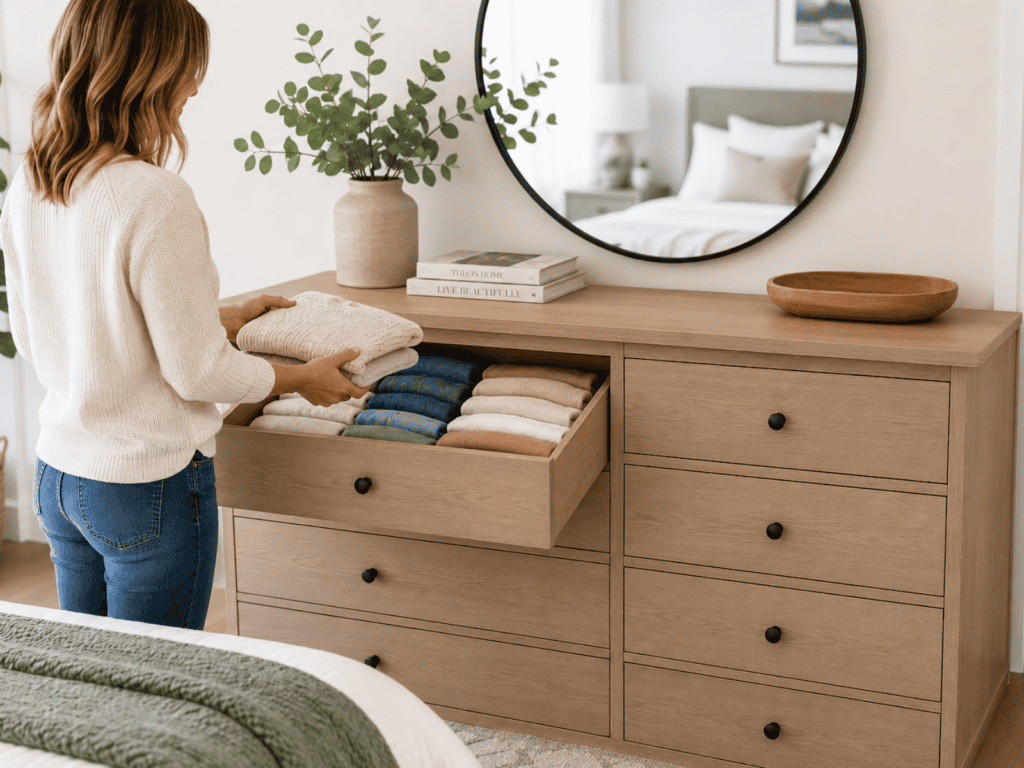
Step 5: Organize Your Dresser So It Is Easy to Use
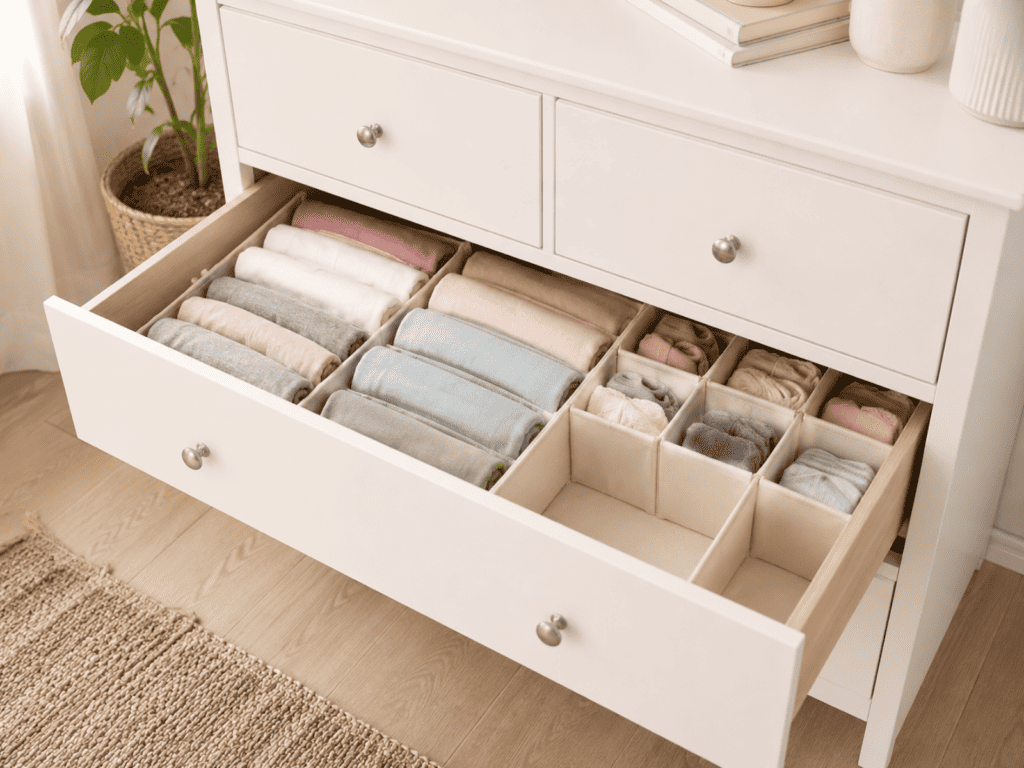
A dresser should make getting dressed easier. If opening a drawer feels like digging through a suitcase, the system probably needs adjusting.
Start by giving each drawer a purpose.
For example:
- Underwear
- Socks
- Pajamas
- T-shirts
- Workout clothing
- Accessories
Don’t overfill your drawers
One of the easiest ways to keep a dresser organized is to leave a little breathing room. If you have to push clothing down to close the drawer, you probably have too much in it.
Overstuffed drawers are harder to use and much harder to maintain.
Use drawer dividers when they actually help
Drawer dividers can be useful for small items such as socks, underwear, belts, scarves, or accessories.
But you do not necessarily need to buy new organizers. Small boxes you already own can work surprisingly well inside drawers.
Fold clothing so you can see it
Use whatever folding method helps you see what is in the drawer without digging through piles.
The goal is not perfectly folded clothing. The goal is being able to find what you own and put it back easily.
Step 6: Fix Your Nightstand Clutter
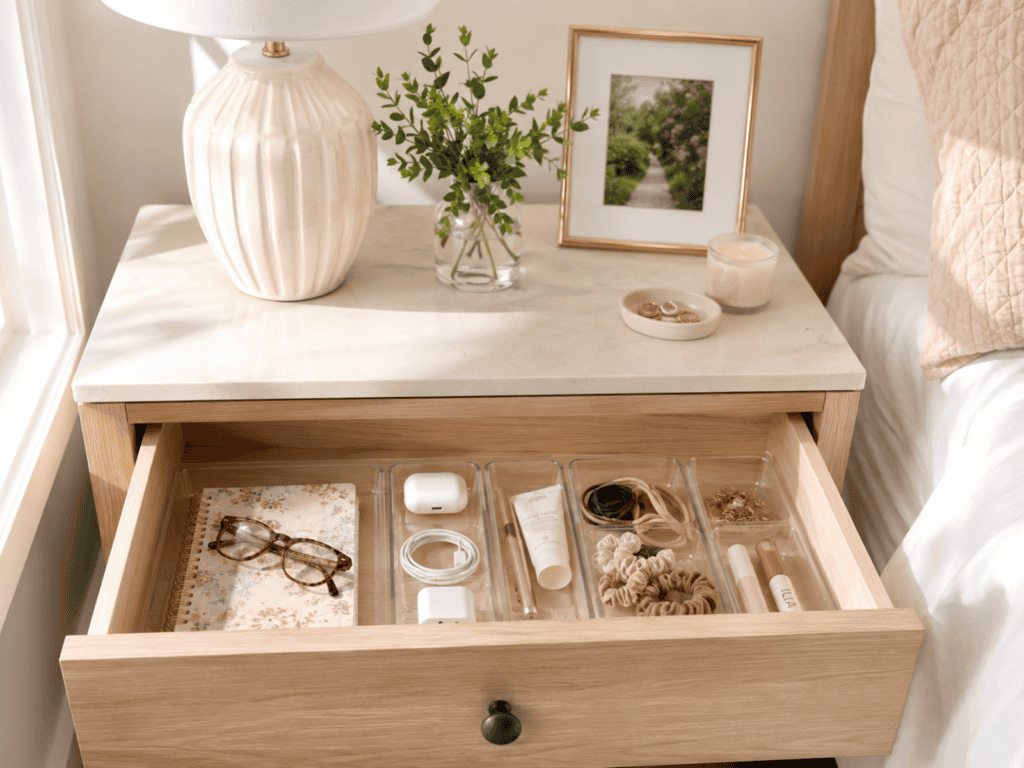
Your nightstand is one of the first things you see in the morning and one of the last things you see at night. Unfortunately, it is also one of the easiest places to pile things.
Start by removing everything that does not belong there. Then keep only what you regularly use beside the bed.
That might include:
- A lamp
- A book or e-reader
- Reading glasses
- Phone charger
- Earbuds
- Hand cream
- A small personal item
If possible, use a nightstand with a drawer so smaller items can stay out of sight.
Repurpose what you already own
You do not need special nightstand organizers. A small decorative box can hold reading glasses. A shallow box can keep charging cables contained. A small dish can hold jewelry you remove before bed.
The goal is simply to stop little items from spreading across the entire surface.
Step 7: Create a Place for Clothes That Are “Worn But Not Dirty”
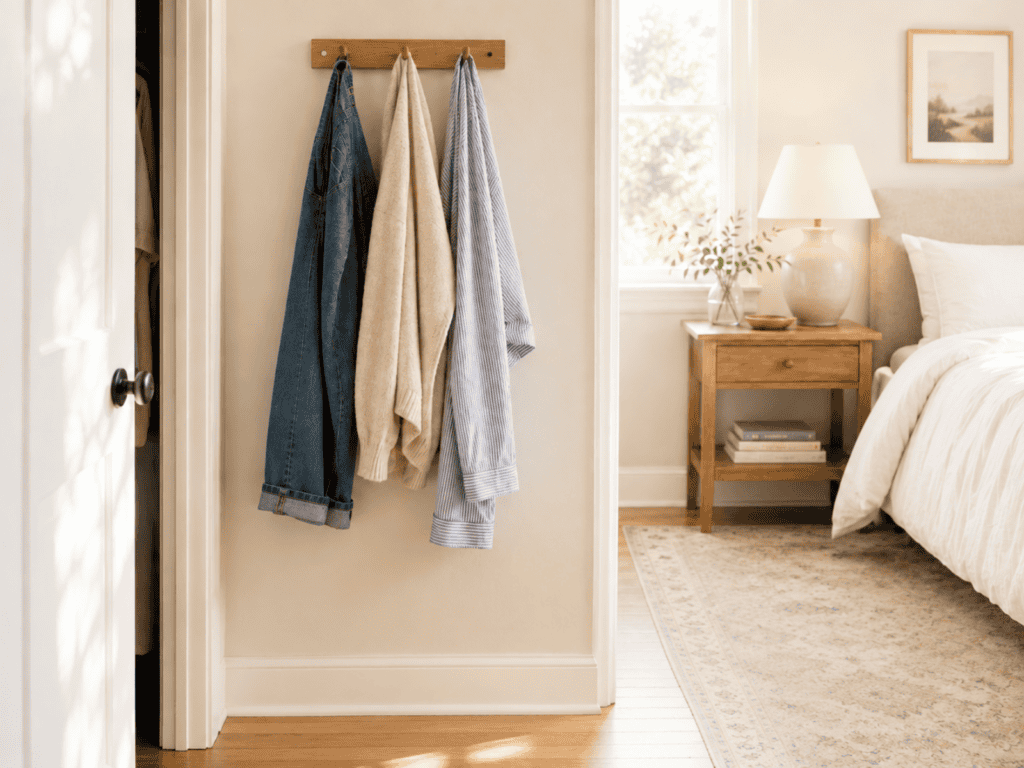
Let’s talk about the chair.
You know the one.
It technically exists for sitting, but somehow it has become the place where jeans, sweaters, pajamas, bras, and everything else that is “not clean enough for the closet but not dirty enough for the hamper” ends up.
This is one of the most common bedroom clutter problems. The solution is to give those clothes a specific place.
You could use:
- A hook
- A valet hook
- A small basket
- A section of your closet
- A small clothing rack
Pick one designated spot. Then give that space a limit. When the hook is full or the basket is overflowing, it is time to make a decision.
Either:
- Put the clothing away.
- Wear it again.
- Or wash it.
The important part is stopping “wear again” clothes from taking over the chair, bed, treadmill, or floor.
Step 8: Use Bedroom Storage Strategically
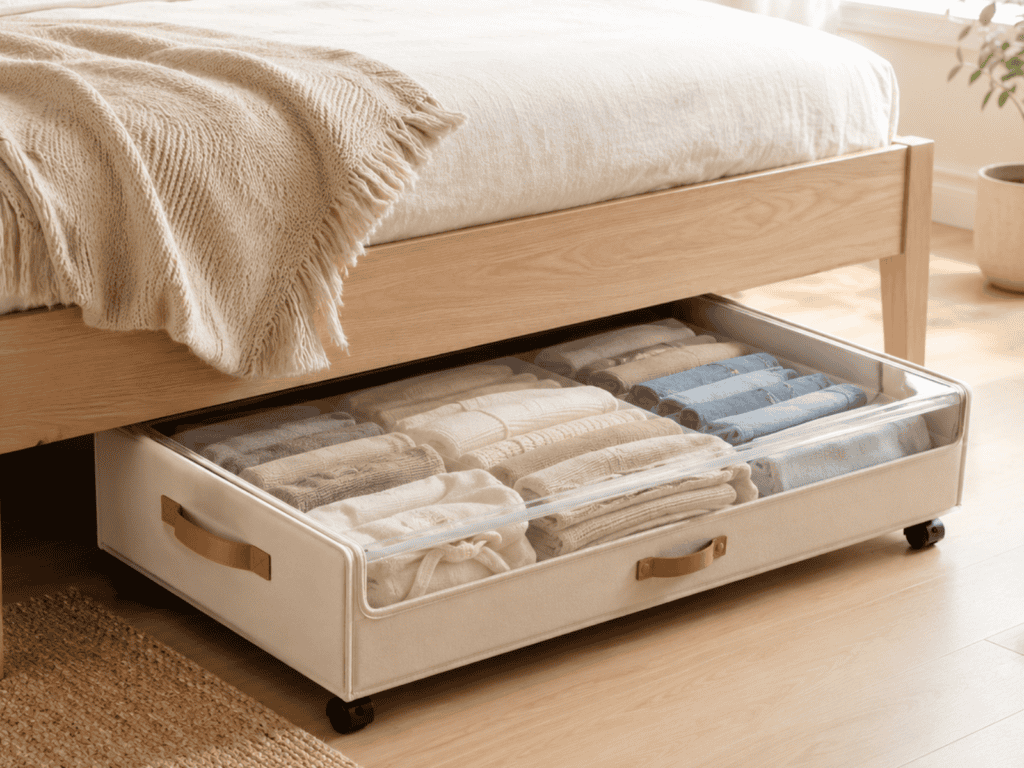
Once you have decluttered and decided what you are keeping, you can finally evaluate your storage. This is when storage solutions actually become useful.
Use under-bed storage carefully
Under-bed storage can be helpful for:
- Seasonal clothing
- Extra bedding
- Occasionally used items
But do not treat the space under your bed as a place to hide things you have not made decisions about.
Storage should hold things you intentionally decided to keep.
Maximize your closet
Depending on your closet, you may be able to add:
- A second hanging rod
- Shelves
- Shoe storage
- Hooks
- Hanging organizers
Look at unused vertical space before adding another piece of furniture to the bedroom.
Choose multi-purpose furniture when possible
If you need additional furniture, look for pieces that do more than one job.
Examples include:
- A nightstand with drawers.
- A storage bench.
- A bed with built-in drawers.
- An ottoman with hidden storage.
This is especially useful when organizing a small bedroom.
Before buying another organizer, ask:
Do I actually need to store this?
Sometimes the best storage solution is letting go of something you no longer use.
Step 9: Clear Flat Surfaces
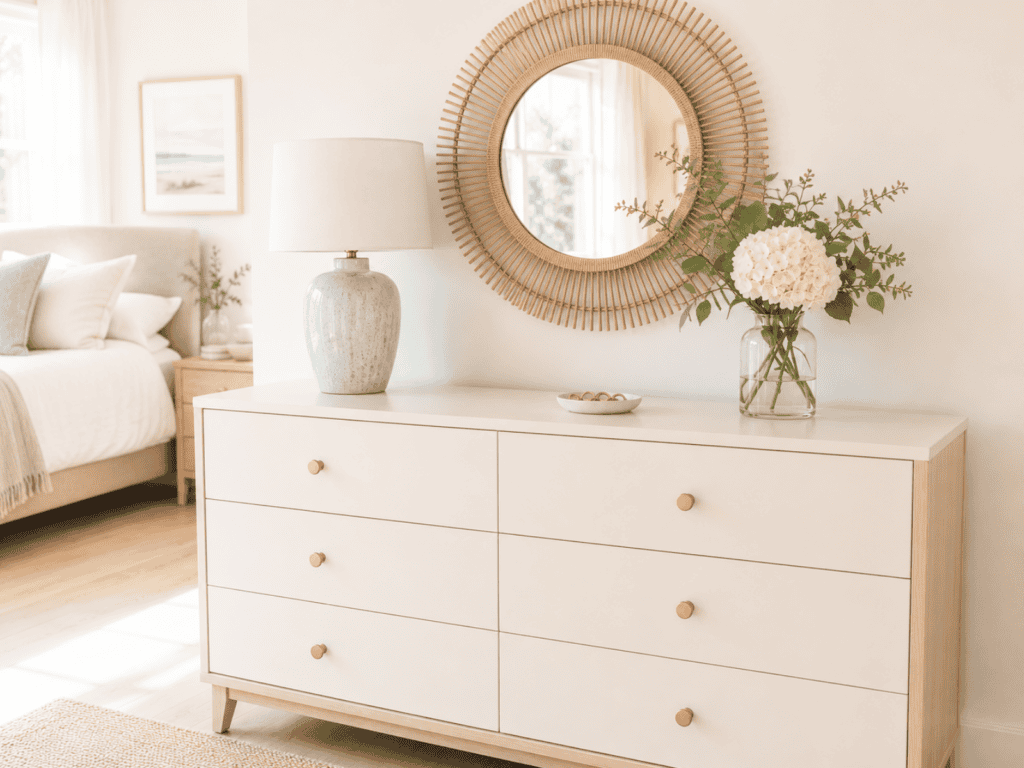
Dressers, nightstands, benches, and chairs attract clutter because putting something down is easier than putting it away.
The more items sitting on those surfaces, the more cluttered the entire bedroom looks.
Start with one surface at a time. Remove everything. Clean the surface. Then intentionally put back only the things that belong there.
For a dresser, that might be:
- A lamp
- A small jewelry tray
- One or two decorative items
It does not need to be completely empty. It simply needs to stop functioning as a landing spot for everything you bring into the room.
Create a rule for incoming items
If something comes into the bedroom, decide where it belongs instead of automatically putting it on the dresser.
- Mail should not live on the dresser.
- Shopping bags should not live on the floor.
- Returns should not spend the next three months beside the bedroom door.
Deal with those items while the decision is still small.
Step 10: Use a 5-Minute Bedroom Reset to Keep It Organized
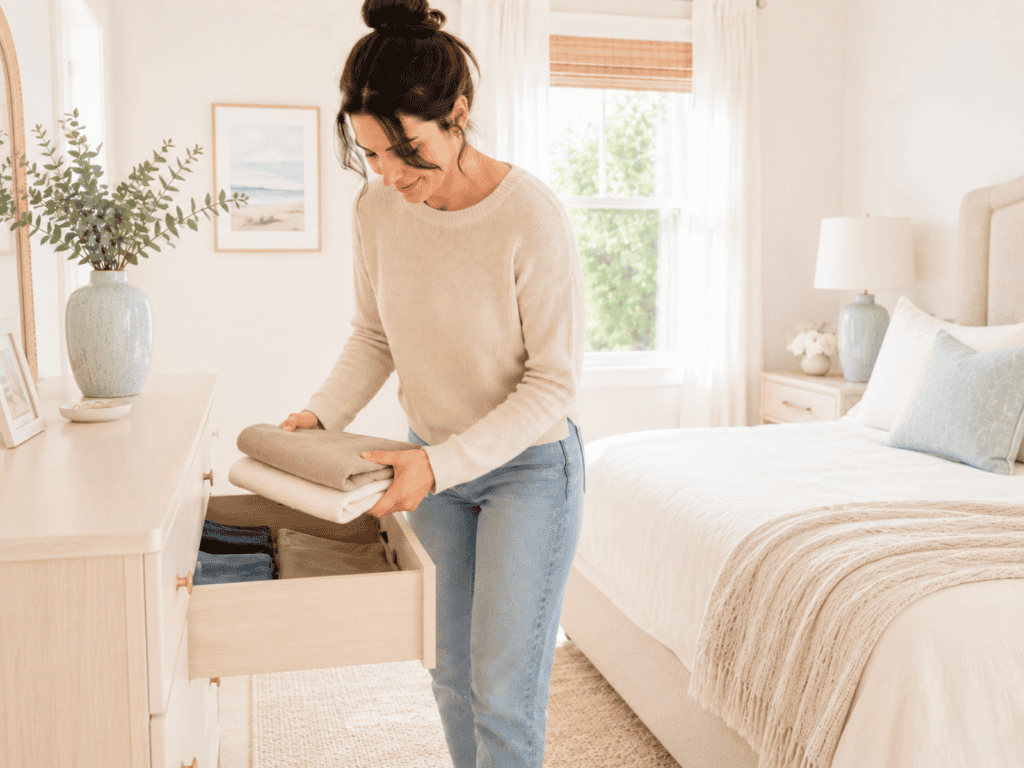
Organizing the bedroom once is helpful. Keeping it organized is what makes the biggest difference.
Fortunately, you do not need a complicated maintenance schedule. Try a quick bedroom reset at the end of the day.
The 5-Minute Bedroom Reset
Before bed:
- Put dirty clothes in the hamper.
- Put “wear again” clothes in their designated spot.
- Put stray items back where they belong.
- Clear the nightstand and dresser.
- Pick up anything sitting on the floor.
That’s it.
You are not deep cleaning. You are simply preventing today’s clutter from becoming next week’s mess.
Do a quick weekly check, too
Once a week, take a few minutes to:
- Empty the trash
- Dust surfaces
- Put away loose items
- Check for clothing that needs attention
- Return anything that migrated into the bedroom
Then, every few months, take another look at your closet and storage areas to make sure your system still works.
A bedroom should not require constant reorganizing. When everything has a home and you have less to manage, maintaining the room becomes much easier.
How to Organize a Small Bedroom
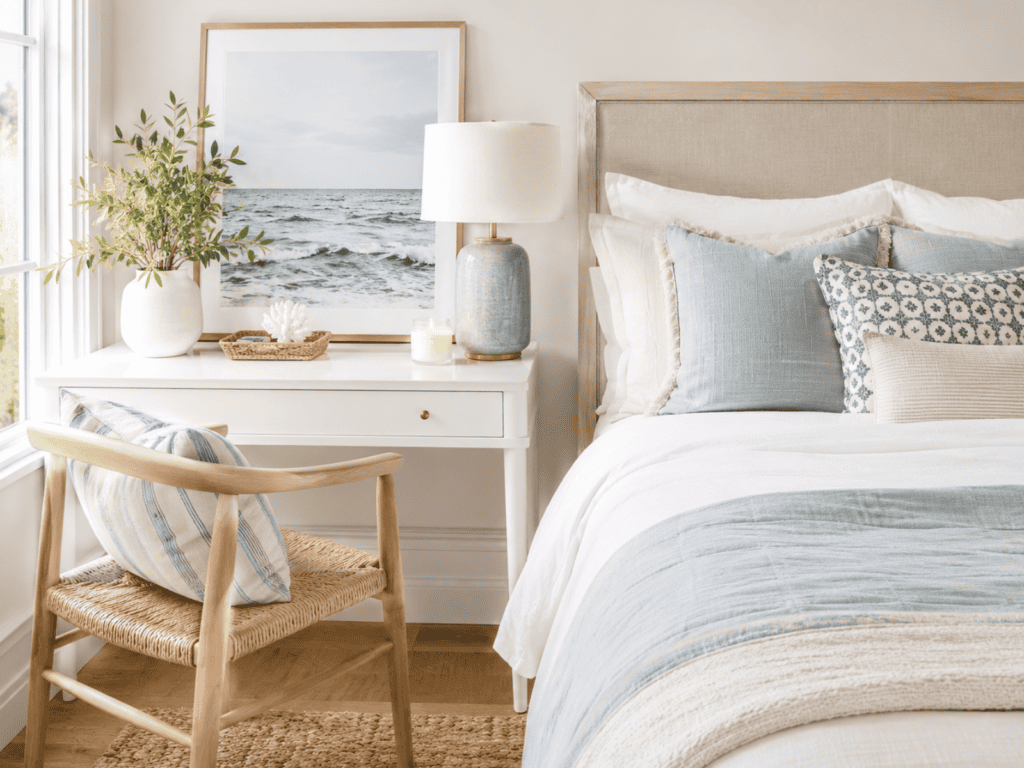
A small bedroom does not necessarily need more storage. It usually needs better use of the space you already have.
Start by keeping only the things that truly need to live in the bedroom. Then look for unused space.
You may be able to:
- Use shelves for vertical storage
- Store seasonal items under the bed
- Add hooks behind a door
- Choose furniture with built-in storage
- Use the upper part of the closet more efficiently
- Keep surfaces as clear as possible
Be especially careful about adding furniture to a small bedroom. Sometimes another dresser or storage unit creates more visual clutter than it solves.
How to Make a Bedroom Feel Calmer
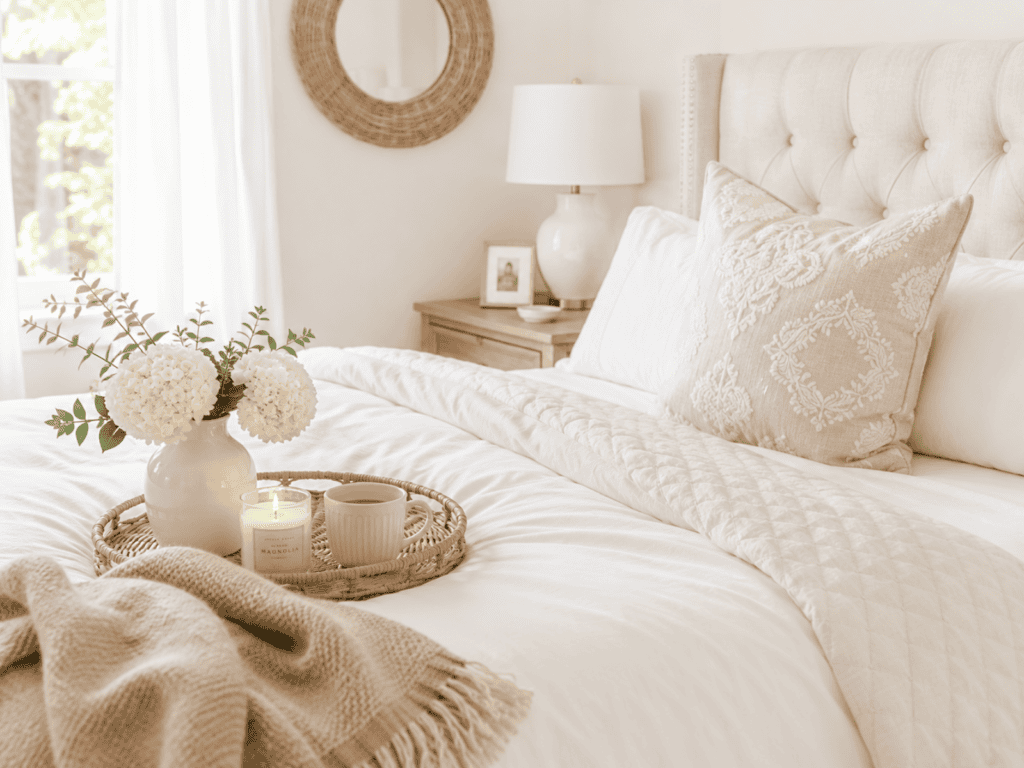
Organization plays a big role in how a bedroom feels. You do not need to create a perfectly styled room.
Start with the basics:
- Keep visible surfaces relatively clear.
- Reduce piles on the floor.
- Limit the number of items sitting on your dresser and nightstand.
- Make the bed.
- Use lighting that works well for the room.
- Keep only decor you actually enjoy seeing.
Once the clutter is under control, you may find that you need much less decor to make the room feel finished.
A calmer bedroom often comes from having less visual noise, not adding more things.
A Bedroom That Is Easier to Maintain
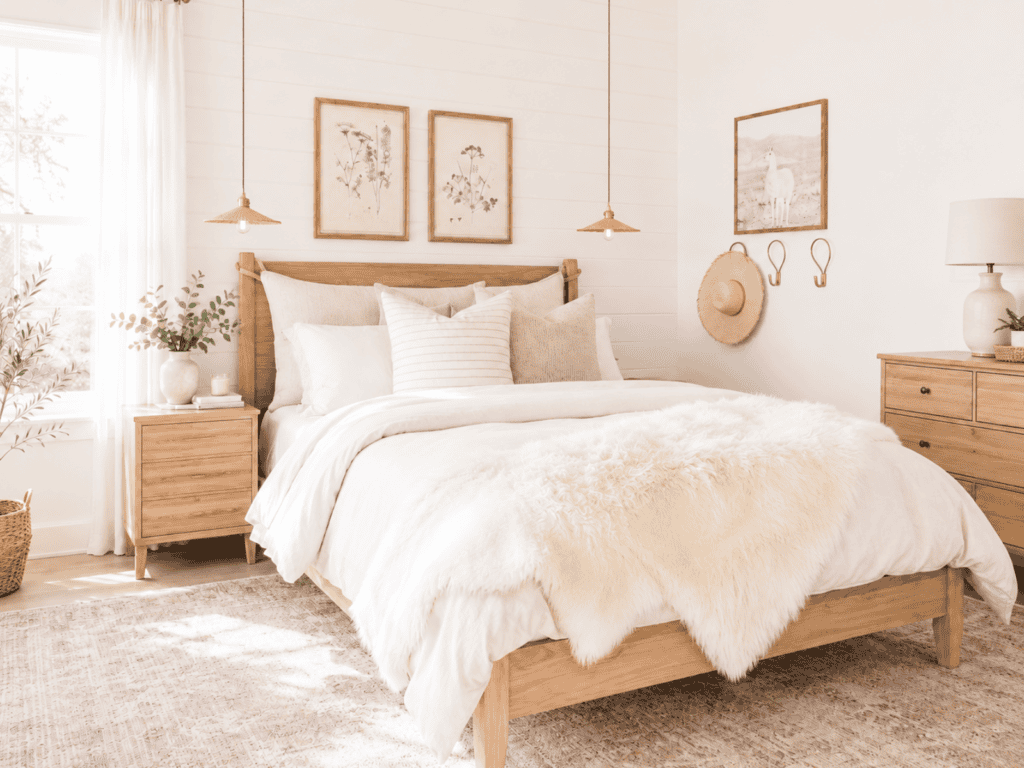
The goal of organizing your bedroom is not to create a room that looks perfect every minute of the day. It is to create a room that is easy to live in and easy to reset.
- Start by removing what does not belong.
- Declutter before adding storage.
- Give everything you keep a real home.
- Then create a few simple habits that stop clutter from building back up.
You do not need more complicated systems. You need fewer things to manage and clear places for the things that matter.
That is what makes an organized bedroom last.
I’m excited to start following this advice and I will begin tomorrow New Year’s Eve.
The first thing I will consider is the table top and clothing declutter.
I love that plan — tabletops and clothing are two of the most impactful places to start. 👏 Beginning tomorrow is perfect, and even a short session will make a difference. Cheering you on!